Alaskans to vote on language change in voter eligibility law in midterm election
Oct 22, 2026 | 9:45 am ET
Description
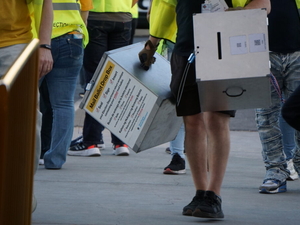
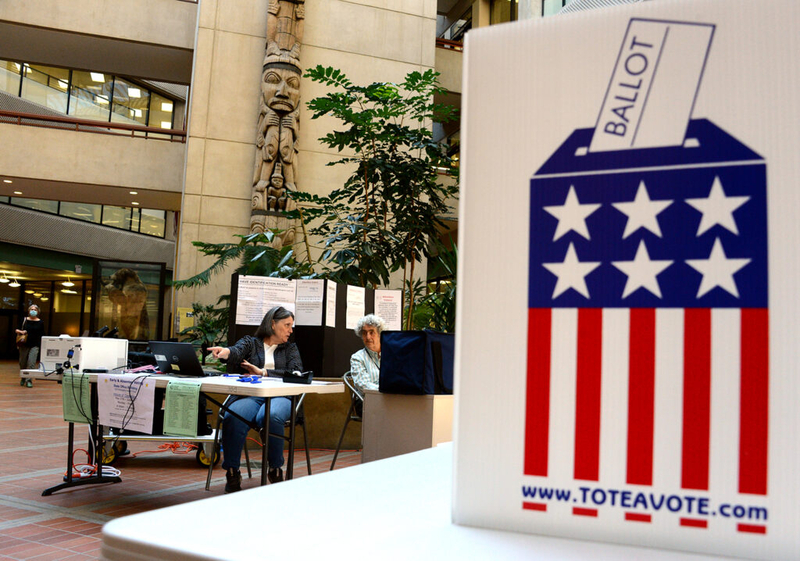
Volunteers operate an in-person polling place for the special U.S. House primary election on Friday, May 27, 2022, in the atrium of the State Office Building at Juneau, Alaska. (Photo by James Brooks/Alaska Beacon)
This midterm election, Alaskan voters will decide whether to change state voter qualification language related to the citizenship requirement to vote.
Only U.S. citizens are eligible to vote in national and state elections. Ballot Measure 3, which appears on the ballot as 25USCV, would not change any requirements to vote, but proposes adding the word “only” to state statute.
In Alaska, the law states “a person may vote at any election who is a citizen of the United States.” Ballot Measure 3 asks voters whether to change language to add the word to read: “Only a person who is a citizen of the United States…may vote in any election.”
An eligible voter must also be at least 18 years of age, reside in the state and house district in which they seek to vote for at least 30 days just before the election, have registered to vote as required by law and not be registered to vote in another jurisdiction. Those eligibility requirements would remain unchanged.
The ballot measure was sponsored by several former Republican state legislators, including former state senators John Coghill of Fairbanks and Josh Revak of Anchorage, and former House Speaker Mike Chenault of Nikiski, who currently serves on the board of the Alaska Gaseline Development Corp.
Supporters of the measure, called Alaskans for Citizen Voting, argue the current law is unclear and should be updated to clarify only U.S. citizens may vote. The group has raised nearly $900,000 this election cycle, with more than $800,000 of that amount financed by major GOP donor and billionaire Richard Uihlein, according to reporting by the Anchorage Daily News.
The Alaska Division of Elections held two public hearings on the proposed ballot measure in July and August. Coghill testified at a Jul. 27 hearing in support.
“The current law says citizens may vote, but it does not specifically say that only citizens may vote, and this measure closes that gap, and it makes the law in Alaska unmistakably clear,” he said.
Coghill cited a proposal considered in Los Angeles, California earlier this year to allow noncitizens who have some form of legal permanent status — like Deferred Action for Childhood Arrivals, Temporary Protected Status holders or green card holders — to vote in city and school board elections. The city council rescinded the ballot measure in June.
“This shows the issue is not hypothetical,” Coghill said. “So we should not wait for a similar fight here before clarifying our own law. The point of 25USCV is to close that door before it gets pushed open.”
The Alaska chapter is part of a national group, Americans for Citizen Voting, which works to pass citizen-only initiatives across the country. Five other states including Arizona, Arkansas, Kansas, South Dakota and West Virginia have proposed constitutional amendments this election to bar noncitizen voting.
Some elections watchdogs say the initiatives are a political stunt to turn conservative voters out at the polls this November, according to reporting by Stateline, particularly where Republicans are fighting for re-election and to maintain majority control in the U.S. House and Senate.
In Alaska, no group officially formed to oppose Ballot Measure 3, but several current legislators gave personal testimony in opposition at the July hearing.
Anchorage independent Rep. Alyse Galvin testified that Alaska already has a citizenship requirement, and the change would be redundant. She also pointed to increased scrutiny by the Alaska Division of Elections, which preemptively removed over 3,000 voters from the active voter list pending proof of citizenship and said the act instilled fear in her constituents with newly acquired U.S. citizenship in voting.
“They’re afraid to go into the polls. That’s not okay. They’re afraid because of all of this rhetoric around what’s happening with ICE and everything else. They don’t know if now they’re on some special list. How do I get off the list? All of that. They don’t know how to navigate the system in a way that makes them feel comfortable enough to vote,” Galvin said. “And frankly, I don’t know how to help them do that. That is a concern of mine, a deep concern of mine.”
“Our system somehow has created fear,” she continued. “And my worry is that this particular ballot measure is going to engender more of that, more of this sort of action, and more of this sort of fear.”
U.S. nationals excluded from Alaska elections
Anchorage Democratic Rep. Andrew Gray, who chairs the House Judiciary Committee, echoed the criticism that the ballot measure is unnecessary, and spoke to a recent case where he said U.S. nationals were prosecuted for voting in Alaska.
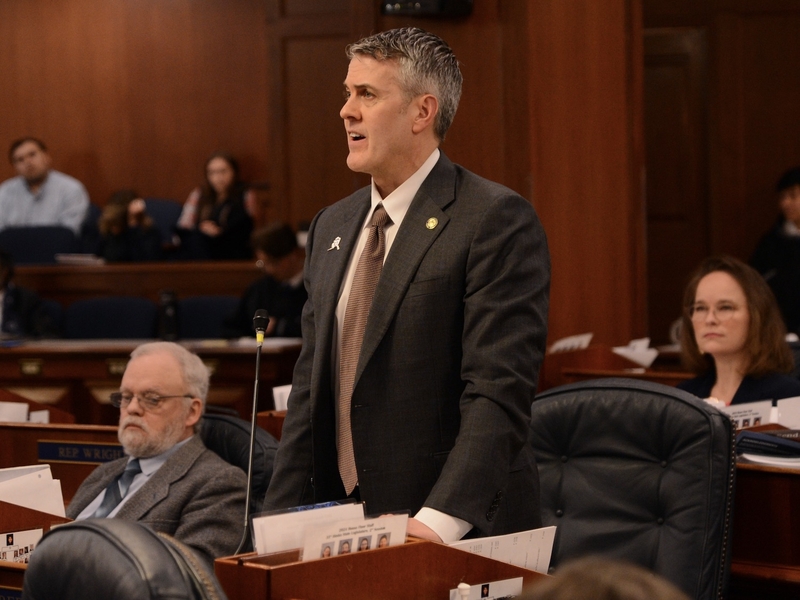
“I am not concerned about California. In Alaska, non-U.S. citizens are already forbidden from voting in local and state elections. This is what led to the arrest of voters in Whittier a couple of years ago,” he said.
Gray said the recent criminal prosecution of 11 American Samoan residents in Whittier — where some voted and a resident ran for school board — was a failure of the Division of Elections, law enforcement and those residents in understanding the law.
American Samoans are U.S. nationals, and have irrevocable rights to reside in the United States, but are not U.S. citizens and therefore do not have the right to vote in state or federal elections. In the Whittier case, 11 residents were charged with illegally voting, and the state dropped the charges after a court of appeals dismissed the case last month.
Gray said he opposes the ballot measure because it could eliminate the possibility of the Legislature or local jurisdictions changing the law to include U.S. nationals — like American Samoans — in the right to vote in Alaska elections.
“They should be able to vote. They should be able to run for local office like the school board, and they should be able to serve their local communities,” Gray said.
“There is room at this particular moment without this ballot measure of expanding being able to vote and serve in the local school board, for example, if we were to expand it to American nationals in Alaska,” he said. “I think that’s the just thing to do. I think it’s the right thing to do. I think it’s the moral thing to do.”
A change to voter eligibility to include U.S. nationals would require a change in state law passed by the Alaska State Legislature and signed by the governor to allow voting in state and local elections. A change to the law barring U.S. nationals from federal elections would require action from the U.S. Congress.
Early in-person voting has begun in Alaska, and continues through 8 p.m. on Nov. 3.
In addition to Ballot Measure 3, voters will have a chance to weigh in on Ballot Measure 2, which would overhaul the state’s elections system by repealing ranked choice voting, reinstating closed primaries and repealing campaign disclosure rules established in 2020.
Juneau