EGLE takes comments on wastewater permit for onsite water treatment at Saline Township data center
Oct 22, 2026 | 9:16 am ET
Description
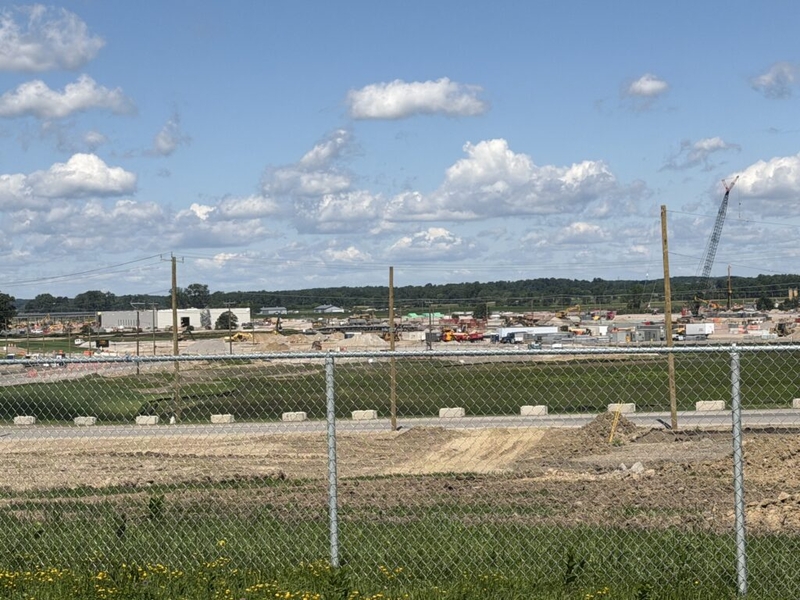
Construction underway on Related Digital's hyperscale data center in Saline Township, Michigan. June 20, 2026. | Photo by Jon King/Michigan Advance
On Wednesday, the Michigan Department of Environment, Great Lakes and Energy took questions and heard concerns from residents of Saline Township and communities across the state as it worked to finalize an environmental permit for an onsite wastewater facility proposed as part of the hyperscale data center under construction in the Washtenaw County community.
Under development by ChatGPT creator OpenAI, along with Oracle and Related Digital, the 2.2-million-square-foot facility has served as the epicenter for backlash against data center development in Michigan.
While the Saline Township Board initially voted against rezoning the project site 4-1, Related Digital filed a lawsuit accusing the board of exclusionary zoning. The board ultimately voted 4-1 to settle the suit, allowing the developer to move forward with the project.
Rather than focusing on the water used by the data center itself or other concerns raised by data center opponents, Wednesday night’s hearing focused on the permits needed for an onsite wastewater treatment facility, which would be used to treat wastewater generated by the data center’s employees, including human waste.
The National Pollutant Discharge Elimination System permit under consideration would allow the facility to discharge the treated waste into the nearby Saline River, with daily monitoring requirements on multiple parameters, though EGLE staff clarified during the hearing’s question-and-answer session that they would be testing the treated wastewater, not the river.
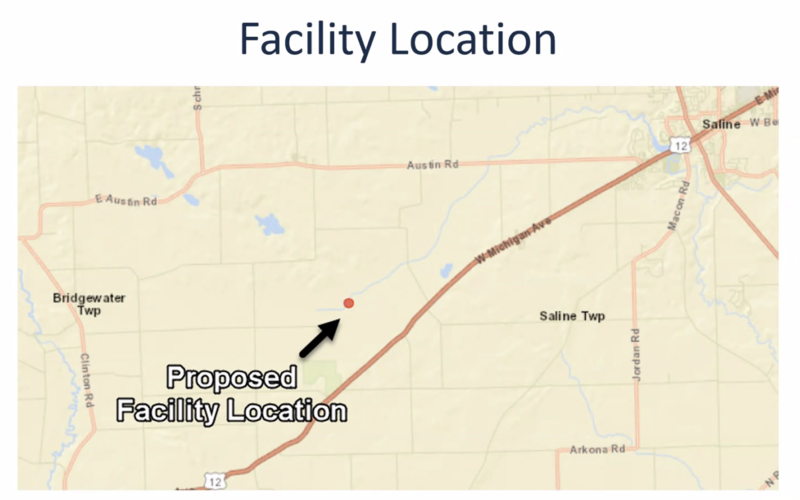
Tom Braum, a permit writer for the department’s Municipal Permits Unit, also explained that the responsibility for monitoring falls on the applicant, noting that Related Digital would be hiring a third-party consultant group to operate the treatment facility, leaving it to monitor and report sample data to EGLE.
While this permit would allow the facility to discharge its treated wastewater, it does not eliminate the need for permits from other units of government that may address cooling water, water withdrawals, permits concerning nearby bodies of water or zoning, Braum said.
“This permit itself is just one piece of the puzzle that focuses on their sanitary wastewater,” Braum said.
Braum also emphasized that the facility would not be allowed to treat industrial wastewater, including wastewater from the data center’s cooling system. The cooling water will be disposed of offsite when necessary, Braum said.
Responding to a question, Braum noted that the discharged waste would not be monitored for PFAS, as the department does not expect to find these kinds of chemicals in wastewater stemming from bathrooms and kitchens.
During the public comment period, residents from Saline Township, its surrounding communities and beyond called for stricter permitting conditions, questioned the safety of allowing the facility to self-monitor and raised concerns about how this additional discharge would affect the health of the river.
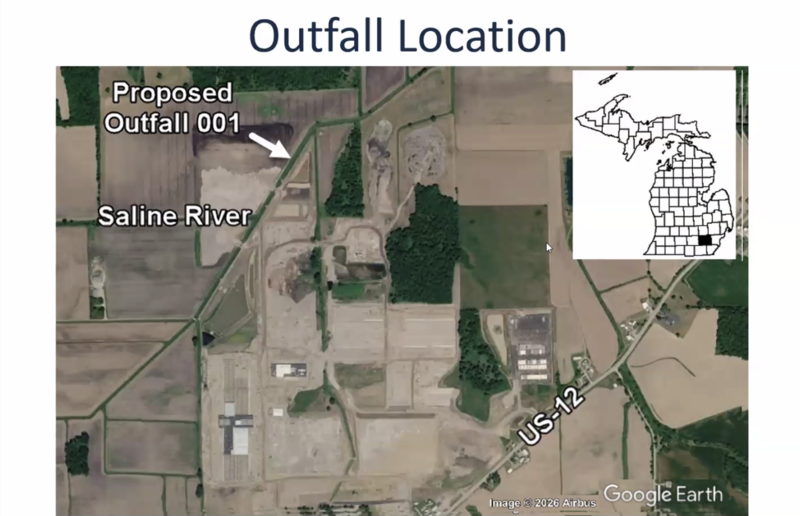
Sean Sutton, who lives downstream from the discharge site in the city of Saline, noted that the biologist report included in the permit documents recommended a monthly average phosphorus limit of 0.1 milligrams per liter, compared to the draft permit, which sets the limit at 0.2 milligrams per liter.
Excess nutrients like phosphorus can contribute to the growth of harmful algal blooms in waterways.
“I’m very concerned about downstream effects. The impoundment about six miles downstream here in Saline City is where nutrients and bacteria will settle and will accumulate,” Sutton said, noting that this is where residents, including his family, live and use the water.
Nichole Keway Biber, the Michigan water justice organizer with Clean Water Action, said the permit failed to account for the data center’s cumulative impact on the waterway, urging EGLE to reject the permit.
Nicki Rockentine, a Saline resident and environmental consultant, raised similar concerns, saying the permitting framework does not account for the cumulative impact of multiple discharge points along the waterway.
“While an individual permit may satisfy current standards, the cumulative effect of the multiple discharge sources deserves careful consideration,” Rockentine said, noting that the Friends of the Saline River had raised similar concerns.
“Once a discharge is authorized, it often becomes a permanent feature in the landscape,” Rockentine said. “Environmental professionals such as myself spend much of their careers investigating contamination that originated from activities that were fully legally and widely accepted at the time. History has demonstrated that compliance with existing regulations does not always equate to environmental protection.”
Rockentine also noted that emerging contaminants are not limited to industrial waste and that PFAS, pharmaceuticals, personal care products and potentially even microplastics have been found in domestic waste.
Many of these substances are not comprehensively regulated and wastewater treatment systems are not designed to remove them, Rockentine said.
“The question before us is not simply whether discharge can meet today’s permit limits,” Rockentine said. “The question is whether establishing a new wastewater discharge in the Saline River is the best long-term decision for the watershed, especially when township zoning can be circumvented by lawsuits.”
Public comment on the permit will remain open until midnight Oct. 23, 2026. Those looking to submit comments can do so online through EGLE’s MiEnviro Portal, by emailing [email protected] or by sending a letter to Tom Braum, Water Resources Division, EGLE, P.O. Box 30458, Lansing, Michigan 48909-7958.
Lansing, MI