Judge blocks Homeland Security from conducting election-related sweeps in 9 states
Oct 21, 2026 | 9:13 pm ET
Description
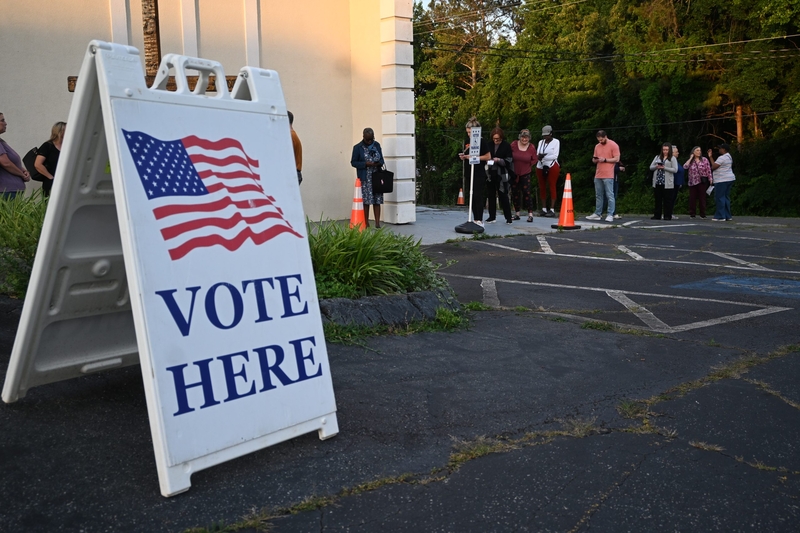
Voters line up outside Shiloh Hills Baptist Church in Kennesaw, Georgia, on primary Election Day, May 19, 2026. (Photo by Ross Williams/Georgia Recorder)
A federal judge on Wednesday night blocked the Department of Homeland Security from conducting election-related field operations that could sweep up U.S. citizens in nine states.
Judge Araceli Martínez-Olguín, an appointee of President Joe Biden in U.S. District Court in the Northern District of California, issued a preliminary injunction after voting rights advocates alleged that Homeland Security was sending armed agents to homes to question residents about their voter status.
The injunction bars operations in California, Connecticut, Georgia, Missouri, Nevada, New York, Pennsylvania, Washington and Wisconsin until polls close on Election Day, though the administration may appeal in the coming days.
The decision marks a legal setback to the Trump administration’s intensifying campaign this fall against noncitizen voting ahead of Election Day. It comes as the Department of Justice is suing California to force state and local election officials to not count the ballots of some 20,000 voters the federal government says it suspects are noncitizens.
President Donald Trump has long decried the threat of noncitizen voting, which studies have shown rarely occurs. He now faces political peril, as Democrats appear increasingly likely to retake the U.S. House and possibly the Senate in the midterm elections.
Martínez-Olguín found that the importance of the public voting free of intimidation outweighed the Trump administration’s interest in rooting out noncitizen voting. But she paused her order until Friday, presumably to give the Trump administration time to appeal.
The evidence in the case, she wrote, leads to an “objectively reasonable fear of law enforcement entanglements that intimidates citizens from urging or aiding others in exercising their right to vote.”
The lawsuit was filed by San Francisco, Santa Clara, the California Nurses Association, National Nurses United and the Voto Latino Foundation.
"Today, the courts affirmed a vital principle of our democracy: Voting is a fundamental right that citizens – whether born here or naturalized – should be able to exercise without armed government agents harassing them,” Beau Tremitiere, a lawyer at the legal advocacy group Protect Democracy, which represented the plaintiffs, said in a statement.
Martínez-Olguín wrote that the “ongoing intimidation that CNA/NNU members experience and the direct impediment it plays in their effort to engage voter outreach, education, and engagement efforts, are irreparable harms that are appropriately addressed by preliminary injunctive relief.”
A Homeland Security Investigations internal memo dated Aug. 31 describes a “surge initiative” beginning Sept. 1 that includes conducting field interviews. The memo, which was filed in court, identifies California, Georgia, Missouri, Pennsylvania, Washington and Wisconsin as targets of the surge during September. Additional locations are redacted in the document.
Homeland Security didn’t immediately respond to a request for comment on the decision.
In a previous court filing, Department of Justice lawyers representing DHS have argued that the federal government has the authority to investigate potential voting by noncitizens.
“Enjoining the government from even investigating such criminal violations would damage the public interest, not serve it,” they wrote.
Democratic groups and top Democrats in Congress filed a lawsuit Tuesday seeking to block Trump intimidating election officials.
All States Newsroom content is free to republish. Read our republishing policy for more information.