Maui Coral Reef Holds Secrets Of The Past — And The Future
Oct 21, 2026 | 6:01 am ET
Description
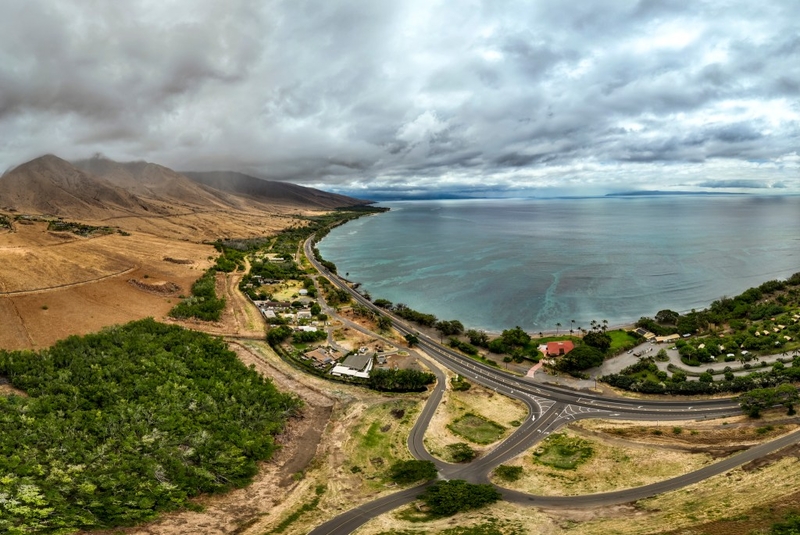
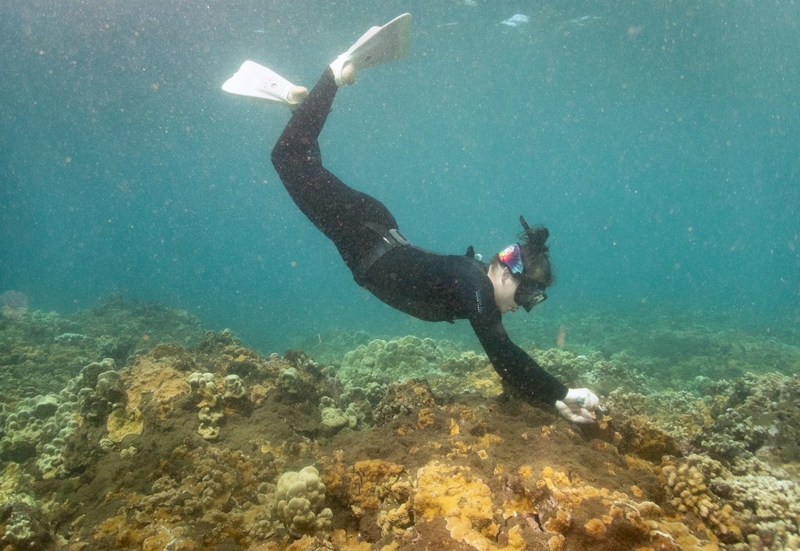
Photo courtesy of Honolulu Civil Beat
New research into a 253-year-old coral sample from Olowalu provides a first-of-its-kind glimpse into the environmental history of Maui.
Scientists who studied the two-century-old core found that the reef’s growth, or lack thereof, closely mirrored what was happening on land. The period they examined, 1760 to 2013, covers the precolonial era, the rise and fall of the sugar-plantation economy and Maui’s development as a tourist mecca.
Their findings, published in the September issue of the scientific journal “Coral Reefs,” offer the “first long-term baseline for understanding ridge-to-reef connectivity on Maui,” according to the U.S. Geological Survey, which originally collected the core in 2013.
The scientists also were able to pinpoint for the first time that the reef’s growth rate began a steep decline in the late 1960s when the plantation economy boomed.
“There’s been several studies showing a connection between historical sugarcane production and poor water quality,” said Andrea Kealoha, a study co-author. “But nobody has been able to connect that to the decline of reef health.”
The new study is significant given Olowalu’s international reputation as a super reef, a mother reef and even a turtle reef, basically a marine rock star for its unique qualities and important contributions to ocean health.
By revealing how land-use patterns affected the reef, the study provides not only a window into the past but a roadmap for land managers making ridge-to-shore decisions.
Learning From The Reef’s Past
Sam Kekuewa of Hawaii Sea Grant College Program led the research team, which included scientists from University of Hawaiʻi at Manoa, School of Ocean and Earth Science and Technology, and the U.S. Geological Survey.
After the USGS originally collected the 6-foot-long coral core in 2013, the federal agency conducted some initial analysis, but it wasn’t until Kekuewa came along in 2024 that in-depth research on the core began.
Kekuewa, who said he grew up amid the Hawaiian diaspora of the San Francisco Bay Area, is a chemical oceanographer with a doctorate from Scripps Institution of Oceanography. After graduating with his PhD in 2024, Kekuewa knew he wanted to live and work in Hawaiʻi. He initially came to Maui to work as a postdoctoral fellow with Kealoha, an assistant professor of oceanography at UH Manoa.
Previously, he had helped Kealoha research how West Maui’s water quality and nearshore environment were affected by the 2023 Lahaina wildfire. When he began searching for a new research project a basic Google search brought him to the Olowalu coral core and its data set.
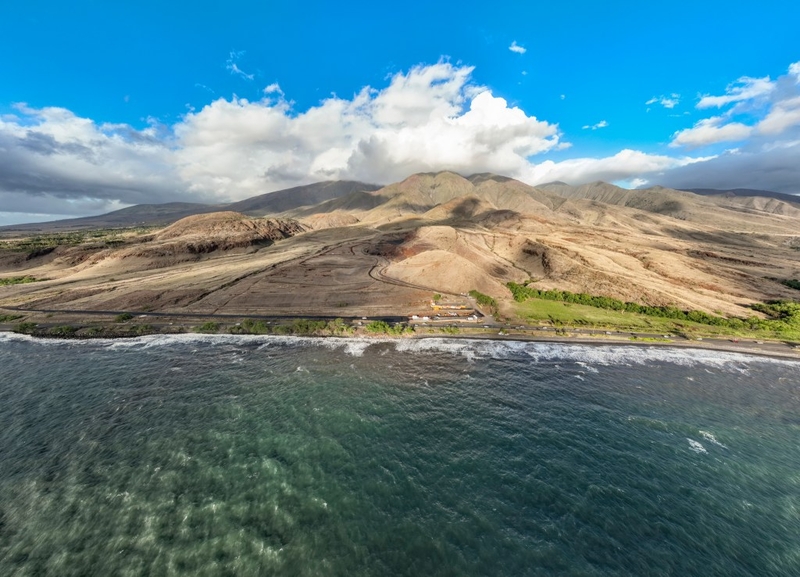
The Olowalu reef spans nearly 1,000 acres off the southwestern coast of Maui, about a 10-minute drive from Lahaina. It is often referred to as a mother reef because it sprays copious amounts of coral larvae into the ocean that currents carry to the neighboring islands of Molokaʻi and Lānaʻi for reef building.
It’s also a Mission Blue Hope Spot for its critical importance to ocean health.
Kekuewa’s idea to focus on better understanding the Olowalu reef, given the myriad threats it’s facing, sparked Kealoha’s interest, and a team was soon assembled.
“It’s very timely given all the things that are happening now: climate change, the Lahaina fire, more fires becoming more prevalent, increasing storm frequencies, you know three hurricanes and tropical storms that made landfall in Hawaiʻi this year so far,” Kekuewa said.
The severe storms affecting Hawaiʻi now and into the future driven by climate change will cause “more runoff, more sedimentation,” he said, which can suffocate the reef.
And it’s not just storms. Future fires, new subdivisions or coastal roadways such as Honoapiʻilani Highway, which connects West Maui to the rest of the island, buckling to chronic erosion, storm surges and king tides, can all affect coral health.
That matters because reefs protect coastal communities from powerfully destructive waves. Healthy reefs also provide nursery habitat for fish prized by anglers and snorkelers, and offer cultural significance and spiritual grounding to local residents, according to scientists and reef advocates.
Kekuewa felt it was imperative to learn from the reef’s past to guide actions for future management
Using Chemistry To Unlock Secrets
Once the research team members gained access to the ancient core, they began to study chemical signatures in the coral’s skeleton.
They analyzed the presence of 18 trace elements and connected them to what was happening on land at the time.
Between the 18th and late 20th century, the ratios of barium-to-calcium, phosphorus-to-calcium and iron-to-calcium jumped between 17% and 55%. The biggest increases took place in the mid-1900s when sugar plantations were going full-bore.
That’s where the ridge-to-reef connectivity comes in as a way to use science to follow these elements through history as they moved from watersheds to the coastline, finally settling on coral reefs.
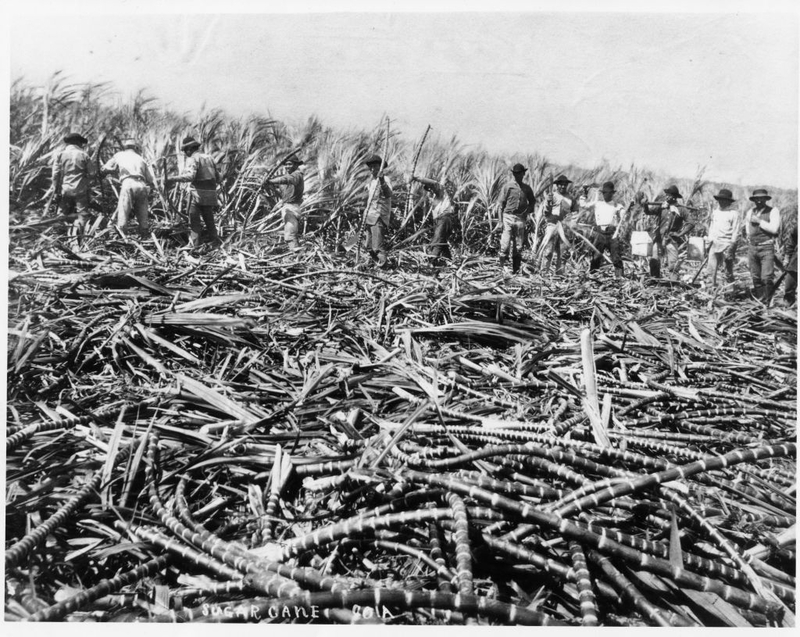
Maui’s sugar plantations, for instance, required massive amounts of water and fertilizer and altered the landscape and natural hydrology through land privatization, native plant removal, the introduction of an industrial-scale monoculture and construction of a water-diversion ditch system.
Both sediment and nutrient runoff, often associated with agricultural fertilizers, are tough on coral reefs. They can reduce sunlight filtering through the seawater, bury the reef or cause coral abrasions.
By measuring the density of the coral and how much it grew each year, the scientists were able to calculate calcification rates, which tell them how much skeleton the coral builds annually. Higher calcification rates mean the coral is building more skeleton, which is one sign the coral is healthy.
Adding in historical records of land use patterns and large-scale weather patterns such as El Niño helped the researchers understand how the reef responded to environmental stress.
They found that coral calcification increased by about 30% before about 1970 but then declined, leading them to conclude that the dramatic decrease in the reef’s growth that coincided with the sugarcane industry’s peak production slowed as plantations were phased out.
Lessons To Be Learned
Multiple projects are underway to keep reef-killing sediment out of Olowalu’s nearshore waters, to reforest and replant native species, mitigate wildfires and control the negative effects of axis deer, feral pigs and goats on vegetation mauka of the coastline.
The new research provides the long-term context to support and guide that work.
“We don’t really do science for the sake of science. We always want to be improving our coastal ecosystem health in Hawaiʻi,” Kealoha said. “We went into this study with that intention.”
Groups scrambling to study and enhance the reef and the ahupuaʻa it lies within range from government agencies such as the National Oceanic and Atmospheric Administration and the Hawaiʻi Department of Land and Natural Resources to nonprofits, including Hui O Ka Wai Ola, Kipuka Olowalu and The Nature Conservancy.
“We are all working together, working mauka to makai, addressing sedimentation in particular, and just the health of our forests and our coastal areas and ecosystems there,” said Tamara Farnsworth, coastal resilience project manager for The Nature Conservancy in Hawaiʻi and Palmyra.
As part of its work, the conservancy is tapping into ike kūpuna — the wisdom of elders or traditional ancestral knowledge.
“They help remind us of how conditions used to be, how it used to look, the plants that used to be there, the activities they used to be able to do,” Farnsworth said.
Even though research studies are often conducted by people with years of formal education and PhDs from prestigious institutions, scientists and advocates are increasingly aware that traditional ecological knowledge is critical to answering nature’s most pressing questions and solving many human-caused problems.
The coral study now becomes part of that equation.
“We’ve seen so much damage over the years as evidenced by these core samples,” Farnsworth said. “This is why it’s so important to talk to the people of the place and to work with them and listen to them. We are working with science as well as ike kūpuna. One is not more important than the other. They’re both important to inform how we work.”
Honolulu, HI