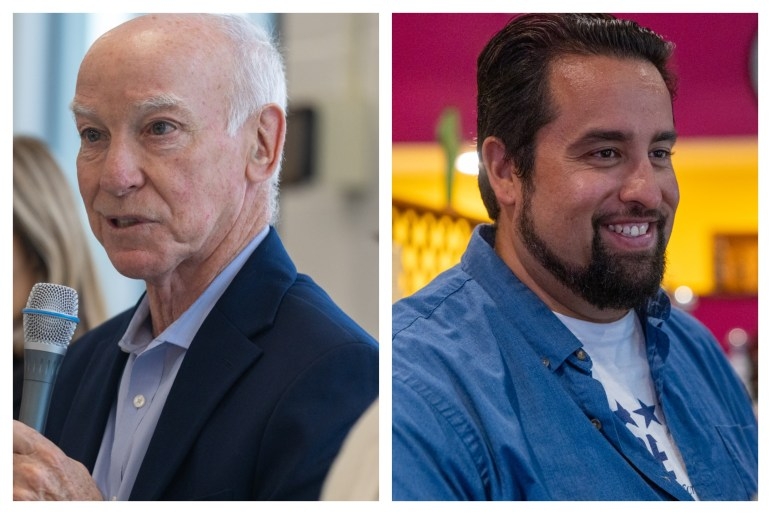
Joe Courtney, George Austin square off in Eastern CT’s 2nd District
Oct 21, 2026 | 5:30 am ET
Description
Photo courtesy of CT Mirror

Connecticut’s 2nd Congressional District is one of the more competitive seats in the state, on paper.
When Joe Courtney first ran for office in 2006, he was part of the blue wave that swept Democrats back into the majority — but in his own race, he flipped a Republican-held seat by eking out a victory with an 83-vote margin.
In the 20 years since, the Democratic congressman has easily won reelection to a seat that covers all of eastern Connecticut through a coalition of voters that cuts through party lines. But Courtney says the district — the most rural in the state — still resembles the one he’s represented for the past 10 terms.
“I don’t think it’s changed that much, honestly,” Courtney said. “I think if you look at the composition of who’s in town halls in terms of mayors and councils and state legislature, it’s still definitely purple. The one lesson I learned by winning by 83 votes is that you just don’t take it for granted, and we’ve been very aggressive out there.”
Courtney, 73, faces Republican George Austin, who hopes to improve his party’s chances despite a tough political environment for Republicans nationally. Touching on a common theme this year among both Democrats and Republicans, Austin, 38, said he wants to see new faces in Congress in the hopes of getting more done and breaking up the partisan gridlock.

Austin supports terms limits in Congress and wants to keep the door open to considering an age limit for candidates since there’s already a minimum in place. He argues that “entrenched career politicians” in Congress have contributed to the malaise of the body and the attitude of kicking the can down the road on many issues. That frustration led him to become a first-time candidate.
“Too many of our members of Congress, of our elected leaders — they’re out of touch,” Austin said. “It’s 100% a byproduct of being in office for too long, with seemingly bulletproof incumbency.”
“Your priorities shift,” he continued. “I don’t want to throw the age question out there just to be trendy. But for those reasons, I think age is definitely a factor.”
Austin is a business owner and works in construction. He noted local Republicans haven’t “put up a blue-collar candidate in a long time.”
He has a similar assessment of the 2nd Congressional District, noting there is a “large contingent of Republicans voting for [Courtney].” He’s seen houses with yard signs for both Republican gubernatorial nominee Ryan Fazio and Courtney. Austin’s approach to the campaign is reaching out to low-propensity and swing voters.
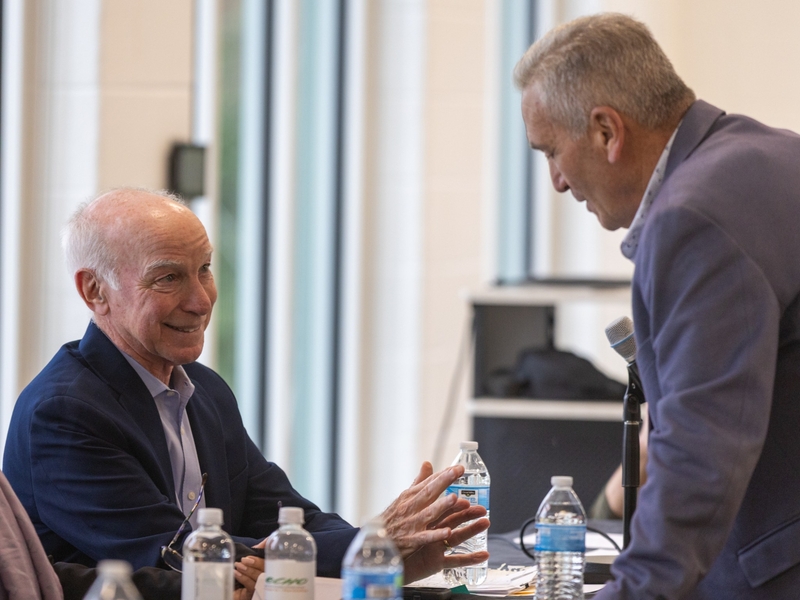
Democrats are hoping for a repeat of the 2006 midterm elections when they rode a blue wave back into both the House and Senate majority. One of those candidates was Courtney, who earned the nickname “Landslide Joe” for his nail-biter race that year, defeating three-term Republican incumbent Rob Simmons by just 83 votes.
Courtney sees some similarities between 2006 and 2026. In both years, Republicans held political trifectas — majorities in both chambers of Congress and control of the White House — and were clouded by unpopular wars in the Middle East. Courtney also pointed to the wave election in 2018, when Democrats took back the House amid voter frustration over healthcare and GOP efforts to repeal the Affordable Care Act.
But he recalled then-Congressman Rahm Emanuel, who oversaw the committee working to take back the House majority, not being convinced until late in the 2006 campaign that prospects were looking good for Democrats.
“This could be another 2006,” Courtney said when he reflected on the midterms a month ago. “Having said that, I still think it really wasn’t until mid-October before I think people really felt like this is really going to happen.”
That hasn’t changed how Courtney campaigns across the district, whether it’s up in the Quiet Corner or down along the shoreline. He said he’s held more than a dozen town halls, some via telephone, over the past two years.
“People actually notice if you’re not around,” Courtney said. “That’s why I make a point of it, in terms of accepting invitations for various events and meetings and get out there. We have a very strong message to talk about in terms of the work on Seapower [subcommittee] and how directly connected it is to the economy right now.”
Austin said he doesn’t fit neatly into a box when it comes to the Republican Party.
“I don’t like to consider myself a 401k conservative,” he said. “My family being Hispanic, our family values are very traditional, and they lean very conservative, which I am bringing to my brand of politics,” Austin said, describing economic policies meant to preserve and boost families, especially the next generation, who are more skeptical to have children for a variety of reasons including economic anxieties.
But he’s made some distinctions between himself and the GOP on issues like President Donald Trump’s sweeping tax bill, artificial intelligence and the tactics of U.S. Immigration and Customs Enforcement. Austin said he would have had difficulty voting for the “big beautiful bill” because it added to the federal deficit. He said he ultimately would have backed it and wants permanent tax cuts for small businesses.
Another area where Austin diverges a bit from party is on ICE. He argued that stronger security along the border to stop illegal immigration is a net positive. But ICE’s approach, including raids at Home Depot where federal agents camped out in parking lots, “really leave a sour taste in my mouth.” He said he wants ICE to fix the problems and focus on more standard law enforcement, though he called abolishing the agency a “nonstarter.”
Austin’s family has its own immigration story. His father illegally crossed the southern border from Mexico multiple times and eventually made his way to Connecticut, where he met Austin’s mother. He got legal status through marriage, and his mother gave birth to Austin. When he was 17, he met his wife in Mexico and went through legal channels to bring her and his stepson to the U.S.
Courtney has opposed ICE’s actions throughout the country and supported congressional Democrats’ push to enact guardrails, like a ban on masks for federal agents and changes to arrest warrant policies. But negotiations fell apart earlier this year during a shutdown of the U.S. Department of Homeland Security, and Republicans passed a party-line bill to fund DHS without implementing the sought-after reforms.
Courtney, meanwhile, has touted his committee work in Congress as beneficial to Connecticut and particularly the 2nd District.

He sits on the House Armed Services Committee and currently serves as the top Democrat on the Seapower and Projection Forces Subcommittee. He also serves on the House Committee on Education and the Workforce. If he wins reelection and Democrats take back the House, Courtney could become the chairman of the Seapower subcommittee.
His assignment on Seapower puts him in a prominent position to work on issues that dovetail with the defense needs of the 2nd District, given Naval Submarine Base New London and General Dynamics Electric Boat, which are both based in Groton. He got another nickname, “Two Sub Joe,” during his first term by increasing the production cadence from one to two submarines per year.
Courtney highlighted the boost for Electric Boat with the late July announcement of the $76.6 billion contract from the U.S. Navy that’ll go toward the construction of nine Virginia-class submarines and five Columbia-class submarines. He believes it provides confirmation that the work won’t disappear and could extend well into the 2040s.
Along with affordability more broadly, Courtney said housing has been one of the most pressing issues in his district and around the country. He’s been campaigning on his support for bipartisan legislation known as the “21st Century ROAD to Housing Act.” The bill seeks to boost housing construction, authorize a pilot program to convert vacant and abandoned properties into housing and expand access to other types of housing such as factory-built manufactured homes.
Noting the housing shortage around the country, Austin said he would want to change the tax code to incentivize married couples who are empty nesters to move out and provide younger families with more options.
There are some areas of agreement between the two candidates, particularly around artificial intelligence.
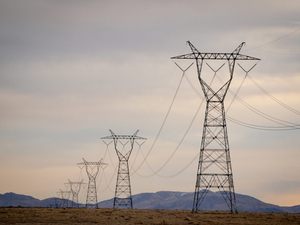
Courtney co-sponsored legislation that would rein in some of the tax incentives for data centers that were in Republican tax bills from 2017 and 2025.
He said the issue started to pop up in the district a few years ago amid plans for a proposed data center at Millstone Nuclear Power Station. The project fell through.
“When it first started, I think people’s understanding of the issue was pretty limited,” Courtney said. “But then, when they realized the fact that this was going to end up making utility costs go up and causing disruption in terms of the town settings and whatnot, it hit the tipping point there. … You got a pretty good taste of the power of this issue politically.”
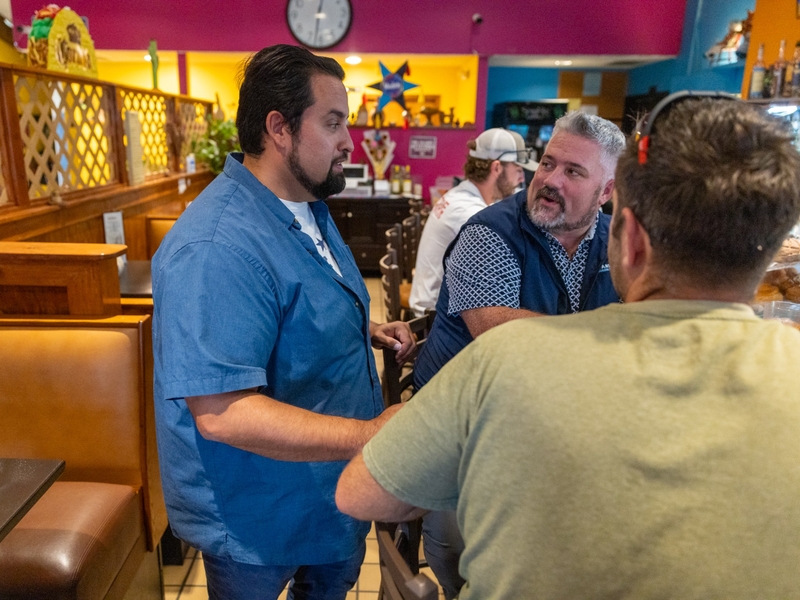
For Austin, he’s made AI guardrails a centerpiece of his campaign. He supports a “kill switch” and wants to keep the technology out of the classroom.
The Connecticut Republican’s views on AI come into stark contrast with many in his own party, including the president, who has touted the technology and the data centers that power it.
Austin said the issue is causing anxiety among Americans over things like job security and learning in schools, and he sees it as a national security issue. And he views it as something that could become a national emergency “if left unchecked.”
“It’s such a powerful technology that if we get ahead of it as best as we can, we can dampen the blow, if you will, when it comes to protecting American industry, when it comes to having data centers in places we don’t want, and having them be net positives for their communities as opposed to being eye sores or just sucking down oodles and oodles of ever-increasing energy,” Austin said.
Austin said Trump has been “very nonchalant” about the growing debate over AI. Austin voted for Trump for president but said he’s willing to take different positions.
“Just because of that doesn’t mean he’s right about everything,” Austin said. “I’m not in favor of the war in Iran, and I’m not in favor of this nonchalant attitude that he and most of Congress evidently have towards AI.”
In the final weeks of the race, Courtney continues to hold a cash advantage, but he and Austin spent similar amounts over the past three months.
Austin has spent money on radio, magazine and Facebook advertising as well as text messages and campaign merchandise like banners, signs, magnets and shirts. He gave his campaign a $240,000 loan.
Austin is on two ballot lines and was cross-endorsed by the Independent Party of Connecticut.
Courtney and Austin are participating in at least two forums, including a meet the candidates event in Storrs that took place on Monday night. Courtney has described the campaign and interactions between the two candidates as “very amicable.”
In-person early voting began Monday, Oct. 19 and runs through Sunday, Nov. 1. The last day to request an absentee ballot is Nov. 2.
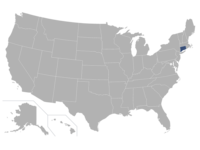
Hartford, CT