Is this America’s most normal congressional race? San Diego candidates run on classic platforms
Oct 20, 2026 | 8:00 am ET

Description
In summary
Democrat Marni von Wilpert and Republican Jim Desmond are sticking to conventional centrist platforms in the closely watched San Diego House race.
Democratic socialists. Carhartt-wearing farmers. Populist physicians.
The insurgent left has come in all forms in California and across the country this cycle.
But a different story is playing out in the open 48th Congressional District, which straddles San Diego and Riverside counties.
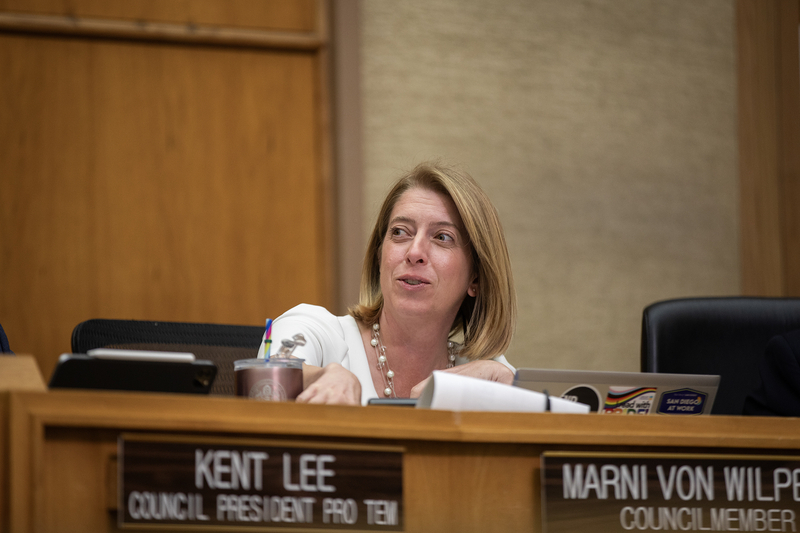
Democrat Marni von Wilpert, a San Diego city councilmember, is running as a true blue establishment type in one of California’s most competitive House races. She faces Republican Jim Desmond, who is running as a budget-hawk style conservative.
Case in point: Former Democratic Vice President Kamala Harris stumped for von Wilpert last month, while Democrats elsewhere have been fearful she’d turn off swing voters still bitter about the previous election.
And Desmond, a San Diego county supervisor, has made slashing taxes and reducing energy prices his main platform while maintaining a healthy distance from President Donald Trump to avoid alienating undecided voters.
Whether cookie-cutter liberal politics or fiscal conservatism will be enough to energize the base and pick up independents in the purple, albeit Democratic-leaning district, is the real question.
Internal polling from the campaigns suggests the race is close. Von Wilpert, leads fundraising at $4.5 million. Desmond has hauled in $3 million.
Over $6 million in outside spending has poured in, more than virtually every other House race in California — nearly all of it for Von Wilpert. That includes more than $4 million from Democrats’ House Majority PAC and $2 million from the Democratic Majority for Israel, a pro-Israeli PAC that boosts Democratic candidates.Trump’s newly formed No Going Back PAC has given more than $330,000 so far to support Desmond.
The independent expenditure spending is third in California behind the closely watched 22nd Congressional District in the San Joaquin Valley between incumbent GOP Rep. David Valadao and Democrat Randy Villegas that’s attracted $19 million from outside groups, and the Stockton-area House race between Democratic Rep. Adam Gray and Republican Kevin Lincoln, which has drawn $7 million, according to California Target Book.
Money will likely be a decisive factor between two candidates who are equally matched, said Paul Mitchell, a Democratic political strategist who drew the new Democratic-leaning maps that reshaped the district.
It’s one of a handful of competitive congressional races in California after Democrats’ 2025 redistricting measure turned Republican Rep. Darrell Issa’s safe Republican seat into a left-leaning battleground. Affluent, conservative voters in Temecula and Fallbrook were joined with voters in Oceanside and Palm Springs, where Harris won the last presidential contest by double-digit margins.
Issa, who has represented the area for more than two decades, briefly flirted with the idea of running in Texas before dropping his reelection bid.
Without an incumbent defending the seat, Democrats see it as ripe for a flip in an election year when they are expected to retake the House from Republicans.
“The 48th is a real matchup between two fairly equally positioned candidates and the challenge is going to be that Desmond is going to have to win against this massive headwind of a pending blue wave,” Mitchell said.
Running with the establishment
Von Wilpert is sticking to her record as a moderate, pro-Israel Democrat, pointing to her ability to pick up her then-red city council seat as a selling point to both liberals and conservatives in the district. And she’s tapped mainstream Democrats such as Harris and California Sen. Adam Schiff to help make that pitch.
At a rally in Escondido last week, Schiff said San Diego County’s high cost of living makes 48th District voters receptive to von Wilpert’s anti-war stance and fiscal arguments, in which she has cast herself as an opponent to Trump, eager to vote for resolutions to end the war in Iran and repudiate his tariff policies.
“This is a district where people are acutely attuned to the high cost of living, the high cost of food and medicine, and are also deeply in tune with military families and concerned about the war in Iran,” Schiff told CalMatters in an interview.
Von Wilpert’s just one of a handful of Democrats who accepted Harris’ help in a time where her unpopularity is still viewed as toxic by some, including candidates in Texas, Kansas and Alaska who rebuffed the former vice president’s support on the campaign trail. The two appeared together at another Escondido rally last month.
“She’s very popular in our district, and people are sick of the Trump White House,” von Wilpert said.
It’s a different approach a few hundred miles north in the toss-up Central Valley seat where the Democratic newcomer Villegas has embraced anti-billionaire, populist messaging alongside Vermont Sen. Bernie Sanders in an effort to oust Valadao. But whether von Wilpert’s strategy to play a safe, routine Democratic campaign in a key swing district is up for debate.
Harris’ appearance on the campaign trail can be risky in parts of the country where she lost, but that’s not the case in San Diego, political consultant Evan McClaughlin said. Democrats gave themselves a three percentage point registration advantage when they redrew the district.
“I’ve seen people write that story about, ‘Well, oh my goodness, nobody wants her in the district,’” McClaughlin said. “That might be true in some places where she didn’t win, but she won this district.”
Keeping it hyperlocal
A former mayor of San Marcos, Desmond has campaigned as a textbook fiscal conservative concerned about burdensome regulations and high taxes. He is one of two Republican votes on the county board of supervisors, often declining to be a contrarian voice on cultural issues but weighing in on immigration, as he did when he opposed the county’s plan to ban federal agents from using its firing ranges.
He’s worked overtime to distance himself from Trump, despite receiving the president’s endorsement. Instead, he focuses on local issues such as opposing a Temecula power line project.
Spokesperson Sam Oh emphasized as much, saying Desmond supports Trump but will act independently of the president in Congress. He said Desmond’s rebuke of Trump’s remarks earlier this month that Iran could “take out” San Diego and Los Angeles was an example.

“I vehemently disagree with President Trump’s comments,” he posted on social media. “No American city is expendable, and no American family should be treated as collateral damage.”
“We are talking to voters about the things they care about. If they want us to talk to us about the president, we are happy to talk about the president,” Oh said.
Oh did not make Desmond available for an interview with CalMatters after repeated requests through email, phone calls and text messages.
But campaigns can only control the narrative so far, and while Desmond wishes to focus on local issues, it’ll be difficult to overcome Trump’s unpopularity, UC San Diego political science professor Thad Kousser said.
“It seems like it would take something extraordinary to mobilize enough Republicans or swing enough independent voters to overcome the geography of the district, but most importantly the national picture of this midterm,” Kousser said.
Sacramento