New coalition aims to keep Virginians covered as Medicaid rules tighten
Oct 20, 2026 | 5:20 am ET
Description
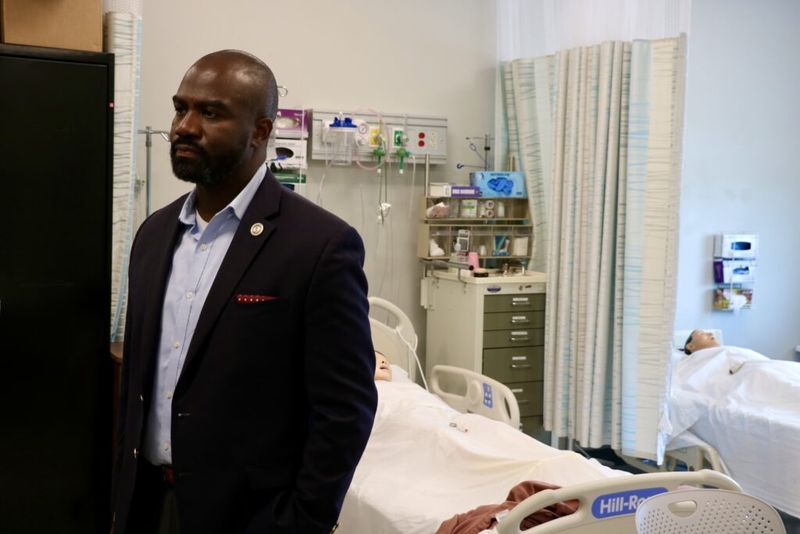
Virginia Health and Human Resources Secretary Marvin Figueroa learns about healthcare workforce training during a tour of Eastern Shore Community College on Aug. 28, 2026. (Photo by Charlotte Rene Woods/Virginia Mercury)
Virginia is bringing healthcare and workforce organizations together to help residents keep their health coverage and navigate new federal requirements for Medicaid and other assistance programs.
Virginia Secretary of Health and Human Resources Marvin Figueroa on Monday announced the Virginia United Coalition, formalizing a partnership that builds on a series of roundtable meetings with him and Gov. Abigail Spanberger throughout the summer, as well as an executive order she signed.
Streamlining communication and collaboration will be paramount to complying with H.R. 1, a federal reconciliation bill Congress passed last summer that includes current and forthcoming changes to Medicaid, hospital funding mechanisms and other social services, including the Supplemental Nutrition Assistance Program.
Starting next year, about 300,000 of Virginians are at risk of losing their Medicaid coverage because of additional verification mandates and eligibility requirements. More than 5,000 lawful immigrants lost their eligibility this month alone.
Figueroa noted that some people losing Medicaid coverage may be inevitable under the federal changes, but the state’s role is to help prevent others from falling through cracks.
“Others may still be eligible but lose coverage because a form was missed, a notice was misunderstood, or the process became too difficult to navigate. That distinction matters,” he said over the summer. “A paperwork failure should not become a healthcare crisis.”
Building on the coalition’s conversations in recent months, participants are launching public awareness campaigns through digital advertising and adding staff or training to help organizations and agencies make referrals.
For instance, UnitedHealthcare will send mail, email and text messages, while the Virginia Association of Free and Charitable Clinics will devote part of its statewide advertising budget to targeted ads helping Medicaid patients understand how to maintain their coverage.
The Virginia Hospital and Healthcare Association will review state-developed notices, forms and other verification procedures to identify potential administrative burdens for patients and help the state streamline the process.
Goodwill Industries and the Virginia Interfaith Center for Public Policy will draw on their community engagement experience. Goodwill is developing a referral process for people seeking employment who are affected by the new work requirements for Medicaid and SNAP.
Virginia Interfaith recently hired a faith network community coordinator to help streamline communications among free clinics, food banks, community health centers and other local or regional partners the organization typically works with.
Along with passing H.R. 1, Congress allowed Affordable Care Act subsidies to expire last year. Those subsidies had helped cash-strapped families without employer-provided insurance who would not otherwise qualify for Medicaid purchase their own health.
Thousands of Virginians have dropped ACA coverage this year, prompting the state to invest $150 million in subsidies residents can access starting next month.
Because uninsured people are more likely to put off preventative care, healthcare providers and some politicians have expressed concern that they may flood emergency rooms when crises arise. Hospitals absorb the cost of unpaid care, but those costs can spread to others over time as health systems negotiate with insurers and rates rise.
Rufus Phillips, president of the state’s free clinics association, said the clinics’ role in the coalition includes helping people avoid losing coverage and providing preventive care to keep those who do lose it out of emergency departments.
Western Tidewater Free Clinic director Ashley Greene told The Mercury earlier this year that her clinic has been able to keep about 75% of its patients from visiting a hospital ER by staying on top of their primary care.
“There’s that much more room for true emergencies,” she said.
Still, Virginia hospitals have documented an 8% spike in ER visits from uninsured patients over the past year.
“I do applaud the state for pulling all the stakeholders together in this fashion,” Phillips said in an interview Monday. “It’s good to collaborate where we can to try to ameliorate the effects of H.R.1.”
Richmond, VA