Louisiana agencies spent $3.2B with nonprofits over 4 years
Oct 20, 2026 | 5:00 am ET
Description
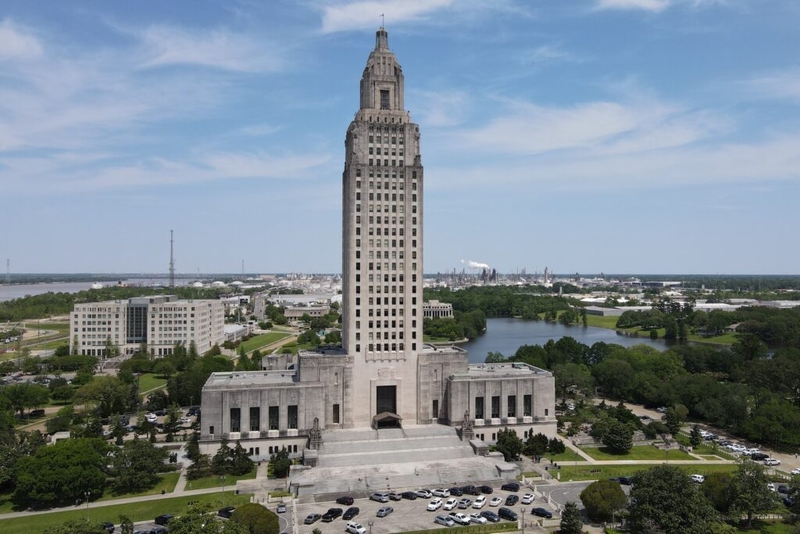
Louisiana spent $3.2 billion in state funding with nonprofit organizations between from July 1, 2021 through June 30, 2025. (Photo by Wesley Muller/Louisiana Illuminator)
Louisiana allocated $3.2 billion in state funding to nonprofit groups over a four-year period that straddled Govs. John Bel Edwards and Jeff Landry’s time in office, according to a Louisiana Legislative Auditor report released this month.
The auditor’s report tracked state government nonprofit spending between July 1, 2021, and June 30, 2025. The period includes the last two and a half years of Edwards’ second term and the first 18 months of Landry’s current term. Each state fiscal year begins on July 1.
Expenditures on “nongovernmental entities,” as nonprofits are referred to in the report, grew over those four budget years from $723.7 million in 2021-22 to $942 million in 2024-25, according to the audit report.
The Louisiana Department of Education spent the most state funding on nonprofits, with $1.9 billion in allocations. By comparison, the Louisiana Department of Health, state government’s largest agency, spent $266.3 million during the same time period, based on the auditor’s calculations.
Much of the education department’s nonprofit spending goes toward charter schools, which are often operated by nonprofit boards. Like traditional public schools, charter schools receive funding from the state on a per pupil basis to cover education expenses.
A large chunk of the education department’s nonprofit money also goes to private schools. They receive funding to help offset the expenses of collecting state data, such as information about truancy and absences, at their campuses. The state also covers a portion of salaries for private school lunchroom staff and transportation expenses at some schools.
Additionally, private schools can receive money to pay for remedial education services and teaching at-risk youth and through a private education voucher program, which Landry has unsuccessfully sought to expand, that covers private school tuition.
Outside of education, other large areas of state nonprofit spending include: grants to upgrade drinking water systems; law firms that represent people facing the death penalty; horse breeding organizations; domestic violence shelters; and groups that attract major sporting events, such as the Super Bowl, to the state.
Landry and legislators turned their attention to state spending on nonprofits after President Donald Trump launched the Department of Government Efficiency, an initiative to reduce federal spending. Landry followed with a similar state-focused effort, called LA DOGE, around the same time in late 2024.
Legislative Auditor Michael Waguespack has said he was asked to investigate state nonprofit spending as part of LA DOGE but initially found it challenging. In May 2025, he told the Louisiana Senate Finance Committee there was no easy way for the public to find all of the contracts state agencies have with nonprofits.
In response, Waguespack and Landry’s staff pushed through a new law state Sen. Heather Cloud, R-Turkey Creek, sponsored. Act 467 requires the state to have a publicly available online database that allows anyone to search state nonprofit spending.
The information is supposed to be integrated into the existing Louisiana Checkbook website, which provides public access to information about state government contracts and vendors.
“The truth is, we don’t really know what all and where all we are investing,” Cloud said at a 2025 hearing on her legislation. The public deserves to know “who’s getting the money, how much are they getting, where are they from, what are they using it for and what their measurable outcomes are,” she said.
This month’s report from Waguespack’s office said the state’s attempt to make its spending on nonprofits more transparent isn’t working as envisioned.
State law doesn’t define what’s a nongovernmental entity, which means state agencies are using different interpretations of the term. The new law wasn’t specific about what types of spending with nonprofits needed to be included, which has led to different agencies relaying different levels of detail about state expenditures.
It’s also not clear which state government entities have to comply with transparency requirements, according to the report. The auditor’s office suggested the legislature consider passing an update to the 2025 law to resolve the confusion.
“State law does not provide key definitions, which impacts the information reported in the NGE database,” Waguespack wrote.
Baton Rouge, LA