Opportunity Zones can help bring investment, development to Idaho areas that need it most
Oct 19, 2026 | 6:00 am ET
Description
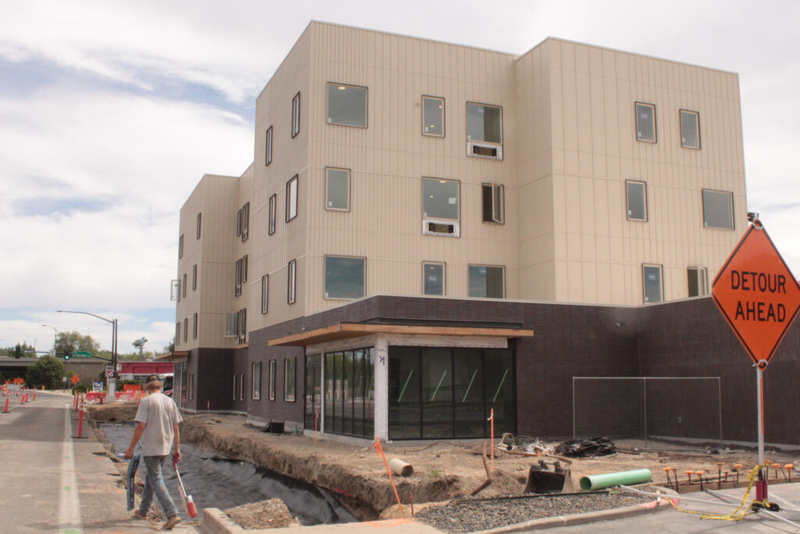
An orange "detour ahead" sign alerts motorists of a new route around new housing construction in Boise in summer 2026. (Photo by Abigail Gerstein/Idaho Capital Sun)
Idaho’s newly approved Opportunity Zones could help bring more housing, businesses and jobs to communities across the state. The attraction for investors is the potential tax savings.
This month, Idaho Commerce announced that the U.S. Treasury approved 25 zones, including areas in Boise, Coeur d’Alene and Post Falls. The new Opportunity Zone designations take effect Jan. 1.
An Opportunity Zone is a designated area where the federal government offers tax benefits to encourage private investment. The idea is straightforward: give investors a financial reason to put money into communities that could benefit from more economic activity.
In Boise, the five areas identified by the city are Downtown, Shoreline, University District, South Boise Village and West Boise. These are general descriptions of the selected areas. The actual boundaries determine whether a particular property is included.
In North Idaho, the officially designated list includes parts of Coeur d’Alene and Post Falls, as well as areas around Blanchard and Kellogg, Smelterville and Wardner. Other designated communities include Caldwell, Garden City, Nampa, Pocatello and Twin Falls.
The state’s announcement provides the complete list and a link to look up the boundaries.
The program connects investors with projects that need money. An investor who sells stock, real estate or a business at a profit may face a tax bill on that gain. By investing an eligible gain through a special investment vehicle called a Qualified Opportunity Fund, the investor may receive tax benefits. The fund puts that money into qualifying property or businesses within a zone. The IRS explains the basic structure here.
Imagine a business owner who sells a company and wants to invest some of the profit. Across town, a developer wants to turn an underused property into apartments with shops on the ground floor. If the project is in an Opportunity Zone and meets the program’s requirements, an Opportunity Fund could connect that investor’s money with the development. The investor receives an ownership interest, and the project receives money to help move forward.
Under the new rules beginning in 2027, a qualifying investor generally can delay tax on the invested gain for five years and reduce the amount of that gain subject to tax. Holding the investment for at least 10 years may also allow the investor to avoid federal tax on qualifying growth in the investment’s value.
Coeur d’Alene also offers a potential partnership story. Idaho Capital Sun reported that Kootenai County and the Coeur d’Alene Tribe both sought designation for the local tract. The application summary identified vacant tribal land as an opportunity for investment involving the Tribe, local governments, and private developers. That possibility deserves attention, although the designation itself does not establish a finalized development partnership.
For investors, those benefits can make a long-term investment more attractive. For developers and business owners, the program can help attract money from people willing to wait for a project to mature. That could support a new apartment building, the redevelopment of an older commercial property, or the expansion of a qualifying business. Residents may benefit from additional homes, employment, and services.
Those outcomes are possibilities, not promises.
Boise, ID