Pentagon searching medical records to identify transgender troops
Oct 16, 2026 | 6:00 am ET
Description
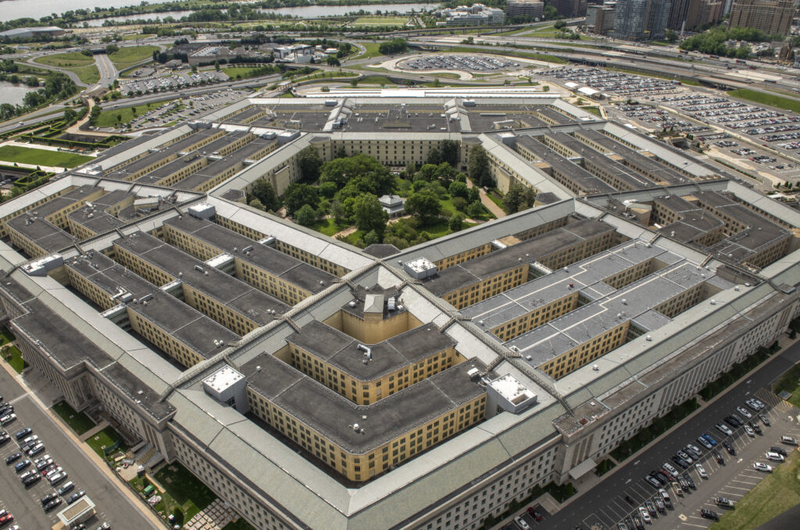
An aerial of the Pentagon, May 12, 2021. (Photo by Staff Sgt. Brittany A. Chase/U.S. Air Force)
By Rachel S. Cohen
The military is searching protected medical records to find transgender troops who have tried to continue serving amid the Trump administration’s ban on transgender Americans in uniform, multiple sources tell Federal News Network.
Commanders around the world have started receiving notices that members of their units are violating Pentagon policy, and are being instructed to begin the separation process. The sweep is believed to have outed several hundred active-duty and Reserve troops, including service academy and Reserve Officer Training Corps cadets, over the past two months, according to the trans advocacy nonprofit SPARTA Pride and Priya Rashid, an attorney with the National Institute of Military Justice.
The Pentagon is moving to separate troops as multiple lawsuits challenging the ban move through the federal court system. In August, the administration petitioned the Supreme Court to weigh in on whether the policy is unconstitutional before a key case goes to trial in January.
The situation has spurred a military-wide scramble to cover the work of troops placed on leave, connect them with legal help and, in some cases, find money and lodging for those facing homelessness.
“The military was my life; it was my everything. I gave my entire self to my job and to my country, and I was serious about my career,” said one sailor, who was granted anonymity because they fear retaliation. “They’re about to completely upend my life and my career, and I’m not prepared for that.”
Finding trans troops
The Trump administration argues that any history of gender dysphoria, the medical condition where a person’s gender identity doesn’t match their biological sex, is incompatible with “high standards for troop readiness, lethality, cohesion, honesty, humility, uniformity and integrity.”
After President Donald Trump returned to office in January 2025, the Pentagon issued directives that formed the basis of the ban. It initially allowed troops to leave during a grace period that ended in July 2025, then began removing them itself.
Now SPARTA officials say dozens of people have reached out to report “unprecedented use of military medical systems to identify individuals.”
Five sources, including two transgender service members facing separation after their gender dysphoria-related diagnoses were flagged to their commands, described what they called a “witch hunt” for honorably serving troops.
Documents obtained by Federal News Network indicate that, in some cases, the information is coming from the Pentagon’s highest echelon.
The Office of the Secretary of Defense has identified service members “who may have a current diagnosis or history of or exhibit symptoms consistent with gender dysphoria in their electronic healthcare record,” according to an internal Air Force email sent July 31 and viewed by Federal News Network.
Spokespeople for the Defense Department, the Defense Health Agency and each of the military services declined to answer emailed questions, citing ongoing litigation.
MHS Genesis, DoD’s electronic health records system, and other databases contain medical histories, prescriptions, mental health notes, TRICARE-covered civilian care documentation and even records from before members joined the military. Personnel databases can also reveal changes in a person’s listed gender over time.
Some, but not all, transgender people experience gender dysphoria; it can be resolved through treatment. Kara Corcoran, SPARTA’s executive director, who is an active-duty Army infantry officer facing separation, said people are being punished for successfully addressing a past medical issue.
“A new line has just shifted and said that these people are inadequate for being able to serve,” she said.
Those details are being shared with unit leaders across the force in conversations and memos from local medical and legal offices, alarming some who argue it violates troops’ privacy and doctor-patient confidentiality.
One separation referral sent to an airman’s commander quoted directly from the service member’s health history, including when they sought treatment for gender dysphoria, their number of counseling sessions and prescribed medication.
The airman said they were never evaluated in order to receive the separation referral, do not currently experience dysphoria and had not shared details of their past treatment with their colleagues.
A widening sweep
SPARTA estimates thousands of trans troops have been kicked out or are in the process of separating, including those placed on leave until their discharge.
Still, it’s difficult to pinpoint the number of service members who identify as transgender. DoD estimated around 4,200 troops with gender dysphoria were in uniform when the ban began. That’s about four times higher than in 2019, when the department told a congressional defense committee that about 1,000 currently serving troops were diagnosed with at least one of seven medical codes related to the condition — a figure pulled from Military Health System data. Other outside estimates have ranged from about 6,000 to as many as 25,000 people.
Out transgender members who publicly transitioned were among the first to go when the policy changes began. But that’s no longer the case in the ban’s second year, sources said.
Rashid, who represents many of the trans troops in their separation cases, said her calls have exploded in recent months, with about 25 people reaching out each week for advice on involuntary separation procedures.
She said she’s heard from many troops younger than 21 who transitioned before joining the military and served in accordance with regulations for their preferred gender from the start.
The latest phase is also flagging older people who transitioned years ago, when they could do so without penalties, and whose current colleagues may not know. The Pentagon is identifying people whose medical notes reference a current or previous transition but who haven’t changed their names or gender markers, as well as those who continue to meet the appearance and fitness requirements of their biological sex.
They are also identifying troops diagnosed with gender dysphoria who didn’t transition, those who sought treatment outside the military but used TRICARE, and those who detransitioned to save their jobs.
“They didn’t do anything wrong,” Rashid said. “They followed the rules and policies and procedures of the year that they were in. We were the ones who changed the rules on them.”
The search is also catching people who aren’t transgender, she said, including members who underwent procedures such as mastectomies or hysterectomies or sought a gender dysphoria diagnosis to obtain treatment for other conditions.
What the military can see
MHS Genesis hosts the patient data of more than 9.5 million troops, spouses and children. Authorized users can search military health databases by diagnosis code to identify people with a certain condition and create registries of patients with particular ailments.
For instance, Military Health System software has been used to track outbreaks of communicable diseases, and identify people at high risk for bone marrow abnormalities.
MHS records have also been used to research service members with gender dysphoria-related diagnoses before. The 2019 report to the House Armed Services Committee lists the specific codes used to identify troops in the MHS Data Repository, including five that fall under gender dysphoria, one for cross-dressing fetishes and one for a history of sex reassignment.
They didn’t do anything wrong. They followed the rules and policies and procedures of the year that they were in. We were the ones who changed the rules on them.
Military medical providers have also relied on that data for studies on issues like inequities in hormone prescriptions for active-duty troops with a gender dysphoria-related diagnosis.
Health privacy laws are more complicated inside the U.S. military. To ensure enough troops are fit for duty at any given moment, HIPAA allows military treatment facilities to disclose protected health information to a service member’s command.
But the Military Health System says that information remains protected under the Privacy Act of 1974, which generally bars disclosure without written consent except in certain circumstances. Those exceptions include cases where an agency’s employees “have a need for the record in the performance of their duties,” according to statute.
The administration appears to be relying on a provision of the 2023 National Defense Authorization Act designed to reduce the stigma around mental health treatment, Rashid said. Congress directed the Defense Department to protect the confidentiality of mental health services except in exigent circumstances. That can allow disclosure when national security, safety or good order and discipline are at stake.
Rashid argues those exceptions don’t apply to transgender troops being removed from the military, including F-35 avionics technicians, pilots, air defenders and surgeons.
“These are zero-fail tasks that would require a high level of occupational finesse, a high level of technical proficiency,” she said. “Mentally unwell people would have a very difficult time.”
The separation process
The Pentagon’s initial guidance on identifying trans troops explicitly said it would do so using medical records. That’s evolved over time.
A March 2025 DoD memo noted that reviewing medical records would be the “primary means” of identifying troops with a history of gender dysphoria. Two months later, another memo clarified that the services should look to troops’ annual checkups and bloodwork to find instances of dysphoria.
That process looks slightly different in each branch of the armed forces. An internal Army order, which was issued in August but was not made public, formalizes a monthslong blueprint for ousting soldiers.
The order, obtained by Federal News Network, explicitly bars commanders from broadly searching health and personnel records to find soldiers with gender dysphoria, or from asking providers for a batch of information about the people in their unit.
It also stops leaders from ordering a behavioral health consult to confirm whether a person has gender dysphoria unless they have personal knowledge of the diagnosis. That could stem from past conversations with the soldier, their request to follow different grooming standards, social media posts, or “reports from higher headquarters to commanders indicating an individual’s medical records reflect a past diagnostic code consistent with gender dysphoria.”
In the Air Force and Space Force, medical readiness boards will determine whether airmen qualify for separation before sending cases to unit commanders, according to the internal email. Commanders then have three business days to send paperwork to a centralized legal team in Washington.
The Navy and Marine Corps have similar processes, with Navy Installations Command handling involuntary separations. Sailors have 10 days to request a separation board or waive that right.
The boards are directed to decide only whether someone was diagnosed with or has symptoms of gender dysphoria, regardless of their character or their job performance. Each service secretary makes the final call on whether to remove them.
What happens next
Separation measures have continued as trans troops await a federal district court’s decision on who will be covered by a class-action lawsuit.
Lawyers representing more than two dozen service members warned in an August filing with the U.S. Court of Appeals for the D.C. Circuit that the Pentagon is expediting removals while a key lawsuit is tied up in appeals. In June, a federal judge allowed Talbott v. USA to become a class action but has not yet said who qualifies to join. The judge’s March 2025 order pausing separations has not taken effect amid administration pushback.
Corcoran said junior enlisted troops are among the most at risk. Those who have served less than six years are ineligible for separation pay, may have to repay part of their enlistment bonus, are last in line for veterans benefits and could become homeless.
SPARTA has provided more than $36,000 in financial support to 29 recipients so far this year, including four who used the money to leave states with anti-trans laws.

Annapolis, MD