Iowa 4th District candidates both disagree with Trump’s Russian diesel deal
Oct 14, 2026 | 11:05 pm ET
Description
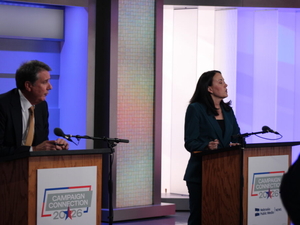
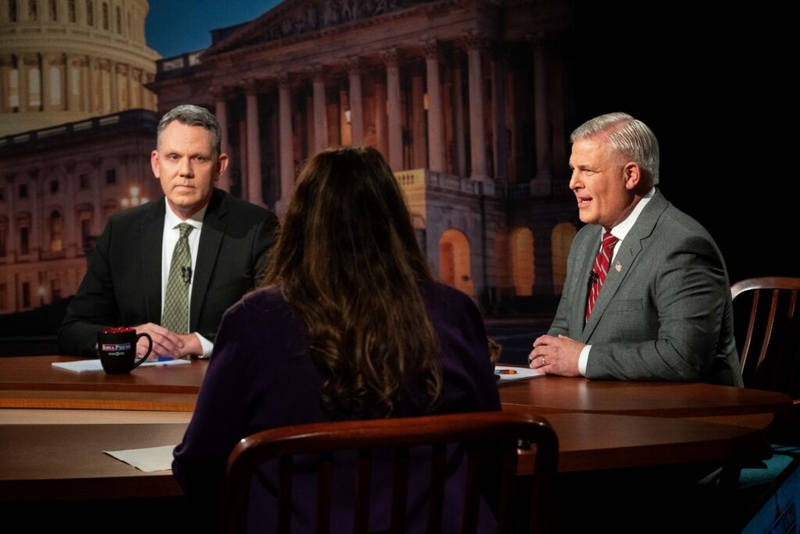
Candidates for Iowa’s 4th Congressional District Dave Dawson, left, and Chris McGowan, take questions during an Iowa Press debate on Oct. 14, 2026, at Iowa PBS in Johnston. (Pool photo courtesy of Iowa PBS)
Republican Chris McGowan and Democrat Dave Dawson, candidates in Iowa’s 4th Congressional District, outlined their potential policy plans and decisions in foreign relationships, agriculture and technology during an “Iowa Press” debate Oct. 14.
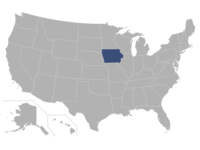
Iowa’s 4th District seat, left open by U.S. Rep. Randy Feenstra, represents the western half of the state and areas north of Des Moines.
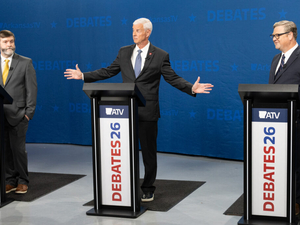
In their first debate Oct. 1, hosted by KTIV in Sioux City, McGowan and Dawson discussed their plans to lower fuel and other costs for Iowans, agreeing that action by Congress was needed to address the issue. The pair agreed again during Wednesday’s debate that the Trump administration’s allowance of importing Russian diesel is not a solution in lowering costs.
“We all recognize there’s an awful lot of pain at the pump, but I have not spoken with any voters who believe that one of the solutions ought to be working with a dictator from Russia who’s engaged in a war that he initiated with Ukraine, one of our allies,” McGowan, Iowa Chamber Alliance chairman, said.
Dawson, an assistant Woodbury County attorney and former state lawmaker, said it was illegal to lift the embargo on Russian diesel under a 2022 law requiring Congress be consulted before doing away with sanctions like these. He called the war in Iran and tariffs imposed by the Trump administration illegal as well, citing the War Powers Act and a U.S. Supreme Court decision that the tariffs were “unconstitutional.”
McGowan said trade in the global economy has been free but not fair to the U.S. for “far too long,” and President Donald Trump’s tariffs are working to “level that playing field.” Trump is trying to bring manufacturing back to the U.S. through these tariffs, McGowan said, which is critically important economically and for national security. One way he said to bring down costs is for Congress to pass year-round E-15 ethanol.
The war in Iran has brought about fuel market destabilization, Dawson said, and has led to further conflict throughout the region. Ending the conflict would aid in stabilizing fuel markets, in turn helping with other rising costs, and stop the national debt from growing further through spending.
“Right now we have a president engaged in an unconstitutional, illegal war that Congress hasn’t authorized, and no one in Congress has been willing to stand up and say this is wrong, and we’re putting too many American lives at risk,” Dawson said. “We’ve already lost 18 Americans, including those from Iowa.”
If he is elected to Congress, McGowan said he would make it one of his top priorities to access classified information from the Pentagon to answer the questions of whether a threat is imminent in Iran, and if so, grave. Once he has that information he said he would be “well informed when it comes time to make those important decisions about our national security and foreign policy,” referring to his potential support of a bill to require further congressional approval for the war.
McGowan said he believes the U.S. has been in Iran “too long,” and the sooner the conflict ends and Americans are brought home, the better. The U.S. needs to define its objectives in the war, which he said should be ensuring Iran doesn’t have access to nuclear weapons and that the Strait of Hormuz remains open, and then “put an end to this” once those objectives have been achieved.
Similar goals, different approaches to farmland, data centers
Both candidates agreed on a number of points, including supporting a farm bill and year-round E-15 ethanol, reforming immigration policy and FEMA, raising penalties for businesses that knowingly employ people not eligible to work in the U.S., leaving final decisions about data centers coming to town to the localities that will be impacted and supporting term limits for everyone in Congress.
However, their reasoning and approaches to making their hopes happen differ. While McGowan and Dawson both supported making it easier for young farmers to get Iowa land to start and keep their own farms, McGowan said he wouldn’t support restrictions on private equity purchases of farmland, questioning whether it is the government’s role to get between a farmer and potentially the highest bidder for their land. Dawson said he would support a private equity ownership ban, as well as one on “out-of-state foreign ownership of our farmland in Iowa.”
In Woodbury County, located in the 4th Congressional District, the county board of supervisors has placed a 12-month moratorium on data center applications. Data centers should be required to meet certain criteria before a community decides whether the project should be approved, McGowan said, including paying for all infrastructure and mitigating light and noise from the center.
Dawson agreed with the county’s moratorium, he said, as it is “the correct entity to make the decision.” However, the federal government can have a hand in ensuring data centers follow rules and don’t harm communities.
“At the federal level, we really do need to make sure that all businesses that are conducting business throughout the United States are complying with environmental standards, so that our air quality and our water quality are not negatively impacted by these businesses,” Dawson said. “And I do support making sure that utility rates are not going to go up for local consumers.”
McGowan and Dawson both said they want to protect Social Security, which is currently facing a shortfall, but McGowan said it should be protected for those currently participating in the program and changes should be scrutinized for future generations not currently enrolled, such as raising the retirement age.
Dawson said he’s participated in the Social Security system since he got his first job at 16, and the best way to fix the shortfall is to lift the income cap and have millionaires and billionaires to pay more into the program. He said he’s opposed to raising the retirement age or cutting benefits.
Both candidates would also bring the civility they’ve shown each other in the 4th Congressional District race to Congress should they be elected, they said.
“I think that we both share a sense that our campaign is rooted in civil discourse, that we’re focused on policy and not personalities, and I hope that our families, both of our families, can look at the race … that we’ve run and take pride in the way that we have conducted ourselves,” McGowan said.
Des Moines, IA