WV school leaders unveil new school funding formula with hope Legislature will consider it
Oct 14, 2026 | 12:54 pm ET

Description
The West Virginia state Capitol in fall 2021. (West Virginia Legislative Photography)
As more schools across West Virginia say they’ll close their doors, the state school board unveiled a robust school funding formula overhaul that they hope lawmakers will consider.
Debate over the school funding formula is expected to be a leading topic in the 2027 legislative session.
The state’s decades-old, seven-step school funding formula has been linked to dozens of school closures since it ties funding to student head count. West Virginia’s overall population — and student population — is declining. An additional 5,000 students have left the public school system since last October.
School budgets have been further strained by the growing need of special education students in the state. The current funding formula largely doesn’t account for special education expenses.
On Tuesday, State Schools Superintendent Michele Blatt said the department now has a working document shared with Gov. Patrick Morrisey and legislative leadership that would restructure the school funding formula to address declining enrollment along with needs in special education, high poverty areas, rural schools and more.
“There was a lot of discussion last legislative session, but not really any legislation that really addressed it was crafted,” said state Schools Superintendent Michele Blatt on Tuesday at the state school board meeting.
“This is a document that puts everything that’s been discussed over the past two or three years, in my opinion, in one place, so that we can have further discussions and determine the direction that not only the state board wants to go, but the legislature,” she added.
There was no overall price tag yet for the proposed changes, which the Legislature will consider in the potential overhaul.
The proposed changes for the special education funding change alone are estimated to cost $190 million, according to School Financial Operations Officer Uriah Cummings with the state department of education.
The education department suggests weighted funding for the three tiers of special education students. Levels would be based on service intensity rather than disability category alone.
There are more than 46,000 level-one special education students in West Virginia.
“We are a state in which both lead the country in special ed population as a saturation of general ed population, as well as a low (supplemental educational services) status student, and to not have some sort of weight within our formula for those two types of students to me is an inadequacy within our formula,” Cummings said.
Federal special education funds account for about 12-17% of special education costs, according to Cummings.
The proposed legislation would require or restrict the funds to be spent specifically on special education students. There would also be weights added in the school funding formula for English language learners and gifted students.
“County boards of education and public charter schools across this state are actually incurring additional costs to be able to educate these students in terms of in comparison to the general ed population,” Cummings said.
Declining student enrollment would be addressed in the proposed formula revamp by looking at the greater of prior-year second-month enrollment or a three-year average while determining funding. The education department said this provides protection against abrupt enrollment-related losses.
The state has also seen students exit the public school system for the Hope Scholarship, the state’s education voucher program. More than 26,000 students are using the program this school year since it became available to all West Virginia students for the first time this school year.
The proposed changes would also revise the school personnel and staffing ratios to better align with school needs. It would also treat public charter schools as school districts for state aid formula purposes and fund them through the same methodology.
Additionally, each county would be required to annually share funding data, enrollment and payments.
The legislative session concluded in March without lawmakers making any changes to the school funding formula after debate on multiple bills to deal with the issue. Roadblocks often centered on funding concerns; a House bill updating the funding formula would have cost $214 million.
Following the session, Senate and House of Delegates education chairs have been working on the formula revamp as well as gathering caucus support for the change.
Morrisey’s office has laid out its own ideas for revamping the state’s school funding formula. The governor wants to see the formula simplified and more money directed to classrooms; that may not equate to increased financial investment into public schools since West Virginia ranks near the national average in terms of per pupil spending.
Board agrees funding is inadequate in response to ACLU lawsuit
The American Civil Liberties Union of West Virginia recently filed a lawsuit over the funding formula, asking the the West Virginia Supreme Court of Appeals to require lawmakers to correct it. The suit was filed on behalf of a sixth grader in Lincoln County Schools, and Lakin Patten, the student’s parent.
The lawsuit listed the state school board, Blatt, House Speaker Roger Hanshaw, Senate President Randy Smith and others as respondents.
In response to that suit, school board members on Tuesday approved a motion that the board’s attorney advance their position in the case, and that the current school funding formula is inadequate.
While it is the Legislature’s constitutional responsibility to provide for a thorough and efficient system of free schools, our Supreme Court has held that it is the board’s constitutional duty to ensure the complete executive delivery and maintenance of a thorough and efficient system of free schools. The current school funding formula fails to allow the board to fulfill that duty,” said board member F. Scott Rotruck.
Board member James Paul voted no on the motion, saying that the motion concedes a claim that each board member failed their constitutional duty to provide an adequate school system. He believes the Legislature is the remedy for addressing the school funding formula, not the courts.
“I support a serious review of the formula … I don’t support conceding that his board failed in its duty,” Paul said.
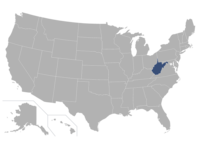
Charleston, WV