Supreme Court won’t hear bid to overturn sanctions against Kari Lake’s lawyers
Oct 13, 2026 | 5:12 pm ET
Description
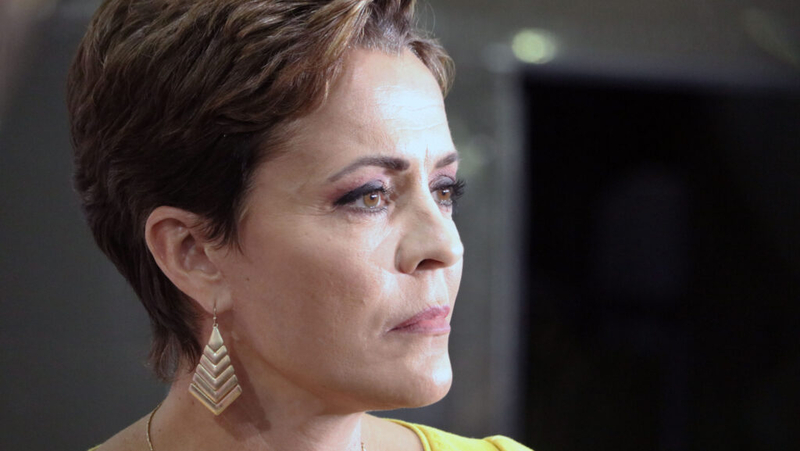
Kari Lake at a campaign event in Scottsdale on Oct. 19, 2022. (Photo by Jerod MacDonald-Evoy/Arizona Mirror)
The U.S. Supreme Court on Tuesday rejected an appeal to overturn hundreds of thousands of dollars in legal sanctions against lawyers who represented failed gubernatorial candidate Kari Lake and made baseless claims about election fraud in her bid to upend how Arizona conducts elections.
The high court released a list of cases it will hear and those it declined to, with the petition from Lake’s former lawyers among those that were refused. No explanation was given for why it will not be considered.
In 2022, Lake and then-Secretary of State candidate Mark Finchem filed a lawsuit against the Maricopa and Pima county boards of supervisors aimed at preventing them from using electronic tabulators to count votes during that year’s midterm elections.
The pair’s legal team, which included Minnesota attorney Andrew Parker, Washington, D.C., employment attorney Kurt Olsen and celebrity attorney Alan Dershowitz, argued that the state’s voting machines are susceptible to hacking. They wanted the federal courts to block election workers from using them to decide the outcome of the 2022 elections, despite Arizona law requiring the use of tabulators.
The case was ultimately thrown out by a trial court judge, who dismissed the allegations as “conjectural” and “frivolous” and slapped the attorneys with $122,000 in sanctions. Judge John Tuchi wrote that his decision to punish the lawyers wasn’t intended to let Finchem and Lake off easy, but rather to dissuade attorneys from making similarly evidence-free arguments in the future.
“To sanction Plaintiffs’ counsel here is not to let Plaintiffs off the hook,” he wrote. “It is to penalize specific attorney conduct with the broader goal of deterring similarly baseless filing initiated by anyone, whether an attorney or not.”
The 9th U.S. Circuit Court of Appeals upheld that ruling a year later, though Dershowitz’s involvement in the sanctions was dismissed because his participation in the case was limited. The petition to the U.S. Supreme Court was the last hail mary for Parker to avoid paying the sanctions. Olsen was not involved in the appeal.
Attorney Nathan Lewin, representing Parker in his appeal, urged the justices to take the case, warning that the sanctions chill the willingness of lawyers to test legal theories.
“The sanctions in this case have grave implications for our justice system and will deter attorneys from bringing creative, aggressive, or novel claims of the sort that are often necessary to shape and reshape our legal landscape,” Lewin wrote.
But attorneys for the Maricopa County supervisors who filed a response to the appeal told the justices that the sanctions were the natural outcome of filing a lawsuit without having any facts or evidence to back up its claims.
“Petitioners were not sanctioned for filing a difficult-to-win case,” reads their response. “They were sanctioned because their filings rested on speculations and presumptions.”
Olsen and Parker faced ethical complaints in 2024 for the tabulator lawsuit, but a disciplinary panel ultimately dismissed those complaints.
Phoenix, AZ