Ethics complaint over NJ school board member’s Facebook posts dismissed
Oct 13, 2026 | 3:43 pm ET

Description
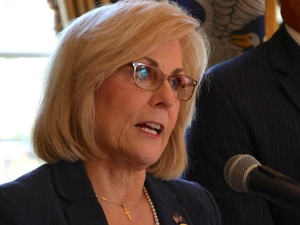
A state ethics board dismissed a complaint against a school board member accused of violating rules by soliciting feedback from residents on Facebook. (Photo by Anne-Marie Caruso/New Jersey Monitor)
The New Jersey School Ethics Commission has dismissed a complaint against an Alloway School Board member, rejecting allegations that she violated ethics rules when soliciting resident feedback on hypothetical school tax increases on social media.
The commission ruled there is insufficient evidence to lead a reasonable person to believe Gail Nazarene made improper promises, impermissibly directed school personnel, or disclosed confidential information when she asked about hypothetical tax increases in three Facebook posts.
Greg Greubel is a senior attorney at the Foundation for Individual Rights and Expression, which represented Nazarene in a legal dispute in federal court about the commission’s investigation of her.
“New Jersey did the right thing this time, and we are grateful Gail’s case brought more attention to the First Amendment rights of school board members. But this attack on Gail’s free speech rights never should’ve happened in the first place,” he said.
The complaint’s dismissal comes nearly a year after Nazarene sued state education officials, arguing the commission’s interpretation of the School Ethics Act impermissibly chills speech by exposing school board officials to legal sanctions for public statements.
Sara Cobb, a since-departed member of the Salem County township’s school board, filed an ethics complaint against Nazarene last year, alleging Nazarene violated ethics rules that bar personal promises that could compromise a school board and require members to keep confidential information that could injure the school or individuals, among others.
The complaint was spurred by social media posts where Nazarene asked residents for feedback on school tax increases ranging between 9% and 30%. After criticism from another board member and Alloway’s chief school administrator, Nazarene appended disclaimers to some posts that said she was asking in her capacity as a private citizen or not on the board’s behalf.
A federal judge dismissed Nazarene’s suit last month, finding she lacks standing because the School Ethics Commission had not ruled on her complaint, which it could not weigh while her lawsuit was ongoing.
Anyone can file a complaint with the school ethics commission, the judge reasoned, and the low bar meant any chilling of speech was self-imposed unless the commission moved to sustain a charge.
Still, the saga over Nazarene’s speech has spurred legislation that would bar officials from reading the School Ethics Act in a way that limits a board member’s speech on matters of public concern, including those related to schools they oversee.
The bill’s sponsor, Sen. Declan O’Scanlon (R-Monmouth), said the commission had issued a tortured interpretation of the law that resulted in the muzzling of elected officials.
“The resources that are wasted on this crap — it is outrageous,” he said. “Nothing like this exists for municipal officials, and it shouldn’t exist for school board officials. My bill needs to pass, and this is another great example of why the bill is needed.”
Trenton, NJ