Alaska candidates for governor address growing gap in childcare
Oct 12, 2026 | 7:45 pm ET

Description
Children's bicycles are parked outside of the Interior Alaska Center for Non-Violent Living in Fairbanks, Alaska on September 14, 2023. (Photo by Claire Stremple for the Alaska Beacon)
One of the many issues before the next governor of Alaska will be the growing gap between available providers and the demand for childcare, which some advocates are calling a “childcare crisis.”
Many Alaska families are grappling with finding reliable care due to a lack of childcare facilities and workers that contributes to fewer slots, long waitlists and rising costs for families.
An estimated half of Alaskan families cannot fully participate in the workforce because they lack access to childcare, according to thread, a statewide childcare resource and referral organization. The organization estimates that’s more than 25,000 Alaskans that could be more active in the workforce.
The average cost to Alaska families is estimated at over $14,000 per year, thread estimates, sometimes surpassing the monthly cost of rent.
Advocates say a patchwork system of federal, state and local funding is insufficient in providing Alaska families with adequate childcare, with childcare providers reporting struggles to complete licensing requirements to open new facilities, provide competitive wages to workers and keep daycare operations going.
Democrat Jonathan Kreiss-Tomkins and Republicans Dave Bronson and Treg Taylor said they would seek to reduce state regulations for childcare providers and promote incentives for employers to provide childcare, if elected.
Kreiss-Tomkins and Bronson also said they would support recurring state funding for childcare.
The three are among four candidates running for governor in the November election, along with Republican Bernadette Wilson. Wilson’s campaign declined to comment on her platform on childcare issues after numerous calls, texts and emails over the course of a week.
Kreiss-Tomkins, Bronson and Taylor said their administrations would prioritize expanding access to childcare, especially in rural Alaska.
Bronson called childcare “essential infrastructure” for the state’s economy. “I would work with local communities, tribes, employers, school districts, and existing providers to expand the options that fit each community. So whether that’s a licensed center, a home-based provider, a cooperative, or an employer-supported program,” Bronson said. “Rural Alaska needs solutions designed locally, because a model that works in Anchorage may not work in a village.”
Kreiss-Tomkins also said he would support opening smaller, home-based providers and for childcare workers in rural areas, which would also boost rural employment opportunities. “Making training available to providers creates jobs for people who already live and work in rural communities and lets parents go to work, go hunting, or back to school,” he said.
Currently, only some Alaskan families receive childcare assistance based on available funding and eligibility. The non-profit thread estimates that 23% of children receive a subsidy from the government or employer.
Kreiss-Tomkins cited a true cost study commissioned by the Dunleavy administration in 2024 that showed a wide gap between childcare assistance and the cost of care — which is significantly larger in rural areas — in his support for boosting state childcare funding.
“Besides direct investment in programs like Child Care Assistance at the state level, I think one aspect we should clearly do more with is investment in the child care workforce, and partner with unions, tribes and universities to make those investments,” Kreiss-Tomkins said.
Bronson also said he supports recurring state funding, as well as “targeted employer partnerships” and pursuing federal grant programs.
But Taylor disagreed, saying before more state funding he would look to federal funding and tax credits for families and employers. “Any state support would come from the existing budget, not new taxes, and be tied to one result: more open slots for Alaska families,” he said.
All three candidates said they would pursue state incentives, like tax credits, for employers to provide childcare.
The three candidates split in views on expanding statewide childcare through implementing a statewide “universal” pre-Kindergarten program. Currently some Alaska school districts provide preschool and early education programs, but not all.
Kreiss-Tomkins said it would be a long-term intention of his administration to “get to a place where pre-K is something all parents in Alaska can count on.”
“That’s a lofty goal, and maybe a ways away, but I want to bring local governments, the state government, and other partners to the table to work toward it,” he said. Kreiss-Tomkins said he would also aim to expand paid family leave to reduce the demand for infant childcare.
Bronson and Taylor said they do not support a statewide pre-K program. Bronson said instead he supports families’ choices for public, private, tribal and community-based options. Taylor said he supports existing pre-K for children who qualify and choices for families, including homeschool programs.
Likewise the Democratic and Republican candidates split on their approaches to supporting childcare worker recruitment and retention.
Kreiss-Tomkins said he would support childcare workers through loan forgiveness programs, and “robust” apprenticeship programs. Bronson also said his administration would “work with employers and training institutions to recruit and prepare new workers.” Taylor said his administration would “lower barriers to entry” by reducing credential and education requirements for childcare jobs.
The Trump administration has announced plans to roll back regulatory requirements for Head Start programs, which serve children ages three to five years old, including changing provider ratios to allow more children per adult.
Bronson said he opposes an increase in ratios “as a quick fix,” citing safety. Kreiss-Tomkins did not say directly that he was in opposition of a ratio increase, but said he wants to be “thoughtful” with changing staffing ratios. “I think for infants, especially, there should be reasonable ratios on the number of infants any one caregiver is responsible for,” he said.
Taylor said he supports increasing staff ratios, in order to expand childcare programs, “with safety as the line I won’t cross,” he said. “The bigger threat to providers today is rules that make it impossible to staff a room or make the business pencil out. More flexibility helps them stay open.”
All three candidates who responded to the Alaska Beacon expressed support for reducing regulations for childcare providers licensed under the Alaska Department of Health to help ease barriers and help expand new childcare centers.
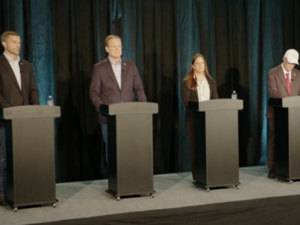
Wilson also indicated at an October candidate forum in Juneau that she would focus on cutting regulations in order to expand childcare capacity.
“For this administration, our first day in office, we’re going to come back and we’re going to roll those pages of bureaucratic regulations off the books. If they shouldn’t have been there, and the governor’s got the ability to do it, then by God, we’re going to get in there, and we’re going to do it,” she said. “We’ve got to roll those back and get them out of the way.”
Juneau