More SC schools get top scores than ever, but education leaders say there’s still work to do
Oct 12, 2026 | 6:49 pm ET
Description
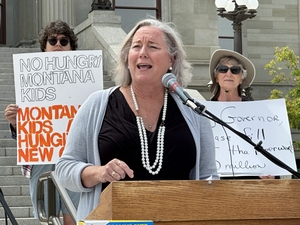
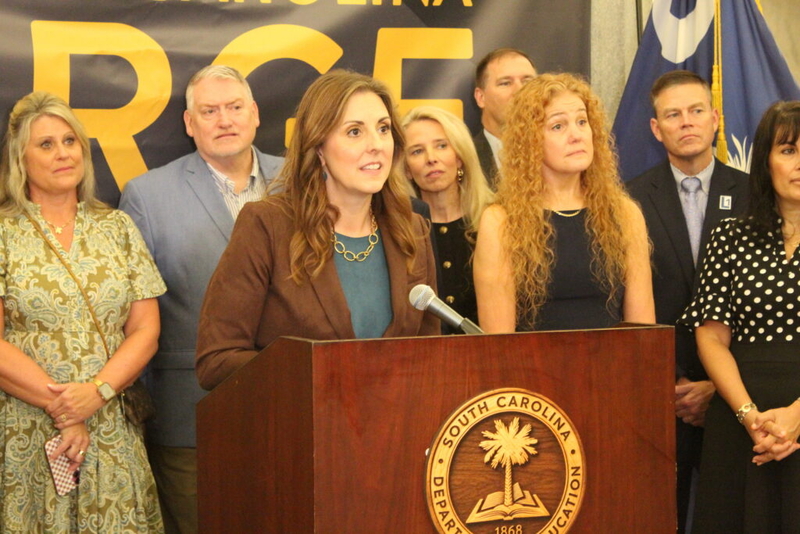
State Superintendent Ellen Weaver announces school report card results at the Statehouse in Columbia, S.C., on Monday, Oct. 12, 2026. (Photo by Skylar Laird/SC Daily Gazette)
COLUMBIA — More schools got top scores on South Carolina’s 2026 state report cards than in any year since the rating system began, according to data released Monday.
Schools continued to improve across all metrics used to grade them, including test scores, classroom surveys and student progress. Education officials pointed to statewide changes in education policy and funding as the reasons behind the improvement.
“We have so much to celebrate,” state Superintendent Ellen Weaver told principals, superintendents, teachers and reporters at the Statehouse. “We have a lot of important work ahead.”
Nearly a quarter of the state’s schools, or 320, received an “excellent” rating, the highest possible score. That’s an improvement of 50 schools over last year and the highest number since the rating system was revamped in 2018, according to the Department of Education.
The number of unsatisfactory schools also declined. This year, 24 schools received the lowest possible rating, compared with 31 last year, according to report card data.
More schools moving out of the unsatisfactory rating means more children receive more than a bare-minimum education, said Patrick Kelly, lobbyist for the Palmetto State Teachers Association. At the same time, having two dozen schools still in that category means students continue to get a subpar learning experience, he said.
Education leaders aren’t done working until every school is out of the lowest categories, Kelly said, also referring to the 103 schools rated “below average.”
“As long as we have any schools rated in the bottom two categories, that’s concerning,” he said.
Overall, though, he considered the results promising, especially after several years of sustained improvement, he said. More than 90% of students are attending schools rated average or better, he pointed out.
“There’s a lot here that’s encouraging,” Kelly said.
Reasons for improvement
Several policy changes at the state level helped push schools out of the lowest categories and toward excellence, Weaver said.
Legislators have made strides in teacher recruitment and retention over the past several years. This year, the state budget increased the minimum starting pay for a first-year teacher to $50,500, surpassing the governor’s goal set four years ago.
Other laws, such as the sweeping Educator Assistance Act passed last year, were meant to improve working conditions for teachers, including dedicated planning days and more transparency about their salary before they sign contracts for the next school year.
Those changes helped drop the number of teacher vacancies statewide, said Kelly, who also teaches advanced government classes in Blythewood. And when the state invests in educators, student performance improves, he added.
“That’s what students are showing right now,” he said.
Policies also changed how and what students are learning. Teachers in kindergarten through third grade had to complete a two-year training program on “the science of reading,” with the goal of improving reading scores. Education leaders say they’re already seeing improvements, and statewide test scores used in report cards reflect that.
While the number of students reading on grade level surged in end-of-year standardized tests taken last spring, more than half of students still couldn’t do math as expected for their grade. A similar training program on math, called the Palmetto Math Project, launched this year with the hopes of similarly springboarding students’ math skills.
“Our philosophy is simple,” Weaver said. “High expectations paired with high support are the winning formula for student success.”
Also helping is a 2024 law included in the state budget that bans cellphones during the school day, Weaver said.
“Our Free to Focus statewide policy is giving students new freedom from the constant distraction of cellphones and giving our teachers freedom to focus on instruction and what they’re there to do: teach,” Weaver said.
For Jenifer Seymour, principal at Centerville Elementary School in Anderson School District 5, jumping from below average to excellent this year was the result of years of hard work and changes in attitude among students and teachers, she said.
“There were no changes in policies,” Seymour said. “It was just really about our whole staff coming together and looking at every single student, where they are, making sure we’re meeting them where they are for them to be successful.”
Holding onto the excellent rating will take a lot of work, Seymour said.
The same is true for the state as a whole, Kelly said.
After Gov. Henry McMaster leaves office in January, the state’s scores could start to backslide unless the incoming governor picks up the mantle, he said.
“For all the positive momentum we have now, we could fly backward,” Kelly said.
Areas for improvement
The on-time graduation rate increased slightly this year, from nearly 87% to close to 88% of students graduating in four years. That means students are still graduating at the highest rates they have in a decade, Weaver said.
While a high graduation rate is good, that doesn’t always reflect the reality of how much students have learned, Kelly said.
Some students receive a diploma without the same rigor as their peers, he said. Incentivized to get as many students as possible across the finish line, some schools offer easier remedial classes for students who failed a class the first time, Kelly said.
“I think that’s well-intentioned in getting students to the finish line, but we also need to make sure there’s value to getting a high school diploma,” he said.
Grade floors may also inflate graduation rates. Some schools still set minimum grades for students and bar teachers from giving lower scores — often a 50 in a state where 60 is a passing grade. That allows students to scrape by in class while doing little to no work. Legislators passed a law this year banning the practice. That might cause graduation rates to dip next year as fewer students pass their classes, Kelly said.
Just over a third of high schoolers were considered college-ready, a metric based on their college entrance exam results, college credit earned through dual-enrollment, and scores on Advanced Placement tests.
The number of students who received a passing score on an AP test, which can earn them college credit, increased this year, according to report card data. But the percentage of those hitting benchmarks on SAT or ACT college entrance tests dropped.
The report card also measures career readiness, which includes passing a test gauging workplace skills, getting a technical education certificate, completing a state-approved internship, or getting approved to enlist in the military.
Roughly 77% of students met that criteria this year, according to the report card data.
A solid foundation
If the state really wants to improve student outcomes, officials should start at the very beginning, said Dena Crews, president of the South Carolina Education Association.
Roughly 39% of kindergarteners started school prepared last school year, meaning they tested ready for their age on language, math concepts, basic social skills and dexterity, such as the ability to hold a crayon, according to scores on the Kindergarten Readiness Assessment.
That means more than half of students started kindergarten behind their peers, Crews said. While some students can get on track, others fall further and further behind in a snowballing effect that’s increasingly difficult to correct.
“When students aren’t coming in ready, they are already behind, and teachers need to play catchup,” Crews said.
Preschool programs are highly beneficial in helping students learn the necessary foundational skills, studies have found. But not everyone has access to those programs, Crews said.
Last year, hundreds of eligible 4-year-olds sat on a waitlist for state-funded preschool, despite the state having thousands of open spots, a report found. Some parents may not know why preschool is important or how to enroll their child, Crews said, adding the state can do more to educate parents.
The state Department of Education will continue pushing programs meant to improve the state’s public school system and student scores, Weaver said. She noted the agency has turned in its funding request for the year, though she didn’t go into detail about what it included.
“Our goal is a better future for every single one of our South Carolina children,” Weaver said. “And so, while we celebrate these historic results, we are not declaring victory. We’re building momentum.”
Columbia