Court blocks SNAP penalties, clarifies eligibility, but advocates still worried
Oct 12, 2026 | 5:00 am ET
Description
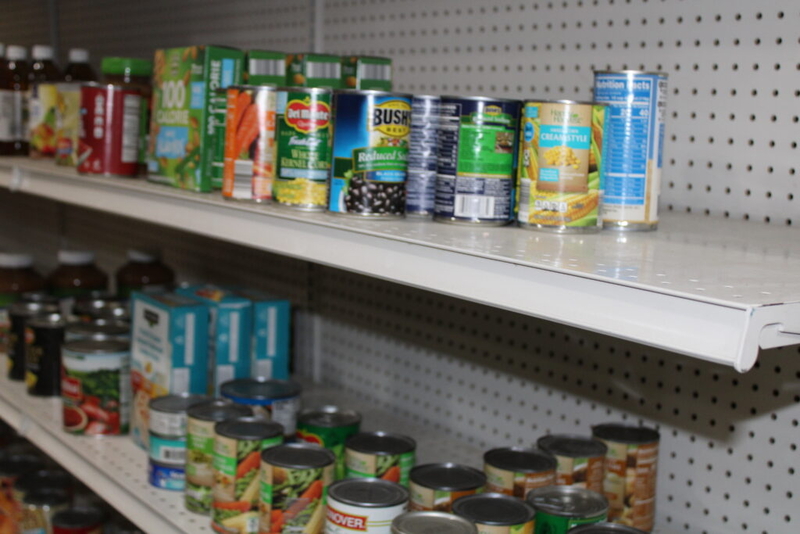
Thousands of immigrant families have already lost access to federal food assistance due to shifting eligibility restrictions based on documentation status. (Photo by Danielle J. Brown/Maryland Matters)
A recent court ruling may have saved states from “potentially ruinous financial penalties” related to changes in SNAP rules, but advocates worry that thousands of Maryland families may still lose coverage as they try to navigate the changes.
Those changes stem from provisions in H.R. 1 — the One, Big Beautiful Bill Act — that affect individuals’ eligibility for the Supplemental Nutrition Assistance Program and states’ management of the program. At stake for immigrant families is the availability of food assistance; for the states, potentially hundreds of millions of penalties if they fall short of the new rules.
Both groups got a break when U.S. District Judge Mustafa T. Kasubhai in Oregon on Sept. 17 sided with 22 states and the District of Columbia, which argued new restrictions on SNAP eligibility ran afoul of federal regulations and arbitrarily barred some non-citizens from receiving food assistance.
And while Kasubhai’s ruling may provide clarity over which immigrants are barred from SNAP and which ones qualify, advocates for immigrants and food assistance programs say the uncertainty and the fear stoked in immigrant communities is driving some people away from federal programs, even the ones they qualify for.
The U.S. Department of Agriculture, which manages SNAP, “tried to read the SNAP law in a way that shut out refugees, asylees, humanitarian immigrants out of SNAP even after they became lawful permanent residents,” said Ray Serrano, national director of research and policy at the League of United Latin American Citizens. “The court said, ‘No, they have a green card. They qualify for SNAP.’
“This ruling clarifies who can get SNAP … but I think the fear and the chilling effect from it is still going to be there,” Serrano said.
Mixed-status immigrant households expected to lose benefits under new public charge rule
Prior to H.R. 1, certain categories of noncitizen immigrants were allowed to receive SNAP benefits, such as those who entered the country as refugees or had been granted asylum, as well as some who were granted humanitarian parole.
H.R. 1, which was signed into law on July 4, 2025, limited SNAP eligibility to immigrants lawfully admitted for permanent residence, Cuban and Haitian entrants, and individuals lawfully residing in the United States in accordance with a Compact of Free Association. The USDA issued clarifying guidance to states in the months that followed.
In a complaint filed against the administration in November, Maryland and the other states claimed the USDA issued a memorandum in October that “misleadingly” provides that some noncitizen populations were not eligible for SNAP unless they obtained lawful permanent resident (LPR) status, commonly known as “green card holders.”
States argued that H.R. 1 and follow-up guidance from the administration arbitrarily excluded immigrants in “humanitarian immigrant groups” from receiving benefits. Groups identified as ineligible for SNAP, unless they have a green card, included Certain American Indians Born Abroad, Conditional Entrants, Battered Aliens, and Victims of Severe Trafficking and Certain Family Members.
But the guidance also suggests that immigrants who are refugees, individuals granted asylum, parolees and other humanitarian immigrant groups are categorically not eligible, without an acknowledgement that those immigrants could also receive SNAP if they receive green card status.
“Irrespective of someone’s immigration status before becoming an LPR, once they obtain their Green Card, they are eligible for SNAP if they meet other statutory requirements,” the states argued in their November complaint.
Kasubhai agreed that the October 2025 guidance from the administration was “arbitrary and capricious” and ran contrary to the law, affirming that humanitarian immigrant groups can receive SNAP benefits if they become get green cards, just as other noncitizen categories.
“The Non-Citizen Guidance itself provides no explanation as to why Humanitarian Immigrant Groups are omitted from the list of non-citizen groups that are … eligible for SNAP if they are an LPR,” Kasubhai wrote. “The Court’s judgment will reflect that LPRs are eligible for SNAP regardless of prior status.”
It’s not clear how many Maryland households the court decision could apply to, but provisions in H.R.1 have already disrupted SNAP benefits for more than 4,500 households that no longer have access to meal assistance due to citizenship status under the legislation, according to data from the Maryland Department of Human Services.
The states’ filing against the H.R. 1 rules reported that Maryland agencies “experienced a twenty-five percent increase in calls from residents affected by the Non-Citizen Guidance.”
“Families are depending on SNAP … It’s our nation’s and our state’s first line of defense against hunger,” said LaMonika Jones, director of Maryland Hunger Solutions. “When a household … becomes eligible, and ineligible, and they lose access, that increases a household’s economic instability, their financial instability, their food insecurity.”
Jones says that Maryland families are struggling to keep up with the shifting eligibility requirements to qualify for SNAP, which can have devastating impacts.
“Since H.R. 1 passed in July of 2025, we’ve had close to 40,000 (Maryland) households lose access to SNAP … that includes households with children,” Jones said. “They’re going to have to use whatever additional money they have to now cover the cost of food, which means that something else in their household budget will have to get cut.”
Kasubhai’s decision also prohibits administrative errors issued under the USDA’s October noncitizen guidance from being calculated in a state’s “payment error rate,” which will determine how much states have to pay. The Trump administration failed to give states adequate time to adhere to the guidance as required by federal regulation, the judge wrote.
“Defendants have placed Plaintiffs in an impossible situation to timely implement H.R. 1’s changes to SNAP though contradictory, absent, and misleading messaging,” Kasubhai said in the decision. “Defendants now seek to penalize Plaintiffs’ inability to overcome that impossibility by retroactively setting an exclusionary period that gives rise to potentially ruinous financial penalties.”
Maryland may be steeply penalized after reducing SNAP payment error rates
USDA regulations allow states a 120-day grace period to implement new rules under SNAP so states can incorporate those changes without fear that administrative errors during the adjustment period will contribute to the payment error rate. Under H.R. 1, states with high error rates face steep financial penalties based on the payment error rates in the current fiscal year.
The guidance, issued on October 31, 2025, declared that the 120-exclusionary period started on July 4, 2025, when H.R. 1 took effect — meaning the grace period would be over Nov. 1, one day after the guidance came out.
“The exclusionary period is also arbitrary and capricious for failing to provide fair notice to Plaintiffs,” Kasubhai wrote. “Defendants did not release their interpretation until well after the enactment of H.R. 1.”
The stakes are high for states. The federal government currently covers the full costs of SNAP benefits, but starting next year, the feds will only cover the full cost of benefits for those state with error rates below 6.00 in this year or last. States with error rates of 6.00 or higher will have to pay the cost of benefits — 5%, 10% or 15% depending on how high the error rate is, with certain exceptions.
Maryland’s payment error rate for federal fiscal 2025 was 13.08, leaving the state on the hook to pay more than $240 million in SNAP benefits starting in 2027 unless the error rate improves this year.
“When a state is undergoing an evaluation … this type of issue is counted as an error against a state agency,” Jones said. “That means it potentially will increase the state’s payment error rate, which means there’s more state costs that will have to be covered to continue to administer SNAP.
“This administration … is not giving state agencies the proper time they need to implement it to make sure the program is running efficiently and effectively, so that we can reduce payment error rates,” she said. “If we truly want to do that, then we have to make sure we’re giving states the applicable time to implement the guidance.”
But Jones and Serrano believe that instability in trying to qualify for SNAP under new federal policies will have a greater immediate impact to Maryland’s immigrant families.
“Restrictions on refugees, asylees, any humanitarian immigrant on SNAP benefits, I think it’s one of the cruelest things you could do. It’s families, it’s children that are being cut out,” Serrano said. “The implications is that families just don’t have food. They don’t have food assistance so they either go to food banks or they don’t eat.”
Annapolis, MD