Pa. health officials face multiple fronts as measles outbreak overlaps with respiratory virus season
Oct 08, 2026 | 8:05 am ET
Description
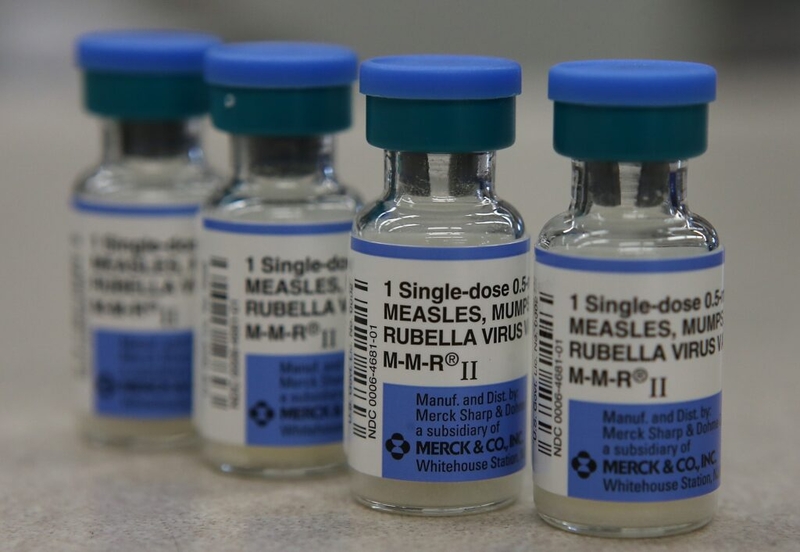
Vials of measles, mumps and rubella vaccine are displayed on a counter at a Walgreens Pharmacy in Mill Valley, California, in a 2015 file photo. (Photo illustration by Justin Sullivan/Getty Images)
This story was originally published by WESA. It is not available for republishing.
Pennsylvania’s measles outbreak crossed a historic threshold this week: at 1,078 cases in 41 counties, the state has recorded the nation’s largest measles outbreak in the last three decades. Five people have died with infections and nearly 200 people have been hospitalized.
As the outbreak overlaps with the start of the respiratory virus season, state health officials are facing several fronts. And despite a recent rift with the Trump administration, it appears that federal help is still on the table.
“It’s all hands on deck,” Pennsylvania Health Secretary Dr. Debra Bogen said Monday. “We have a very robust response from our own Department of Health as well as many of our partners across the state.”
Local officials confirmed the first case among Allegheny County residents Monday, though people were exposed in August at Children’s Hospital of Pittsburgh when infected patients from out of town visited the emergency room.
Health providers across Pennsylvania have administered nearly double the number of measles, mumps and rubella (MMR) vaccines in a typical month since the outbreak began. Pennsylvania medical providers typically administer around 25,000 doses of the MMR vaccine per month. In August, that number jumped to 49,000 doses. In September, providers administered 53,000 doses of the vaccine.

The MMR vaccine is extremely effective in preventing measles infections, according to the American Academy of Pediatrics. One dose is about 93% effective against infections. The recommended second dose brings that immunity up to 97%, and it’s lifelong.
Bogen stressed the importance of the MMR vaccine at an event at the Hilltop Pharmacy in Pittsburgh’s Allentown neighborhood Monday.
“The MMR vaccine has proven to be effective for decades, and we didn’t have cases for decades because of the effectiveness of the vaccine,” Bogen said.
Still, measles infections continue to climb in Pennsylvania. More than half of the state’s 67 counties have tallied cases. Nearly 30 new infections were reported just over the weekend.
It’s not yet clear if the state’s effort to ramp up vaccinations have improved waning immunity in Pennsylvania classrooms. One in three kindergarteners in Allegheny Countyattend class at a school with immunization rates below the recommended threshold.
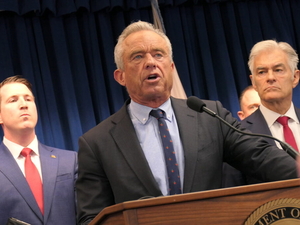
Bogen said the state is coordinating its measles response with federal health agencies such as the Centers for Disease Control and Prevention. But the outbreak has placed Pennsylvania at odds with U.S. Health Secretary Robert F. Kennedy Jr. Under his leadership, the CDC website reflects just two of the five measles-associated deaths in Pennsylvania.
In a letter to the CDC last month, Bogen requested support from the federal government, but on the condition that the CDC acknowledge the additional deaths.
“The CDC’s choice not to publicly recognize the deaths undermines our response,” Bogen wrote. “If CDC is unable to transparently and accurately communicate information about those measles-associated deaths, the Department will respectfully rescind our request,” for aid, she wrote.
It’s all hands on deck. We have a very robust response from our own Department of Health as well as many of our partners across the state.
On Monday, Bogen doubled down on her comments, contending that “not recognizing the deaths minimizes… the loss of life that we’ve had to vaccine-preventable illness.”
“I just want people to understand how serious this infection can be,” she said.
Bogen said the state is determining the need for additional support from the federal government to manage the measles outbreak. She downplayed the impact of such help, noting that it would add one or two people to the department’s staff of 300 already responding to the outbreak.
“[We] would welcome any support that comes our way, but again, we do have a very robust response already with very good technical assistance,” she said.
Bogen joined Allegheny County Health Department officials to highlight the availability of the COVID-19 vaccine ahead of the respiratory virus season. Bogen and Department of Human Services Secretary Val Arkoosh each got updated COVID-19 boosters at the Hilltop Pharmacy.
Medical experts broadly recommend the COVID-19 vaccine for everyone aged 6 months and older in consultation with a healthcare provider. Vaccination is especially important for older adults, the immunocompromised and others at higher risk of severe illness, according to the American Medical Association.
Pennsylvanians with private insurance can get their COVID-19 and flu vaccines covered with zero out-of-pocket costs, Bogen said. Those without can still get a free shot at federally qualified health centers, state health centers or through the Allegheny County Health Department.
Bogen also stressed the importance of the flu vaccine, which she said she planned to get in the coming weeks. Most patients can get the flu and COVID-19 vaccine in the same visit.
Forecasting the severity of the upcoming respiratory virus season — when influenza, RSV and COVID-19 are more likely to circulate — is challenging. Health experts often can’t determine the dominant flu strain until the season develops.
Last year, more than 13,000 adults and 1,200 children were hospitalized with COVID-19 infections in Pennsylvania, according to the health department. Nearly 600 people died.
The flu, COVID-19 and measles can all exhibit similar symptoms such as fever, cough and a runny nose. Bogen encouraged people to take a test to determine what kind of infection they have before coming into contact with others, especially the immunocompromised.
“For 30 years I didn’t ask families who came to my clinic during [the] respiratory [virus] season, ‘Have you been exposed to measles?’ But nowadays I think that’s an additional question people should be asking,” Bogen said.
Harrisburg, PA