Inside Indiana’s state surplus warehouse
Oct 08, 2026 | 5:00 am ET
Description
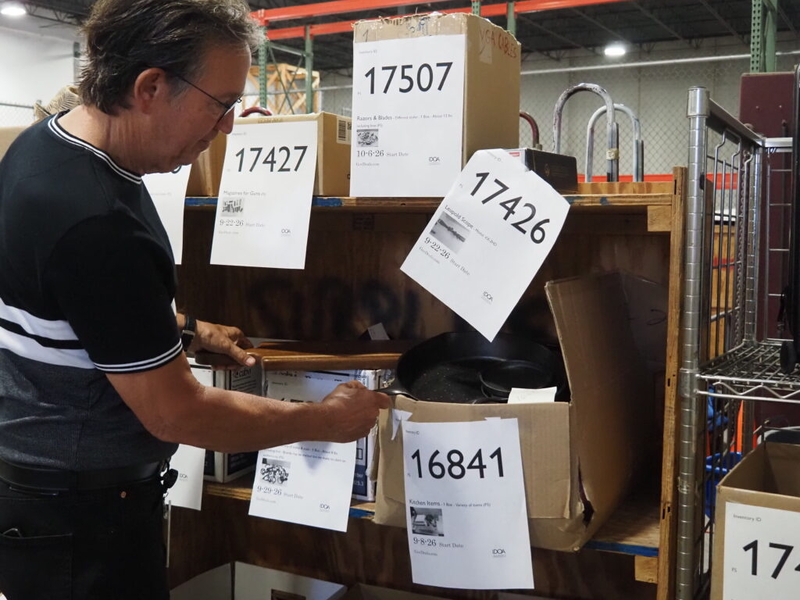
Kitchenware confiscated or abandoned at the Indianapolis International Airport is transported to the Indiana Department of Administration warehouse for storage. (Photo by Mackenzi Klemann/Indiana Capital Chronicle.)
There’s a saying at the Indiana Department of Administration: One man’s trash is another man’s treasure.
The stack of broken chairs in storage at the IDOA State Surplus Warehouse may be useless to the 30,000 state employees who once sat in them, but the chairs are a popular item with recyclers.
IDOA routinely redistributes state property to other agencies, saving Hoosier taxpayers an estimated $571,000 in the past three years alone.
Local governments are next in line for this surplus property.
Any remaining unwanted property is then auctioned off to the public, who can bid on used vacuum cleaners, printers, lawn mowers, vending machines, television sets — even air compressors once used by divers at the Department of Natural Resources.
The state raised just shy of $2 million in revenue through those auctions in the past three years, averaging $252 apiece for products sold on govdeals.com.
“We like to think we’re the Fred Sanford of the state,” said state surplus Director Marshall Tullos, referring to the fictional junk dealer from the 1970s sitcom “Sanford and Son.”
A broken vending machine can be stripped for parts by recyclers or resellers, whom Tullos said are the surplus program’s primary customers. “There are good parts in there,” he said.
The surplus warehouse is brimming with unexpected finds: corkscrews, drill sets, brass knuckles, rolling pins, cast-iron skillets and a snake-engraved dagger confiscated by TSA agents at the Indianapolis International Airport.
Boxes are filled with forgotten car keyfobs, jewelry, belts, cellular phone chargers and sunglasses left behind at the airport.
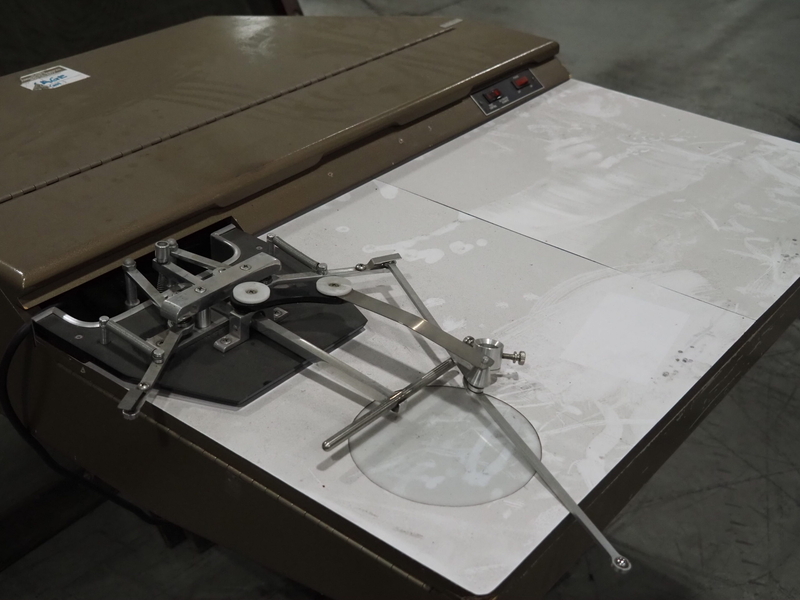
Outdated security cameras, printers, snow blowers and a wardrobe-sized safe are in storage awaiting auction.
So too are metal detectors, vending machines and microscopes.
There’s a dresser filled with envelopes of every conceivable size.
Nearby is an old lectern used by the Indiana Integrated Public Safety Commission available for state employees to repurpose.
Not for sale is the gubernatorial autopen desk where Indiana governors once sat to automate their signature.
The desk is cordoned off in a section of the warehouse where governors and first ladies temporarily dispose of unwanted furnishings from the Governor’s Residence until the next family moves in.
Law enforcement agencies in need of supplies can browse through used police sirens, radios, flashlights, ballistic vests and holsters no longer needed by Indiana State Police or DNR.
IDOA also facilitates redistribution of surplus military vehicles and ammunition from the U.S. Department of Defense, though equipment is shipped directly from DOD to police departments.
More than 150 Indiana law enforcement agencies acquired equipment through the federal surplus program, which IDOA estimates saved a collective $4 million in the last three years.
The warehouse itself is neatly organized, with items for auction kept separate from office supplies and law enforcement equipment still available for internal redistribution.
Most items up for auction sell within three weeks, Tullos said.
Shipments go out daily, with anywhere from 40 to 80 items sold in a typical week.
In the past three years alone, IDOA coordinated 451 pickups and deliveries and auctioned off 7,531 items the state could no longer use.
“People think of surplus as being junk, and we don’t,” Tullos said. “We think that there’s a resale value for everything.”

Indianapolis, IN