Advisory group zeroes in on recommendations to regulate data center energy use
Oct 08, 2026 | 4:24 am ET
Description
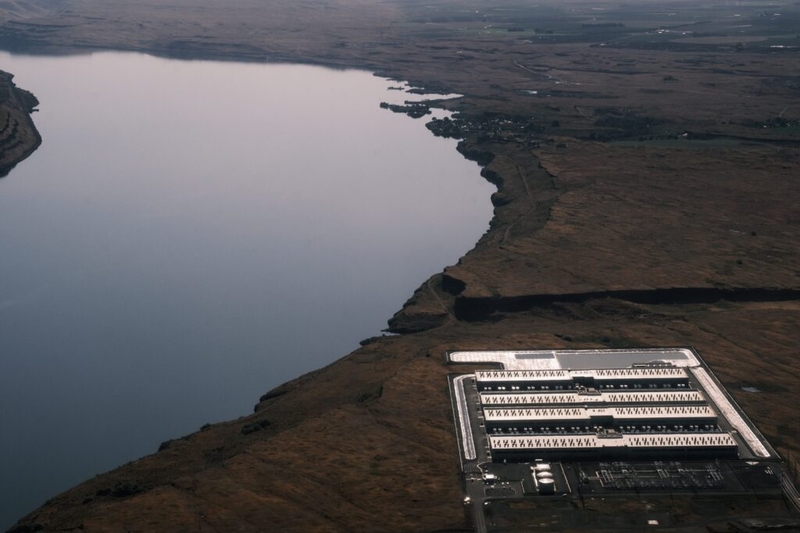
An explosion of data center facilities, including the one pictured here in northeast Oregon on May 18 have been built along the Columbia River Gorge during the last few years. (Photo by Jordan Gale/Oregon Capital Chronicle)
As the Maine Data Center Advisory Council begins drafting recommendations for the upcoming Legislature to regulate data centers, energy use is emerging as a key and contentious issue.
The council met Wednesday and began to refine its initial draft recommendations, which are due to lawmakers in a final report in January. Much of the discussion related to energy, which has been a key concern of communities across the country with the rapid expansion of large scale data center development.
Celina Cunningham, acting commissioner of the Maine Department of Energy Resources, said the main focus of the energy recommendations was to ensure that the power costs “associated with large data centers should be borne by the data centers, not Maine people and businesses.”
Patrick Scully, a member of the Maine Public Utilities Commission, said he was concerned that data centers could inadvertently drive up prices in Maine’s energy supply market, because of the increased consumption and demand. He compared it to Maine’s natural gas usage during winter heating.
“Even if we have enough steel in the ground, we can see in the winter when demand gets really high that those energy market prices spike pretty dramatically,” he said.
Scully said another issue the PUC is considering is the secondary impacts on grid capacity. Even if the regional power grid has the capacity for a data center to connect, it could max out the existing capacity.
And without that wiggle room, it raises prices for natural load growth or other new, smaller customers trying to connect.
“So you’ve lost the headroom because the data center came in and ate it up, and so those next customers coming along — that we might very well want to see — might be facing big costs to accommodate their interconnection, where those costs are really a consequence of the data center eating up the available headroom,” Scully said.
Public Advocate Heather Sanborn also raised concerns about utilities and local communities making upgrades in anticipation of a data center that then never arrives.
“We need to give some consideration to what happens if a data center comes in and there’s a lot of investment made in order to upscale infrastructure to meet the needs of that data center, and then the data center disappears,” Sanborn said. “This is a particular issue, not just for electric utility, but potentially for water as well.”
The 17 council members weren’t in agreement on all the recommendations, and disagreed on what to do about clean energy requirements. The preliminary draft recommends that the state require data centers to adhere to Maine’s existing clean energy laws and procure some amount of energy generated by renewable sources.
Jack Shapiro, with the Natural Resources Council of Maine, suggested that the state should require data centers to procure more clean energy.
“It feels to me like a simpler way to do it is to actually just create a requirement that that capacity and energy that is being procured by the facility would just need to be 100% clean because we’re only 14 years from that requirement,” he said, referring to the state’s commitment to reach carbon neutrality by 2040.
But Amy Turner, CEO of Fox Islands Electric Cooperative, pushed back and argued that Maine’s clean energy laws are aimed at utilities, not customers like data centers.
“The prescriptive portion in this clean energy section could be like a de facto ban effectively on data centers, because it’s not going to be practical or feasible or economically possible for developers to work within these guidelines,” Turner said.
Sanborn countered that the state can’t control all aspects of the broader energy market, but requiring data centers to bring their own clean energy is one way to protect ratepayers.
“What we can do is say what these data centers have to do in terms of bringing their own clean energy and capacity, as a way of trying to ensure that those new entrants into the market aren’t disproportionately driving up costs for the rest of us,” she said.
The question of mandatory requirements versus flexible recommendations was a recurring theme of the meeting.
Cunningham noted that any regulations will need to be able to adapt as the industry develops.
“We want to make sure that we continue to have ratepayer protections in place even as the data center market evolves,” Cunningham said.
Michael Duguay, commissioner of the Maine Department of Economic and Community Development, argued such an approach would deter development. “I do think having something that’s prescriptive up front, sadly, as a default, creates more obstacles,” he said.
But Shapiro noted that public sentiment about data centers is “dire” and the council should have stricter suggestions to make sure residents are confident in the regulations. Otherwise, he said, “we’re just going to see local moratoriums and opposition, and none of the projects will ever get built, which is the other side of the tightrope between it being sort of prescriptive. “
The council also discussed the initial recommendations focused on the environment and public health; and community and economic development.
The group will continue to meet and discuss the recommendations, and a final draft will be shared for public comment later this year.
Augusta, ME