Curtis Flowers, wrongly imprisoned after enduring six trials, dies at 56
Oct 07, 2026 | 5:26 pm ET
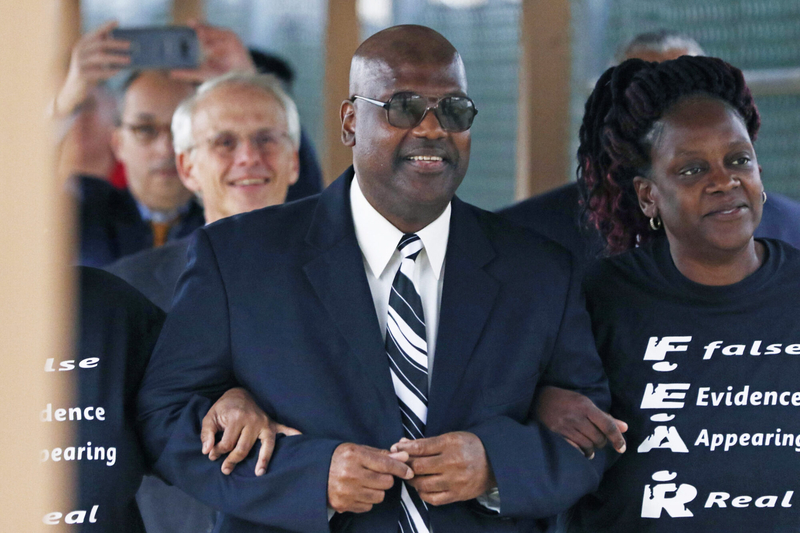
Description
Photo courtesy of Mississippi Today
Audio articles are automated for accessibility. Humans wrote and edited the story; however, this audio has not been reviewed for accuracy and may contain errors. Read more about how we use AI to increase access to our reporting.
Curtis Flowers, a Black man whose six trials for murder in Mississippi became a landmark case for racial bias in jury selection, has died, according to the Montgomery County coroner.
Flowers was 56.
His cause of death was not immediately released. Montgomery County Coroner Allan Pratt told Mississippi Today in a statement that Flowers’ body was found on Wednesday and that his death is an “ongoing investigation.”
On July 16, 1996, four people were shot and killed at Tardy Furniture in Winona, located about 92 miles north of the capital city of Jackson. The victims were store owner Bertha Tardy and employees Robert Golden, Carmen Rigby and Derrick Stewart.
Then-Montgomery County District Attorney Doug Evans prosecuted Flowers six times for the murders, as Flowers maintained his innocence throughout the prosecutions. Each time Flowers was prosecuted, it either resulted in a hung jury or a guilty verdict that was later overturned by a higher court.
Evans secured a conviction in the sixth trial, and Flowers was sentenced to death. In June 2019, the U.S. Supreme Court voted 7-2 to overturn Flowers’ conviction and said Evans intentionally struck black people from serving on the jury that convicted Flowers.
Flowers was released on bail in December 2019 to await a seventh trial. Evans recused himself, and the state attorney general’s office took over the case. Circuit Judge Joey Loper, in September 2020, dismissed the capital murder charges with prejudice after a motion by the attorney general’s office.
Tucker Carrington, director of the George C. Cochran Innocence Project at the University of Mississippi, released a statement on behalf of Flowers’ legal team:
“To a person, we all feel privileged to have called him a client. Later, in the years after his release and exoneration, we felt equally honored to call him a friend.
“One of Curtis’ favorite hymns was the traditional African-American lament, ‘I Couldn’t Hear Nobody Pray.’ In one of many versions, the singer makes a request of God: that, if it be His will, He ‘remove this bitter cup.’ Curtis’ cup was bitter, but he was not. He was gentle. And he endured. For that, his name is etched into U.S. Supreme Court jurisprudence — about what it means to fight for a fair trial free from racial bias in the selection of jurors. And also for that, but for so many other reasons, his name is etched into our memories, too—professional and personal. We will miss him.”
After the case was dismissed, a judge ordered Mississippi to pay Flowers $500,000 in wrongful-imprisonment compensation.
The American Public Media podcast “In the Dark” investigated the case. It presented an analysis showing a long history of racial bias in jury selection by Evans, and evidence suggesting another person may have committed the crimes.
Updated 10/8/26: This article has been updated with a comment from Tucker Carrington from the Innocence Project.

Jackson, MS