Rhode Island state crime lab taking back more firearms cases
Oct 07, 2026 | 4:34 pm ET
Description
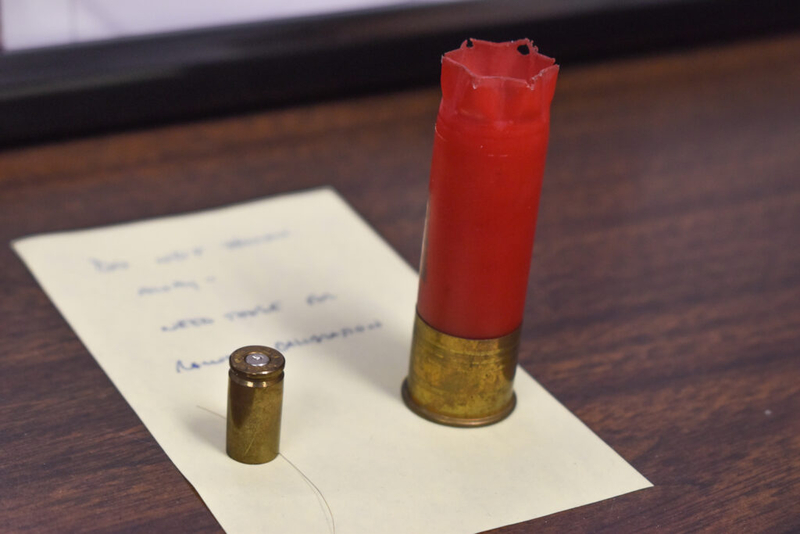
Shotgun shell casings at the Rhode Island State Crime Lab in 2023. (Photo by Christopher Shea/Rhode Island Current)
The Rhode Island State Crime Laboratory is sending fewer firearms cases to outside reviewers while accepting more gun evidence from local police departments thanks to progress rebuilding its in-house testing staff, its director said.
Three forensic firearms examiners left the lab after 2024 testing error upended its operations and reputation. Soon after the labs outsourced its toolmark exams to two former New York City police examiners with all work verified by two out-of-state labs.
In April, under a plan approved by the five-member commission that oversees the lab on the University of Rhode Island’s Kingston campus, 15% of cases needed verification from third-party contractors, a workload that has gradually scaled down to 10% this month.
State Crime Lab Commission approves plan to bring firearms toolmark testing largely in-house
By March 2027, that figure should be 5% assuming the lab’s new toolmark examiners continue demonstrating that they can reliably handle the work, Lab Director Dennis Hilliard said in an interview Wednesday.
“There were no issues in these first six months,” Hilliard said.
Hilliard is scheduled to update the State Crime Laboratory Commission Thursday on the toolmark section’s progress as it moves into the next phase of the action plan.
The lab temporarily suspended toolmark testing in August 2024, after discrepancies were found in test results for a pistol seized as evidence in a 2021 Pawtucket murder case. Cartridge casings were flagged as matching a different firearm in possession of the Boston Police Department.
Work was subsequently handled by two former New York City police examiners from STRIA Consulting Group. All verifications were performed by examiners at SCL Forensics in Texas and FoCoSS Forensics in New Hampshire.
But in January, the lab began rebuilding its in-house staff, hiring a lead toolmark examiner who previously served as a lead examiner for Connecticut’s state crime lab. The lab has since filled its standard examiner position with an internal candidate who completed training through the U.S. Bureau of Alcohol, Tobacco, Firearms and Explosives and passed competency testing.
That second examiner is now working under supervision on casework and is expected to be cleared to verify other analysts’ work within two to three months, Hilliard said.
The lab has left a third examiner position unfilled, Hilliard said, allowing it to use those funds to continue paying STRIA consultants for third-party verifications. Since the lab staffed up, consultants have come in on a weekly basis.
“It might step down to a monthly basis — depending on how many cases come in the laboratory” Hilliard said.
And Hilliard is expecting more cases as the lab begins accepting firearms evidence that police departments previously were told to hold onto.
Following the 2024 testing suspension, Hilliard said police departments were told to hold off on submitting cases when there was no suspect or firearm for comparison. Now, the lab plans to accept those cases and begin microscopic examination while investigators continue looking for a suspect or gun.
“Police chiefs have been notified that they can send any firearms cases that they want to,” Hilliard said.
Providence, RI