Former SC governor’s childhood home, Pawleys Island beachfront up for preservation
Oct 07, 2026 | 3:54 pm ET
Description
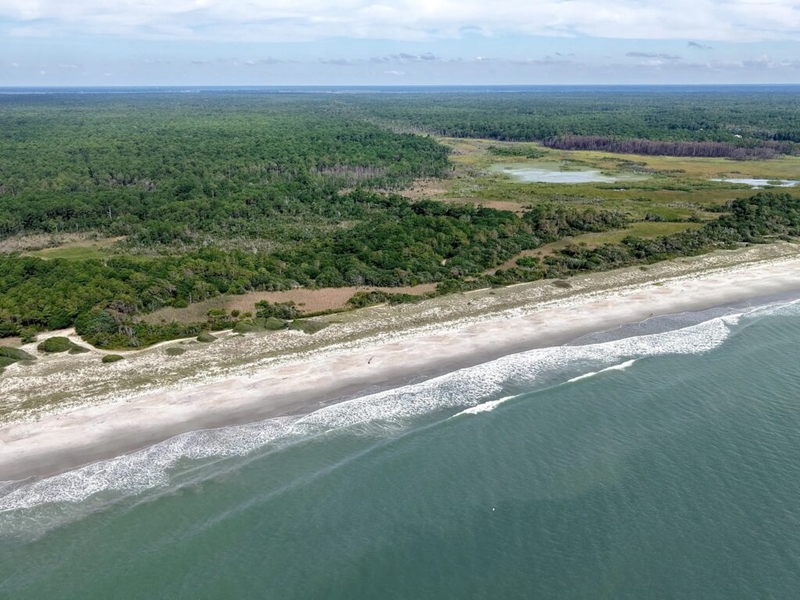
South Carolina is seeking to purchase 3,400 acres of the former Arcadia rice plantation in Georgetown County for a wildlife preserve and beach access. (Photo courtesy of Ducks Unlimited and Holstein Appraisals)
COLUMBIA — The family farm of former Gov. Robert McNair and beachfront property in Pawleys Island are among the latest lands slated for protection under South Carolina conservation programs.
A state spending oversight panel gave the initial nod this week to protecting from development the 2,640-acre Ballsdam Plantation along the Santee River in Berkley County and 3,400 acres of the former Arcadia rice plantation along the Waccamaw Neck.
Proposals call for a conservation easement to safeguard the Berkeley County property, which includes the gravesite of McNair, governor from April 1965 to January 1971. And in Georgetown County, the public would gain beach access to the narrow peninsula between the Atlantic Ocean and the Waccamaw River.
The projects were among 18 forest, wetland and farmland conservation efforts, totaling nearly 21,400 acres statewide, considered for various stages of approval Tuesday by the legislators who sit on the review panel.
Of all the projects, the Pawleys Island property drew the greatest scrutiny from legislators.
A state agency focused on flood reduction received permission to spend $118 million — alongside an additional $3.5 million from the state’s Conservation Bank — to purchase the property in an effort to prevent increased flooding of the coastal retirement destination located south of Myrtle Beach.
The state also plans to apply for a federal grant to recover an estimated $8 million to $10 million of the cost.
SC put $274M into flood response and prevention. Here’s where the money is going.
Formed in the wake of catastrophic flooding in 2015, the state Office of Resilience has taken on 13 such projects statewide, using $200 million in state funds set aside specifically for conserving land, the agency’s chief, Ben Duncan, told legislators. After this purchase, the agency will have just $4.5 million left in the fund.
The Arcadia property marks the largest purchase to date.
Preventing development
“This is a pretty sizable undertaking,” said Senate Finance Chairman Harvey Peeler.
Developers had sought to build on the property, filing a plan in 2002 that promised single-family homes and condos, a retirement village and a golf resort, as well as a hotel, 400,000 square feet of commercial space and a 1.26 million-square-foot office park. The developers renewed those efforts last year.
But with no movement on the development to date, the family that owns the property has decided to sell it to the state instead, turning it into a wildlife preserve run by the state Department of Natural Resources, similar to Botany Bay on Edisto Island.
Georgetown County Council and the Georgetown County School District Board of Trustees are supportive, Duncan said.
In addition to the property’s half mile of beachfront with high, protective sand dunes, there are also nearly 2,500 acres of wetlands that can store and hold back floodwaters in the case of a hurricane, more than 1,000 forested acres and 100-acre fishing lake, Duncan said.
“It’s a big protector of the inland,” he said.
Historic plantation among 1,700 acres in conservation projects SC considers buying
If the property were developed instead, the sponge-like qualities of the land would be replaced by rooftops and asphalt.
“Think about the traffic, all the infrastructure that needs to be put in,” Duncan said.
There’s also a possibility of research work on the property, similar to the Baruch Institute of Coastal Ecology and Forestry Science operated by Clemson University at nearby Hobcaw Barony.
“The brief time I was there, I saw wild pigs running around, two foxes and a turtle nesting area on the beach. So, it is a strong ecosystem,” Duncan said.
Legislators’ biggest concern was ensuring all South Carolinians, whether from Peeler’s Upstate hometown of Gaffney or Democratic Rep. Gilda Cobb-Hunter’s hometown of Orangeburg, could access and enjoy the property once it’s under state control.
A governor’s childhood home
As for Ballsdam Plantation, conservation of the property is expected to protect both its wildlife and historic value.
Located on the “French Santee,” the property is in an area initially settled by French Huguenots during Colonial times. They were the largest group of Huguenots, outside of Charles Town. By 1690, 80 families of French origin had settled there.
The Rev. Pierre Robert, believed to be the first Calvanistic minister in South Carolina, was an early owner. Then, Elias Ball, the property’s namesake, settled there sometime in the 1700s. After him came Dr. John Saunders Palmer, one of the signers in December 1860 of the Ordinance of Succession, which declared South Carolina’s separation from the Union.
McNair’s father purchased the property in 1933 and passed it on to his son, a World War II veteran first elected in 1950 to the state House representing Allendale County. Voters elected him lieutenant governor in 1962, and he ascended to governor in 1965 when Donald Russell resigned to become a U.S. senator. McNair was then elected governor in 1966 and re-elected in 1968, giving him six years in office at a time when gubernatorial terms lasted only two years.
The Democrat, who died in 2007, was at the state’s helm amid the Civil Rights Movement and desegregation.
SC considers protecting nearly 6,000 acres ‘of critical importance’ near Grand Strand river
In legal circles, McNair’s name is perhaps more widely known for the law firm he founded.
After leaving the Governor’s Mansion, he established the law firm of McNair, Konduros & Courley in 1971, which became the massive McNair Law Firm with more than 130 attorneys spanning the Carolinas. Birmingham, Alabama-based Burr & Forman purchased the firm in 2018.
He and his wife are buried in a family cemetery on the property. Pineland Cottage, which still stands today on the property, was McNair’s birthplace and childhood home.
The McNair family now uses Pineland Cottage as a family retreat and hunting cabin. The property has 15 food plots for the deer, turkey and wild boar that live there.
The state will pay the family $1.2 million for a conservation easement keeping the land as is.
Columbia