Kemp suspends penalties for on-road dyed diesel after USDA secretary urges states to act
Oct 06, 2026 | 7:34 pm ET
Description
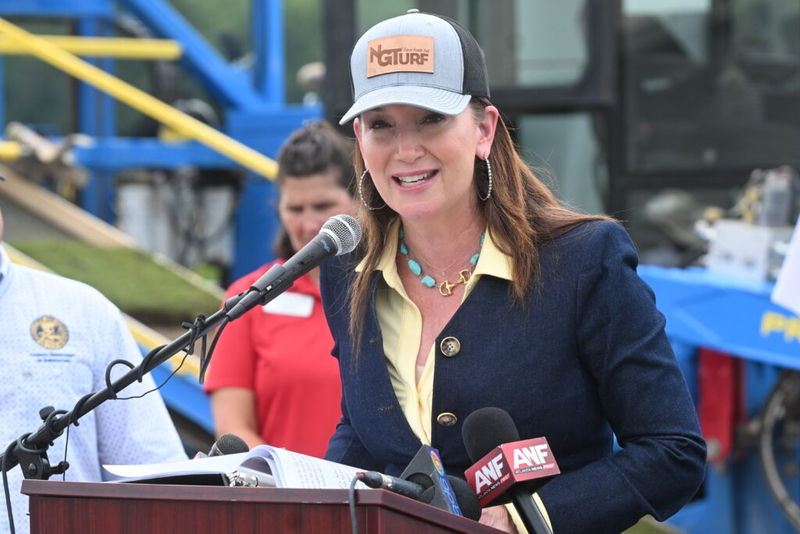
U.S. Agriculture Secretary Brooke Rollins speaks at NG Turf in Whitesburg, Georgia, during a visit earlier this fall. Ross Williams/Georgia Recorder
Gov. Brian Kemp announced Tuesday evening that he will suspend penalties for dyed diesel after U.S. Secretary of Agriculture Brooke Rollins urged governors to follow the president’s move to suspend penalties on the unrestricted use of the fuel, which is typically allowed in off-road machinery only.
President Donald Trump announced Monday evening at a rally in Nebraska he would authorize highway use of dyed diesel fuel and defer the federal excise tax on the fuel to provide relief from the steep diesel prices which have hit record highs of more than $6 per gallon, nationally.
The move from Trump followed actions from several states to suspend state fuel taxes or to allow dyed diesel fuel. After Trump’s Monday-night executive order, more states have leveraged similar state-level suspensions.
Rollins, speaking with reporters at a stop in Iowa Tuesday, said she is “on the phone constantly with other governors, trying to get them to do the same.”
Kemp, a Republican, announced last week that he would suspend the state’s fuel tax, and on Tuesday, he suspended the penalties for off-road dyed diesel use and stretched the suspension of the gas tax out until Nov. 5. The motor fuel tax is 33.3 cents per gallon for gasoline and 37.3 cents per gallon for diesel.
“Dyed diesel is critical for agricultural and forestry operations, particularly in the fall harvest season, and the state of Georgia should take every action to facilitate the implementation of President Trump’s order,” Kemp wrote in an executive order.
According to the executive order from the president, the federal suspension could save drivers as much as $100 per trip to the fuel station. Corn growers from Iowa wrote to Iowa’s congressional delegation in September and asked them to push for federal waivers to use dyed diesel on the road, in addition to calls to stop diesel exports and to release oil from the national reserves.
In his announcement Monday evening, Trump said the order would allow “anyone” to purchase red-dyed diesel fuel “for any reason.” Trump’s executive order runs through the end of the calendar year.
Rollins said Tuesday that in addition to the executive order on dyed diesel, an influx of 100 million barrels of oil from the Group of Seven, or G7, countries have “already” caused the price of diesel to decline. The G7 announcement was made Friday. According to AAA fuel price data, the national average price of diesel was about $0.13 per gallon lower Tuesday than a week prior.
“There’s a lot of really good things that are being deployed right now,” Rollins said.
Fuel prices have risen sharply due to the ongoing war in Iran and closures in the Strait of Hormuz, a prominent trade route for products like oil and fertilizer, combined with continued conflict between Russia and Ukraine.
In his rally speech in Nebraska, Trump said the situation in Iran is “going to be over with very soon.” Rollins echoed the sentiment Tuesday when asked about the war and said the government of Iran “cannot have” a nuclear weapon and that the war was “so important for the future.”
“He has said that we’re moving quickly, that we will and should be out of it very soon,” Rollins said. “When that happens, all of the fuel prices, everything will absolutely go down significantly.”
Rollins said the current situation “is exactly why” the administration is “working so hard” to increase domestic energy production.
Rollins, who spoke at an event in Des Moines, said onshoring fuel production doesn’t just mean oil, but also investing in biofuel production.
Georgia Recorder Editor Jill Nolin contributed to this report.
Atlanta, GA