State, plaintiffs agree to settle lawsuit over NH in-home care program after five-year court battle
Oct 06, 2026 | 5:16 pm ET
Description
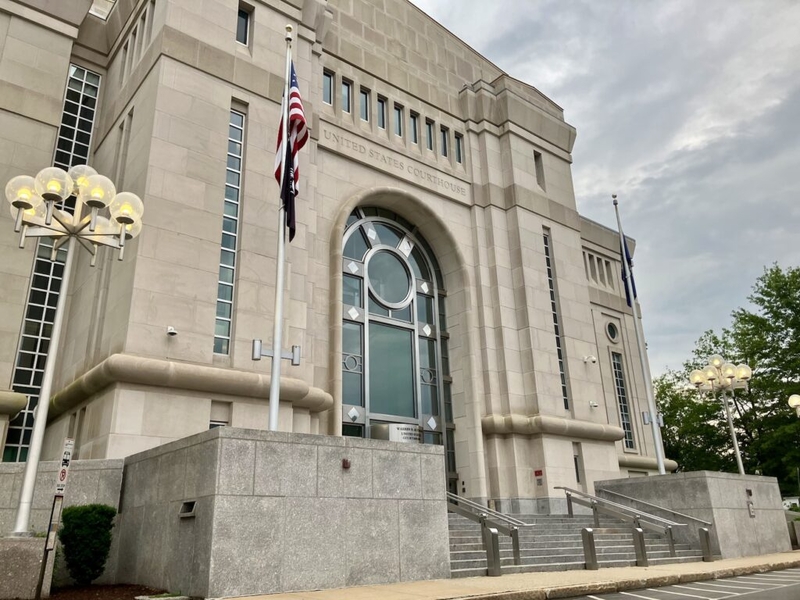
The U.S. District Court, District of New Hampshire in Concord. (Photo by Ethan DeWitt/New Hampshire Bulletin)
The New Hampshire Department and Health and Human Services, facing a class-action lawsuit over its in-home care program for older adults and people with physical disabilities, agreed to a settlement with plaintiffs Monday.
A group of nonprofits — including the AARP Foundation, the Disability Rights Center-NH and New Hampshire Legal Assistance, as well as the law firm Nixon Peabody — sued the state in 2021 in federal court over the lackluster state of its Choices for Independence program.
Choices for Independence seeks to allow the elderly and those with disabilities to stay in their homes instead of being placed in nursing facilities. To do this, the program provides funding to hire in-home care aides. Evidence presented in court showed placement in a facility is three times more expensive for the state, and most participants say they’d rather remain in their own homes. However, participants struggle to actually receive the care because of staffing shortages and, the plaintiffs argued, underfunding by the state.
The lawsuit, which became a class-action suit in 2023, alleged that by underfunding the program, the state is violating participants’ legal rights to remain in their communities by unnecessarily forcing them into nursing homes. It was set to go to trial next month.
However, after half a decade of legal fighting, the two sides have come to an agreement. If U.S. District Court Judge Paul Barbadoro approves the settlement, the trial won’t happen. Instead, the state and the plaintiffs have agreed to a deal in which DHHS will implement a series of remedies for the program. In agreeing to the deal, DHHS did not admit to any wrongdoing, law violations or liability.
“I think it’s a very hopeful moment that we’re in,” Kelly Bagby, an attorney with the AARP Foundation and lead counsel for the plaintiffs, said. “And I do think that it will require vigilance by the plaintiffs’ lawyers to continue to monitor. It will require DHHS to really embrace the settlement. But I think finally the CFI participants will have a voice in their own care, and they’ll have that voice through the grievance system, through the request for specialized rates. If they can’t get a service provider, they’ll have a voice in being able to tell DHHS whether they think they’re doing a good job or not. And I think that has also not existed before.”
That deal would require DHHS to hire a third-party consultant to analyze the network of care aides to determine whether it meets the needs of the participants. Specifically, the analysis would determine the level of service the state approved for participants and how much they actually received, among other things. DHHS has agreed to complete this analysis within 180 days of the settlement being finalized and again annually thereafter.
DHHS has also agreed to ensure that every participant has a contingency plan in place should they not receive their approved services. Additionally, it agreed to identify any participants who have received less than 50% of their services each month and require the case management agency (the agency managing the care) to execute the contingency plan.
Care aide salaries are determined in part by DHHS reimbursement rates. People in the program have consistently reported that caregiver pay is so low it makes hiring close to impossible. DHHS has agreed to perform an analysis on its reimbursement rates and methodologies for the program. It also agreed to ask state lawmakers for biennial increases to match inflation.
In the past, DHHS has sometimes offered specialized rates to care aides if it determined that it was unable to hire anyone due to low pay. The plaintiffs argued DHHS offered these specialized rates infrequently. Under this agreement, DHHS “shall amend its Specialized Rates policy to facilitate the expeditious use of Specialized Rates to address CFI Service Gaps.”
“That system has been very limited,” Bagby said. “I think maybe roughly 200 people ever got a specialized rate.”
DHHS has also agreed to create an online portal and directory of aides. This directory will include names, contact information, whether the aide is accepting new clients, the counties the aide serves and more. The directory would be available through an online portal.
Finally, DHHS agreed to expand its existing grievance system, where participants can file complaints about the program, to include complaints about missed services.
Every six months, DHHS would be required under this agreement to create a report outlining its compliance with the agreement. Asked if she’s concerned the reforms won’t be enough to fix the program, Bagby said she and her colleagues will be watching the state’s moves, “and you know that’s our job, and we will be very passionately pursuing it.” She also said the plaintiffs’ attorneys plan to hold virtual sessions where participants can learn about the settlement process in November.
“Older adults and people with disabilities deserve access to the services they need to live safely and independently in their homes and communities,” Attorney General John Formella, who led the agency that fought the lawsuit for the past five years, said in a statement. “This settlement strengthens accountability and oversight of the Choices for Independence program and provides a framework to address service gaps. The Department of Justice will continue working with DHHS and our partners to support implementation.”
Michael Garrity, deputy chief of staff for communications and external affairs at the Department of Justice, declined to make anyone available for an interview with the Bulletin, saying in an email the department had nothing further to add.
“I think it’s a happy day for CFI participants,” Bagby said. “I think we’re at a hopeful point, and again, reforms take time, but I feel like we’re at the beginning of those reforms now.”
Concord, NH