Proposed property tax elimination state question invalid, Oklahoma high court rules
Oct 06, 2026 | 3:08 pm ET
Description
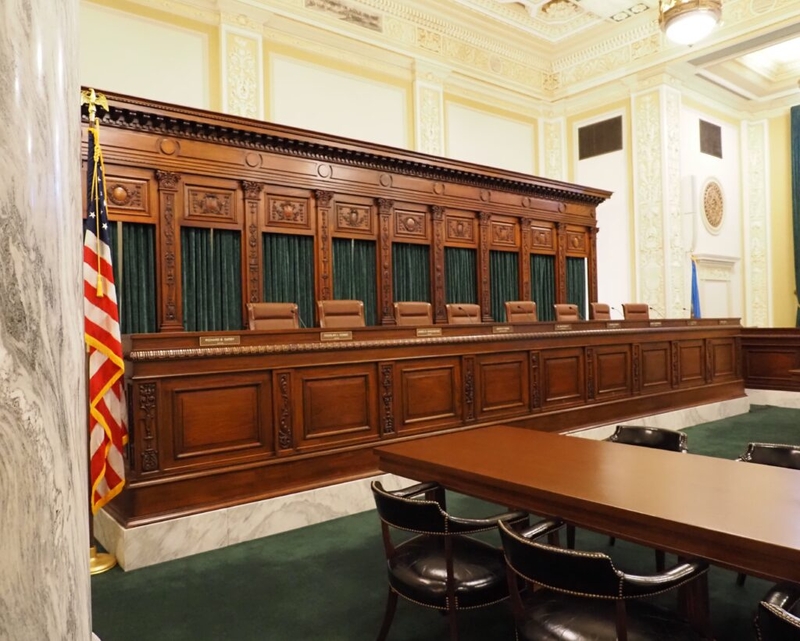
The Oklahoma Supreme Court chamber is pictured Dec. 7, 2023. (Photo by Carmen Forman/Oklahoma Voice)
OKLAHOMA CITY – A divided Oklahoma Supreme Court has invalidated a proposed state question that sought to eliminate property taxes in three years.
In a 5-4 ruling issued Monday, the state’s high court said State Question 843 “clearly and manifestly violates the Oklahoma Constitution.”
The state question runs afoul of the Oklahoma Constitution because a homestead would not be assessed in accordance with constitutional provisions governing ad valorem taxation of real property, according to the order.
Property taxes are used to fund schools, counties, public safety and other services.
Vice Chief Justice Dana Kuehn was among those dissenting.
“I do not believe this Court has jurisdiction to determine the constitutionality of an initiative petition before it has been presented to the people,” she wrote.
A challenge to the proposal was filed in April.
The Oklahoma Supreme Court in June heard oral arguments on the challenge.
“We are evaluating where we want to go from here because we are not going away,” said Mike Reynolds, a proponent of the measure and former Oklahoma House member.
It is rare that the court makes a decision based on hypothetical, Reynolds said.
“It should have gone to voters where it would have passed overwhelmingly,” he said.
“They have taken power away from the people today to make decisions about what is best for them.”

Oklahoma City, OK