Where you happen to be standing when angels pass by
Oct 05, 2026 | 5:30 am ET
Description
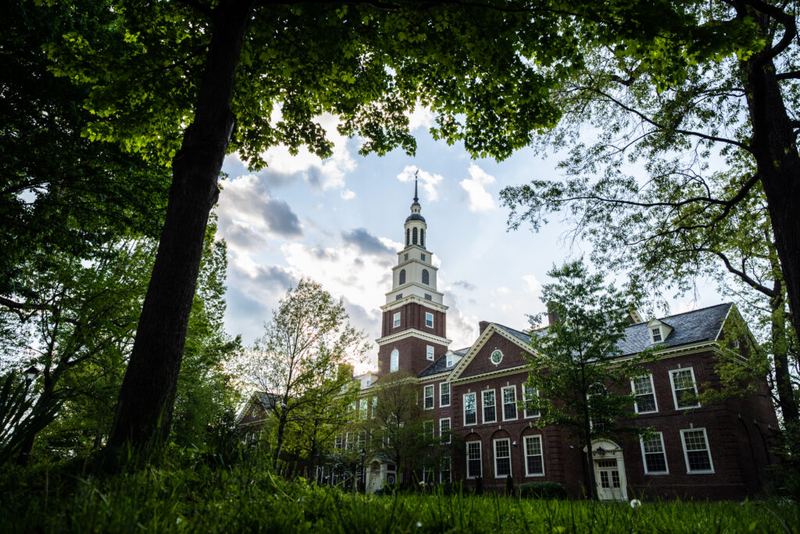
Built in 1938 and renovated as recently as 2002, the Draper Building is one of the largest academic buildings on the Berea College Campus. It houses a variety of departments and programs, including Sustainability and Environmental Studies and Women's and Gender Studies. (Photo courtesy Crystal Wylie/Berea College)
At Standard & Poor’s in New York, I had young analysts with credentials far better than mine, MBAs from schools I could not have afforded to walk past.
Every few months one of them would appear in my doorway and say, “Mr. Branscome, I’d like to discuss my career.”
Because I liked them, I told them the truth. “Your career is going to be far more random than you are prepared to accept. It depends mostly on where you happen to be standing when the angels of light and darkness pass by.”
They wanted a ladder. What I offered was a warning that the whole apparatus of planning is mostly ceremonial.
I have a case study, and most of it runs through Berea College, which recently announced that it will become the first college in the nation to offer every student a completely free education.
The teacher who knew a place existed
I started at the one-room Vinson School in Carroll County, Va., seven grades around a potbellied stove in the Blue Ridge Mountains.
The year I entered fourth grade, Velma Bowman Horton arrived with a fierce belief that mountain kids could go somewhere. I was a hillside farmer’s boy headed for the furniture plants in Galax or Pulaski.
Years later, as guidance counselor at Hillsville High School, Mrs. Horton knew my mother and I had no money. She also knew something few in Carroll County knew. There was a college in Kentucky, founded in 1855 by abolitionists as the first integrated, coeducational college in the South, that charged no tuition and put every student to work.
That is the whole hinge. Not encouragement, just information.
I arrived in Berea in August 1964 with $300 earned pitching hay and digging culvert ditches for the highway department. I never gave the college another cent, and when I graduated in 1968 they owed me $600 for the extra labor hours I had worked as a student teacher.
The barn
One morning, while we cleaned manure out of our barn, my grandfather, who had built a bigger dairy himself, said, “Jimmy, you could make a good living on this place.”
I heard a prison sentence and decided in that instant to go to college.
Neither of us could have known that Carroll County’s 100 dairy farms would dwindle to none. A few months ago, my second cousin shut down the last one.
I thought I was refusing manure. I was actually leaving ahead of a collapse I could not have named. Being right and being wise are almost impossible to tell apart from the inside.
What I asked for, and what I got
On my Berea application I asked to work at the college-owned Berea Citizen. Berea put me there, not to write, but to melt lead for the typesetting machines at 16 cents an hour.
My junior year I was moved to work for Dr. James Y. Holloway, a Yale-trained theologian who edited Katallagete, the journal of the Committee of Southern Churchmen. The group helped ministers who had been run out of their pulpits for supporting desegregation.
I copyedited manuscripts by Father Thomas Merton, Rep. John Lewis and Fannie Lou Hamer. I was 20 years old, from a one-room school, marking up Merton’s punctuation for beer money.
Holloway later asked me to write an article about the mountains. I called it “Annihilating the Hillbilly.” The Appalachian Movement Press sold thousands of copies as a pamphlet. Fifty-eight years later I published a book with a similar title.
A sidewalk in front of Boone Tavern
In 1968, I was admitted to Johns Hopkins on a full scholarship to study philosophy. It was the most orderly thing that had ever happened to me, and I gave it up. With a doctorate in philosophy, I would be driving an UBER today.
Bill Best, a Berea professor, was walking past Boone Tavern when he ran into Paul Nachtigal, who was recruiting for a Ford Foundation leadership program and wanted an Appalachian. Best said my name.
I was not on that sidewalk. I traded a funded doctorate for one year of foundation money with nothing waiting at the end of it. That was not a shrewd bet. It only looks like judgment because of how it came out. Ford sent me to the Appalachian Regional Commission for a month in January, 1969 and I became a staff member for two years where I met Sharen, my wife of 56 years.
Rooms I was not in
Lobbying for strip mine regulation in Kentucky, I got myself thrown out of a U.S. House hearing for insisting that citizens whose land was being destroyed be allowed to testify.
A New York Times reporter named Ben Franklin was in the room. He later told the editors of the Times Magazine that the fellow they’d thrown out might be able to write. My cover story ran in December 1971, and I have been a journalist ever since.
Six years later, the Washington Post called David Hawpe at the Courier-Journal looking for someone to cover the mine workers’ democracy movement. Hawpe gave them my name. I was not on that call either.
The thing I did not believe in
By 1990 I was running stock research and the index business at Standard & Poor’s. Nate Most at the American Stock Exchange wanted a fund built on the S&P 500 that would trade all day like a single stock. Jack Bogle of Vanguard, who invented index investing, had told him it would not work.
I signed the license. Nobody else at S&P would, partly because everyone was already calling the product “Spiders.”
Neither Most nor I thought SPY, the nation’s first exchange-traded fund, would amount to much. It launched in January 1993 with $6.5 million and nearly got shut down. Today it holds more than $800 billion.
I did not see the future. I signed a piece of paper five other people had declined to sign. I was promoted to Managing Director, probably because S&P earns a very handsome fee on all those assets.
What Berea has to do with it
In 1973 the sociologist Mark Granovetter found that opportunities come less through close friends than through acquaintances at the edge of your life, who have access to rooms you don’t. Bill Best was not my mentor. Ben Franklin had covered me once. Hawpe was a competitor.
Now count the institutions. Mrs. Horton knew Berea existed. Berea’s labor program put me at Holloway’s desk. Best was Berea faculty, and Boone Tavern is Berea property. Mike Clark, who hired me at the Highlander Center in 1972 and introduced me to Tom Gish at The Mountain Eagle, was a Berean a class ahead of me.
Six of my first eight accidents route through one small college in Madison County. I did not notice for 40 years.
That is what an institution is for. Randomness is distributed evenly. The ability to convert it is not.
A college that charges nothing and puts a farmer’s son in a room with a Yale theologian is not guaranteeing outcomes. It is standing you somewhere the angels are likely to pass.
The ones who went to Galax
My classmates at Hillsville High in 1964 were as quick as I was. Several were quicker.
Some went to the furniture plants in Galax and Pulaski. The plants went to China. Carroll County offered its children two honorable futures in 1964 and has since closed both.
The difference between them and me is not talent or grit. One woman knew about one college in Kentucky, and she told me.
So when a Berea student asks me what to plan for, I say plan for very little. Stay where the traffic is, keep the kind of reputation that makes people say your name when you are absent, and be ready to be wrong about what you wanted.
And when it turns out well, resist believing you did it. Somebody stood you there.
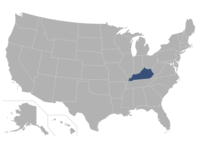
Frankfort