Who should bear the cost of University of Minnesota’s budget problems?
Oct 02, 2026 | 9:27 am ET
Description
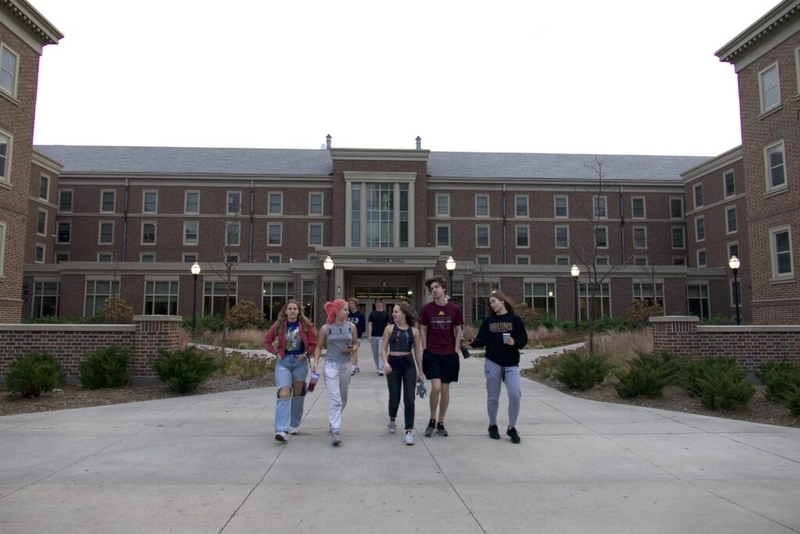
University of Minnesota students leave Pioneer Hall in November 2022. (Max Nesterak/Minnesota Reformer)
In the University of Minnesota’s announcement of $225 million in budget cuts over two years beginning in July 2027, President Rebecca Cunningham described the decision as an “institutional inflection point.”
The financial pressures facing the university are real, but who bears the greatest costs remains a choice. Will Cunningham and the Board of Regents continue placing that burden on students, staff and faculty, or pursue solutions advancing the land-grant mission by empowering Minnesota’s working families?
While the scale of these cuts is staggering, faculty, staff and students are accustomed to austerity budgets expecting them to do more with less.
In July, the University announced higher employee health costs beginning in January 2027, the same day the regents extended Cunningham’s contract and added up to $1.48 million in retirement contributions through 2031. These decisions followed two years of budget cuts and tuition hikes that demanded sacrifice from students and workers while the University created a new vice presidency. It also committed $15 million over five years to a marketing contract that produced the discarded “Leave a Future” slogan.
The U’s budget tables for 2025 show $138.2 million in consulting and professional services spending from nonsponsored funds — meaning the operating budget, nothing tied to external funding like federal research grants.
A Star Tribune analysis found “academic administrative” headcount grew 32% from 2017 to 2025, compared with 6% for faculty, while its payroll share rose from 11% to 13% as faculty’s fell from 29% to 27%. Because that category includes research, student services and technology, the numbers are not proof of waste. But they raise the question: Why is sacrifice concentrated elsewhere?
We have little reason to expect the coming budget cycles to be different under Cunningham and the Board of Regents’ leadership.
The Morris campus, my alma mater, has already endured years of cuts to academic programs and staffing. More cuts would undermine efforts to increase enrollment while reducing the value Morris offers. Although Morris reports the lowest average student debt in the university system, that means less if cuts eliminate the programs students came to study, push professors to seek better pay elsewhere and leave faculty stretched too thin to offer the learning experience students deserve.
But this does not have to be how Cunningham and the Board of Regents “leave a future” for Minnesota’s working families.
In the announcement, Cunningham promised to restructure the university’s budgeting process to allow broader input in financial decisions. (Transparency would help, too: The budget is far too opaque for average people to examine.)
University leadership has a responsibility to establish a genuinely democratic process, giving Minnesotans a voice through sharing real deliberation, rather than lip service. As a former student body president, I am familiar with the administration’s tendency to invite consultation without meaningfully sharing power. This moment calls for the University to forgo that pattern and treat people’s voices as more than a box to check.
The moment also calls upon university leadership to consider how it shares in our sacrifices by reining in their worst excesses. While it may not be enough to offset the costs of the forthcoming cuts, it would be meaningful if Cunningham paused spending on exorbitant consultant contracts, froze hiring of new senior leadership positions, or asked the university’s highest-paid executives — herself included — to accept temporary pay cuts before asking others to sacrifice even more.
Public university presidents have set a precedent of accepting pay cuts in similar moments of financial crisis. Even a modest reduction would demonstrate that university leadership is committed to working families and bearing some of the burden being asked of us.
I came to the University of Minnesota from the Rosebud Indian Reservation in 2019. Growing up in a community devastated by poverty, pursuing a college education and using it to make positive change was my greatest dream. My Morris experience made that dream real and even inspired me to continue my education at the U’s Humphrey School of Public Affairs. I still believe in the opportunity of higher education, I still believe in the U, and I share Cunningham’s hope these cuts will create a sense of mission and collective purpose.
But collective purpose cannot be imposed from the top down, and sacrifice cannot always be demanded from the bottom up.
University leadership has a choice: continue down the familiar path of austerity, or build a future worthy of the working families this university exists to serve.

Saint Paul, MN