In 1876, Colorado Republicans emerged victorious in the first state elections
Oct 02, 2026 | 6:00 am ET
Description
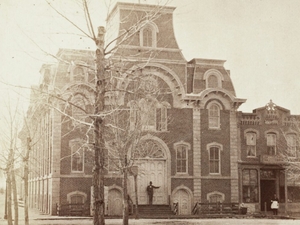
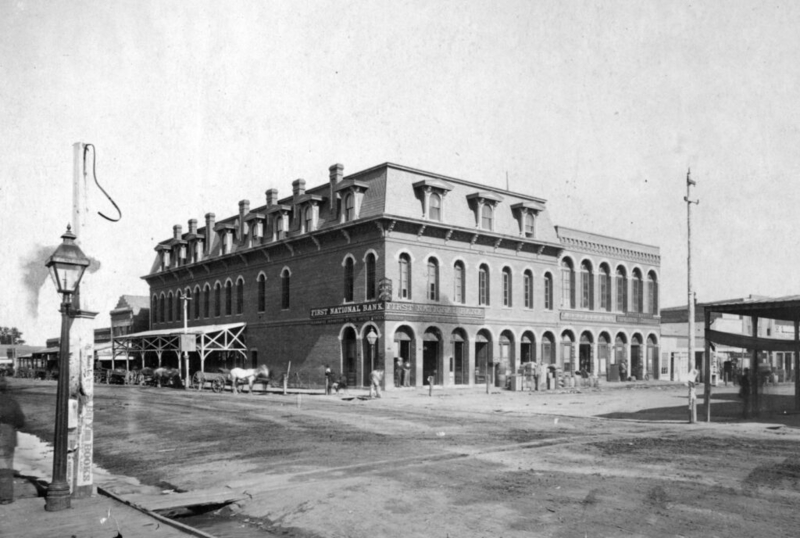
The third floor of the First National Bank building on 15th Street served as the chambers of Colorado's 1876 constitutional convention. (Courtesy of Denver Public Library Special Collections, X-23704)
After a month-long sprint of political campaigning across the new Centennial State, Coloradans went to the polls to vote in the first state elections on Oct. 3, 1876 — and telegrams arriving in Denver throughout the day soon left little doubt as to who the victors would be.
“By four o’clock in the afternoon it became an established fact that the majority for the Republican Party would be far in advance of what the most sanguine people had set it down at,” rejoiced the pro-GOP Rocky Mountain News the following day.
Headed by ex-territorial Gov. John Routt, who was returned to office as the state’s first chief executive, the Republican ticket won majorities even in “places that had never before given anything but overwhelming victories for the Democrats,” the News reported. By the evening the atmosphere at the state party’s Denver headquarters, nicknamed “The Wigwam,” was “electric.”
“No pen can describe the enthusiasm with which the victorious dispatches were received,” said the News. “Men shook hands over and over again, and threw their hats into the air, shouting until they were hoarse, in their delirium of joy.”
In fact, Colorado Republicans and the News’ editors were getting carried away with themselves: final results would later show Routt eking out a victory with 14,154 votes to the 13,316 for Democratic nominee Bela Hughes, and most of the other statewide races were similarly close.
Still, Republicans had made a clean sweep of the executive offices up for election, which included lieutenant governor, state auditor and superintendent of public instruction, and captured large majorities in the state Legislature. That would allow them to both elect the state’s first two U.S. senators and award its three electoral votes in the 1876 presidential election — a one-time provision in the state constitution that underlined Republicans’ partisan motive for admitting Colorado to the union in the centennial year.
“The election is over and we are heartily glad of it,” admitted the editors of The Colorado Banner, based in Boulder, one of the state’s few Democratic newspapers. “There is no use denying the fact that although not entirely unexpected, it does not meet our wishes by a great deal.”
Though the Colorado campaign had been bitterly fought, it was mild by the standards of the 1876 presidential election, which would become one of the most controversial contests in the country’s history.
Democrats in the South and beyond hoped to be swept back to national power for the first time since the Civil War, and the Republican-backed effort to guarantee Black civil rights in the ex-Confederate states through Reconstruction now hung in the balance. Elections in the South were marred by political violence and voter intimidation carried out by Democratic paramilitary groups that were organized in states like Mississippi and South Carolina.
“Although the excitement in Denver was intense yesterday, the election passed off very quietly, and no disturbances occurred,” reported the News.
“The battle still rages in all the other states, and we of Colorado are but interested spectators,” said the Democratic-leaning Golden Transcript. “In the canvass just closed here there has been less of personal abuse of candidates than we witness in many of the eastern communities, and we are rejoiced that it is so.”
Still, as the votes were tallied in the days and weeks following Election Day, Democrats and Republicans began to trade accusations of ballot stuffing and other acts of fraud. The Banner, for its part, conceded that Democrats may have been out-worked and out-organized, but went on to speculate about a “baser cause” for the Republicans’ success.
“It was a noticeable fact that men who heretofore had but little if any ready money, were handling it quite liberally for party purposes,” the paper’s editors wrote. “Who furnished it we do not know, but that it was furnished can hardly be doubted.”
The Oct. 3 election also sowed the seeds of a controversy that would engulf Colorado politics for more than a year to come.
Republican James Belford won election as the state’s at-large congressional representative for the remainder of the 44th Congress, unseating Democratic territorial delegate Thomas Patterson and spoiling the opposition party’s best chance at an upset. But a dispute arose over whether Belford had also been simultaneously elected to a full term in the 45th Congress, set to convene in March 1877, and Republicans and Democrats were soon bitterly divided over whether a second congressional election was to be held the following month.
Denver, CO