Analyst: Democrats show promise in gaining congressional control
Despite a hard push by Republicans to bolster their chances of retaining control in Washington by redrawing congressional districts to the party’s advantage, Democrats are in a good position to gain several seats in the U.S. House in November.
And which party controls the U.S. Senate after January is now a true toss-up, according to The Cook Political Report.
Historically, the party that's out of power picks up seats in the midterm cycle.






In Episode 48, you’ll hear from Erin Covey, who leads The Cook Political Report's coverage of the U.S. House of Representatives. Cook’s analysts have recently moved 15 House races in the Democrats’ direction, and say it’s realistic that the party could also take a majority in the U.S. Senate amid a worsening political environment for the GOP.
Covey is keeping an eye on U.S. House races in Florida, Ohio, Pennsylvania and Texas, along with the Senate races in Alaska, Iowa, Ohio and Texas.
You’ll also get a weekly news wrap-up from Evening Wrap newsletter writer Danielle Gaines and Daybreak newsletter writer Madyson Fitzgerald. They’ve got you covered with the latest on: data centers on federal land, states bolstering election safety and astronauts encouraging young people to vote.
Episode produced and edited by Mallory Cheng. Music for Stories From The States composed by David Singer.
Got questions? An episode idea? Email us at [email protected].
Subscribe to Stories From The States on Apple Podcasts, Spotify or YouTube.
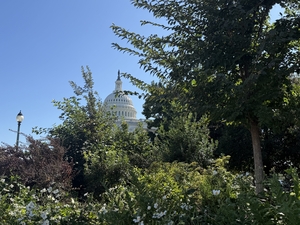
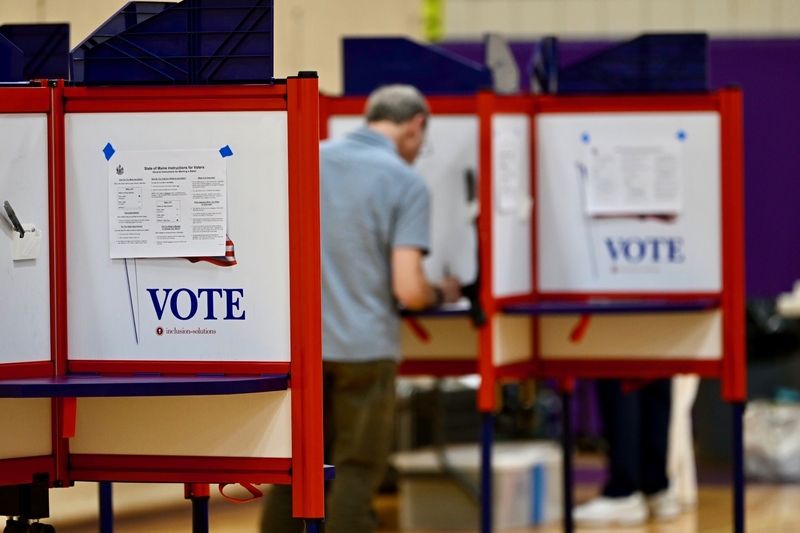
Photo: Voters will decide this November who will have control in the U.S. House and U.S. Senate. (Photo by Jim Neuger/Maine Morning Star)
Stories From The States is a production of States Newsroom, the nation’s largest state-focused nonprofit news organization, with reporting from every capital. At this pivotal moment in American democracy, our veteran journalists from all 50 states are reporting the consequences of government decision-making. By zooming in on one story each week, Stories From The States contextualizes and gives a human voice to what is happening now.
Transcript was created using an automated software.
Chris Fitzsimon
This is Stories From The States. I'm Chris Fitzsimon. Thanks for being here. There's a lot to catch up on this week, like over in the West, a California-based energy company is pushing plans to build a data center on federal land. This week in Tennessee, the state botched the execution of a death row inmate. We'll have the latest...
Transcript was created using an automated software.
Chris Fitzsimon
This is Stories From The States. I'm Chris Fitzsimon. Thanks for being here. There's a lot to catch up on this week, like over in the West, a California-based energy company is pushing plans to build a data center on federal land. This week in Tennessee, the state botched the execution of a death row inmate. We'll have the latest on the aftermath of that, and we're just about a month away from the November midterm elections. For the past year, Republicans tried to bolster their chances of maintaining control in D.C. by redrawing congressional districts. But according to an expert from the Cook Political Report, she says with a worsening political environment for Republicans, Democrats have a shot at gaining control of both the U.S. House and Senate.
Erin Covey
Control of the Senate is a pure toss-up, and Democrats are in a very good position to win control of the House. With the big question being, how many seats are they going to be able to pick up?
Chris Fitzsimon
Coming up, we'll chat with Erin Covey from the Cook Political Report. But first, let's check in on the news with our state's newsroom newsletter authors Danielle Gaines and Madyson Fitzgerald. Hi, Danielle and Madyson. How are you guys?
Madyson Fitzgerald
Doing good.
Chris Fitzsimon
Another crazy week. The baseball-I can't believe baseball playoffs are here already, and some of the series are pretty wild. Are you guys watching it?
Madyson Fitzgerald
I'm keeping an eye on it just for for fun.
Danielle Gaines
I'm out. The Cubs are out.
Chris Fitzsimon
The Cubs are out. That's right. And also, I think this is the biggest news: National Black Dog Day, as the proud owner of a giant rescue, half lab, half Great Dane black dog.
Madyson Fitzgerald
Oh wow!
Chris Fitzsimon
This is a day I celebrate.
Danielle Gaines
Well, I have a black. I have a black dog too, but he's kind of well. His name is Agate because he was supposed to be tiny, like the newspaper print, and then he just grew bigger.
Chris Fitzsimon
Same with me. Our dog is named Silla, and we thought we were just getting a black lab mix, and the mix turned out we didn't know from the shelter it was Great Dane, and now she weighs 110 pounds.
Madyson Fitzgerald
Whoa.
Danielle Gaines
Yeah.
Chris Fitzsimon
So that's a big dog.
Danielle Gaines
Wowza.
Chris Fitzsimon
Mady, what have you been up to?
Madyson Fitzgerald
What have I been up to while I'm preparing for some fall activities. I know I'm always talking about pumpkin spice, but this weekend we actually might go to a pumpkin patch, which would be very fun. And I'm also planning my Halloween party.
Chris Fitzsimon
Wow! It won't be long.
Madyson Fitzgerald
Yeah, yeah.
Chris Fitzsimon
Well, let's let's just jump to the news. Sort of a hard way to begin, but just a shocking couple days in Tennessee with which is making national news. An execution there went terribly wrong after the execution was stopped and then restarted. So quite quite a week in Tennessee.
Madyson Fitzgerald
Yeah, and this is also not the first time something like this has happened, and not just in Tennessee. This is also kind of a trend that we've been seeing across states over the past couple of years with botched executions and discussions on capital punishment and whether states should proceed with it. But yesterday, following the botched execution of Tennessee death row inmate Christa Pike, Republican Governor Bill Lee has ordered a hold on state executions for the rest of the year, and so on Wednesday, Pike was supposed to be executed by lethal injection. But after two rounds, she was still breathing. And according to media witnesses who were there, they actually said that they heard audible snoring. And so an anti-death penalty group filed an emergency appeal to end the execution and get Pike medical care as long as her legal team stepping in. And she was later taken by ambulance to a hospital for treatment after the failed execution. And so, this is just the latest, like I said, to be botched by the Tennessee Department of Corrections. And like, it's it's going to be interesting to see what happens for the rest of the year as they plan for elect or if they're going to decide if they want to keep continuing executions by next year.
Chris Fitzsimon
Yeah, and then this is also a year in the last couple years where some states execute people with firing squad. There's been an uptick in many states. It really feels like we. I thought not too many years ago we were heading away from the state killing inmates, and it looks like now we're we're back.
Danielle Gaines
Yeah, I mean this is all against the backdrop of, you know, the presidency of Donald Trump, who has encouraged states to once again pursue execution and death row penalties.
Chris Fitzsimon
Well, let's go jump into another topic that is everywhere. I feel like there's there are 10 stories in States Newsroom every week about data centers or more at data center is back in the news again. This time, maybe on federal land.
Danielle Gaines
Yeah. So another kind of state-federal issue here, and we do have a whole section on our website of data center coverage if you want to go there. But a California-based energy company is advancing plans for a data center on federal land in Oregon, and this is happening as the Trump administration has opened up development in several Western states for data centers on federal land. This would be the first one in Oregon, and one of at least 12 proposed for 17,500 acres of federally managed. Land. President Donald Trump issued an executive order in July 2025 to hasten data center development, and since then there have been these filings made about federal land management. And the Washington Sun first reported on this using the land records system, and so there are proposals on federal land in Arizona, Idaho, Nevada, Oregon, Utah, and Wyoming, all for data center development.
Chris Fitzsimon
Madyson, this seems like a new way in some ways around all the protests about data centers. Especially, looks like it might hit Oregon the most.
Madyson Fitzgerald
Yeah, for sure. And we've we've talked a lot about like protests against data centers and also against some of the non-disclosure agreements and a lot of the other things that have been involved in this giant conversation about how do we handle data centers. But Oregon has definitely been an epicenter as of late, and so this project specifically in Umatilla County is already home. Oregon that or that county in Oregon is already home to some of the state's largest data centers, and about 20% of the state's roughly 111 facilities, which is a lot, and that's coming from someone who lived in Virginia for for most of their life. Two data centers are being considered on BLM land in Utah, and four are being proposed in Arizona. And as of now, only one data center proposed on federal public land has been approved so far, but that project, which is in Boulder City, Nevada, was put on hold earlier this month after the city sued.
Chris Fitzsimon
It's interesting. The Bureau of Land Management traditionally and federal lands traditionally are are owned by the federal government to be preserved or as open spaces or for occasional parks or monuments or other things. And now this seems like a whole different direction.
Danielle Gaines
Yeah. So this was part of this series of executive orders from the president that kind of restated the use of federally managed lands. So we talked before on the podcast about using it for you know quote unquote national security for the mining of minerals and and whatnot. And the president has cast the growth of AI and the growth of data centers as an international competition that he wants the United States to lead in. So...
Chris Fitzsimon
Well, it's a natural segue into the next topic. It feels like, with some exceptions, President Trump is one of the few politicians openly supporting data centers and even sometimes demeaning people who oppose them, even though now most Republicans running for office at least have concerns about data centers. So, speaking of the election, I think a lot of us are worried about election election security. What's going to happen at the polls with all sorts of rumors and and claims being made? Madyson, tell us about some of the things the states are are thinking about.
Madyson Fitzgerald
Yeah, as we're getting closer to the November election, several states are definitely want to bolster election security. And as we were talking about earlier this year, I know there were conversations about ICE at the polls and other federal law enforcement agencies being at the polls more than they have in recent years. And while that's something that the federal government, I think, has still yet to nail down. States are instead stepping forward with their own kind of response to making sure that everything goes smoothly on election day. In Colorado, specifically, one organization is actually preparing to expand a longstanding nonpartisan election protection program during the midterm election with around 1000 volunteer poll monitors, which is up from 300 in 2024, and I'm not good at math, but that sounds like a very large percent increase.
Chris Fitzsimon
Big increase.
Madyson Fitzgerald
Huge. And in a couple other states, in Georgia, the state election board advanced a resolution calling on the secretary of state's office to update the state's voting machines. They're also urging some federal agencies to step in to ensure that these updates take place, and this conversation is also coming up in campaigns. In Michigan, five Secretary of State nominees from across the political spectrum came together for a virtual forum, and there, of course, they took several questions about election security and also battling misinformation, which is a very big topic that I feel like we will probably talk about it a few in a future podcast.
Chris Fitzsimon
Absolutely, and and Danielle, the there's still a lot of conflict between the Trump administration trying to get records, trying to withhold funding. It feels like there's a big battle, even though the Constitution and our government is pretty clear that elections are held by states, not by the federal government.
Danielle Gaines
Yeah. So one of the other things that's happening right now is kind of this idea that voters might be purged from various voter rolls across the country. And so the federal government has created this Save database, and it's they say it's meant to help root out non-citizen voters on the voter rolls. The U.S. Supreme Court issued an opinion just last week, allowing that to be continued to be used by states, and you have some states saying that they want to move forward with that. In Tennessee, a federal court ruled in favor of Nashville and some other communities after the Trump administration tried to withhold anti-terrorism funds from them if they did not use this database. We also had some stories. In Nashville, the leaders called it a notoriously error-filled system. In North Carolina, I think the system has flagged 1,600 people, and it's unclear how the state plans to move forward with that. Missouri has said that they plan to continue using it, and of course, this leaves very little time for anybody who might be purged to try to fix that and and get back their right to vote.
Chris Fitzsimon
Yeah, I am sure we will be talking about this the the rest of this month of October as we get closer to the election. Well, let's jump in with one last thing before we run out of time, this is to me fascinating.
Danielle Gaines
Yeah, this one I just thought was was kind of fun and not something you hear about every day. When I was young and growing up, MTV had Rock the Vote, and that was how they were trying to get young people out to the polls. But this generation has Astronauts for America, so this new group, Astronauts for America, they are touring college campuses, encouraging young people to get out and vote. One particular former NASA astronaut, John Harrington, he was out this week in Montana and talked to our Montana site. He is a member of the Chickasaw Nation and was the first enrolled member of a Native American tribe to fly in space, and so he has a lot of unique perspective on on the world and on contributing to community around you, and he's been going to college campuses, encouraging young people to vote, not telling them who to vote for. He says just encouraging them to go out and do it. And I think my favorite part of the whole little story is that they are using, you know, a very iconic statement to spur action. So they say, "going to the polls is one small step for you and one giant leap for our country".
Chris Fitzsimon
Oh, there you go, Neil Armstrong. Well, thank you both as always. Good to talk to you.
Danielle Gaines
Thank you.
Madyson Fitzgerald
Yeah, good to hear from you.
Chris Fitzsimon
To stay up to date on the latest news happening in the states, subscribe to Daybreak and Evening Wrap. You can subscribe at newsfromthestates.com/subscribe. The midterm elections are right around the corner. Republicans now control both the U.S. House and the U.S. Senate. Historically, the party out of power picks up seats in the midterm election cycle. Experts at the Cook Political Report predict Democrats will gain several seats in the House in November. They also think it's actually a toss-up about which party will control the U.S. Senate. So, how many seats do Democrats need to have congressional control? In a moment, we'll chat with Erin Covey about what she thinks. She leads the Cook Political Report's coverage of the U.S. House of Representatives. We'll be right back.
Chris Fitzsimon
Daily news, especially these days, can get overwhelming. At times, it's hard to keep up with how it all could impact you, your family, and your community. Hi, I'm Chris Fitzsimon. I host a podcast called Stories From The States to help make the top stories a bit more digestible. It's a weekly news podcast that explores one issue happening in the states that could shape the entire country with the help of local journalists.
Sherman Smith
There's no evidence that anybody can find really where somebody was really bothered by who is in the bathroom with them?
Chris Fitzsimon
Experts.
Dr. Kristin Lyerly
They had an ultrasound picture of what they were told was their pregnancy, but what it actually was was a full bladder.
Chris Fitzsimon
And community members.
Max Moran
Money isn't everything, and the real value when it comes to the land is being able to pass it down.
Chris Fitzsimon
We've got you covered. Subscribe now to Stories From The States, a podcast from States Newsroom.
Chris Fitzsimon
Erin Covey leads the Cook Political Reports coverage of the U.S. House of Representatives. Hi, Erin Thanks for being here.
Erin Covey
Yeah, thank you for having me on.
Chris Fitzsimon
Well, can you give us an overview, sort of, of the political climate, there's it feels like I might be wrong, but following politics for a long time, there have been more shifts lately than usual. I wondered what you what your sort of senses of the overall political climate as we're now roughly a month away from the general election.
Erin Covey
Yeah, I mean, I think that we have known from the beginning of the cycle this was going to be tough for Republicans. Historically, the party that's out of power picks up seats in midterm cycles. There have only been a couple of recent exceptions to that role, and so Democrats have been on offense all cycle. But what has happened over the last month or so, I would say, is that the overall political environment has really solidified to favor Democrats, Trump's approval rating has been stuck under 40% for the last several months, and Democrats have opened up a wider lead on the national generic ballot. Some of that is due to the fact that after Labor Day pollsters start pulling a smaller group of the electorate, likely voters rather than registered voters, and we expect that Democrats tend to kind of pick up a lead through that. But I think at this point, it is clear that we are in a political environment that is going to, you know, be about probably eight to 10 points better for Democrats than it was in 2024. We don't know exactly how that is going to play out in every single state in every single district, but what we do know is that at this point, control of the Senate is a pure toss-up, and Democrats are in a very good position to win control of the House. With the big question being, how many seats are they going to be able to pick up? At this point, our estimation is that Democrats will likely end up with around 220 to 230 seats at the end of the day, of course, that would be a majority in all of those cases. But on the lower end, that would be a pretty slim majority. Some of that is because the battleground of competitive districts is relatively small compared to previous cycles, and so the number of truly vulnerable seats that Democrats can pick up is capped in a way that it wasn't in 2018, for example, but the national political environment is, you know, just as good as it was for Democrats in 2018.
Chris Fitzsimon
It's interesting. I guess normally, as you mentioned, when the party out of power is always has the advantage in off-year elections, and I I don't know if it's usual or not that there's a one party controlling all the House, the Senate, and the White House, and the president's approval rating is low. I guess those are the and the economy people's perception of the economy is that it's still struggling and they're upset about gas prices and so forth. That seems to be the the sort of the ground we're under. Has this been an unusual year in that regard, or is it does this happen every cycle? Would you say?
Erin Covey
I wouldn't say it's particularly unusual. I think what is different for Democrats this cycle is that Trump's unpopularity is largely driven by his handling of the economy, whether that's through tariffs, through of course the Iran War. I think that Democrats have an advantage on economic issues that they normally don't have. Historically, voters have said that they trust Republicans to handle economic issues better than Democrats, and that has changed this time around. And Trump's approval on economic issues specifically is underwater in a way that it was not in 2018. And so I do think that the economic angle is perhaps a bit more of a unique factor for Democrats this cycle. But typically, what we do see is that at this point, in a midterm year, the party that's in power has taken on a lot of criticism, and voters' views of them begin to sour. It is not uncommon to see a president's approval rating underwater at this point, and the only like exceptions to that rule were like in 2002, for example, when Republicans were able to pick up seats in the House, and that was in large part due to the fact that President Bush's approval rating was still in a strong place following the 9/11 attacks, and so the fact that the president's approval rating is underwater certainly that is not an outlier. That is kind of what we would expect at this point in the cycle, but I think the economic angle, in particular for Trump, is what makes this election cycle different.
Chris Fitzsimon
I want to talk a little bit, if we can, separately about the House and the Senate. I guess we'll start in the House. You were mentioning that the the range of margins. It does seem like the Cook Report and most prognosticators are expecting the Democrats to have a majority, and the question is the size of the majority. Is there a chance, as some Democrats would hope, that this is that there's still room for the Democratic majority to be bigger than the margin you have forecast?
Erin Covey
Certainly, I mean, I think we're going to continue adjusting our race ratings in the next five weeks or so. You know, I think that people forget that for a lot of voters-they're just now tuning into the election, and so the undecided voters-we're just now getting a sense of how they are going to vote in November. For a lot of these races, if you look at polling over the summer, they were stuck at maybe 43-43, So yes, the Democrat and the Republican are tied, but in the low 40s, and so you have a lot of voters who were still undecided, and in the vast majority of these districts, those are voters who tend to lean a bit more Republican because the House battleground is largely made up of districts that Trump carried to a certain extent in 2024. Some are districts that he only narrowly won. Some are districts that he won by double digits that are now highly competitive, but those undecided voters are people who you know tend to lean Republican, but also have a pretty unfavorable view of Trump at this point. So whether or not those voters come home to Republicans and still vote for these Republican members of Congress, even if they're dissatisfied with the president, I think has been the task for Republicans all cycle, and Democrats hope that these voters either stay home or that they can persuade at least a segment of them to vote for Democrats.
Chris Fitzsimon
What what impact does the out of cycle gerrymandering mania that we saw recently? How does that affect these races and the and control of the House overall?
Erin Covey
Yeah, it's really remarkable. We saw ultimately. Nine states redraw their maps this cycle. There would have been a 10th had the Missouri map not been thrown out in court at the last minute. But despite all of these new lines that have dramatically affected not just members in competitive districts but also members in safe seats who now have pretty new territory, Republicans are definitely in a better position than they were before this, but not in a much stronger position, particularly due to the environment that they're dealing with at the national level. We estimate that Republicans are basically able to pad their majority by about four seats on net. That's just due to redistricting alone. So they technically have a three-seat majority in the House with redistricting, we estimate they effectively have around a seven-seat majority. I would say there is a lot of variance, though, in that because of the fact that a lot of the seats that were redrawn, particularly in Texas and Florida, these are seats that favor Republicans more, but they are still quite competitive. So there is certainly a world in which Democrats are able to win these seats still this November, and Republicans may not actually realize the gains they made through gerrymandering until 2028, when these districts are going to be much harder for Democrats to win, most likely.
Chris Fitzsimon
I know there's so many races, obviously 435, but is there a bellwether race or two, or state or two that folks should look at. You know, a long time ago, it used to be whoever won Ohio won the presidency, or there'd be a a swing seat here or there. Are there are there specific races, one or two that people should look to?
Erin Covey
It's hard to narrow it down to one or two races. We currently have 21 seats in the toss up column. The large majority of those are held by Republicans, so you can see that they are obviously playing the most defense. If Democrats win all of the toss-up races and all the races that they're favored in, that would get them to around 230 seats. So I would watch those races in particular. In terms of regions of the country, though, there are definitely some states that have more competitive races than others. I would pay close attention to Texas and Florida in particular. Texas, of course, has a highly competitive Senate race as well. That is a large part of the reason that Democrats are feeling better about a lot of these House races at the same time, because those coattails can help lift up Democratic candidates running down ballot. The other two states that I would pay close attention to on election night are Ohio, which you mentioned, and Pennsylvania. Ohio, of course, also has a very competitive Senate race and a very competitive governor's race happening at the top of the ticket, and so those environmental factors within the state are also benefiting Democrats as well. And then in Pennsylvania, Pennsylvania has always had a large number of competitive House races. Governor Josh Shapiro is at the top of the ticket. He is not going to have a competitive race this cycle due to how popular he is. Even though Pennsylvania itself tends to be a swing state, the governor's race is not competitive. But both of these states have you know four to six districts that are worth keeping an eye on. Six in Ohio, four in Pennsylvania, Texas has around six districts that we're tracking. Florida has around seven districts that we're tracking. So, if you want to watch the races or the states that could have the most sway in terms of which party controls the majority, I would follow those four states in particular. And on election night, Florida, of course, those results are going to come in first. So that is really going to be the real bellwether, I think, of you know how good of an environment this is for Democrats.
Chris Fitzsimon
Let's turn to the Senate. You mentioned some of these Senate races. If we had been talking a few months ago, I think people would have thought it was a long shot for the Democrats to have given the map that they have to defend Georgia, North Carolina, other places. People would have thought that was a long shot. Now it does, as you mentioned, I guess a 50-50 chance that the Democrats take over the Senate, which means they'd have to net four seats. Is there a map that's widening? We hear a lot about states like Kansas, Nebraska. Is there a potential that some of these that weren't swing state swing seats a few months ago are now in play.
Erin Covey
Yeah, I mean, I think what's remarkable about Democrats' prospects in the Senate is that they are contesting races in states that do typically favor Republicans by decent margins, and that's races in Texas, Ohio, Iowa, Alaska. These are all states that voted for Trump by double digits in 2024, these are all also states that we have rated as a toss-up when we're looking at their Senate races. So Democrats, I would say, have already expanded the map to include a lot of winnable races in states where they normally don't compete, and that is the reason that the Senate is so in play this cycle. And you also have the fact that Republican candidates in places like North Carolina and Georgia, which should be highly competitive, have struggled and have faced strong Democratic recruits. So a lot of this is due to candidate quality. Of course, this is also impacting the Senate race in Texas, for example, where the Republican Attorney General. Won the primary there and is now highly vulnerable just due to the fact that he has so much baggage on his own. But yeah, I think we're also keeping an eye on some of those other reach states for Democrats like Kansas and Nebraska. I think Kansas is probably a slightly better pickup opportunity, but these are still, I would say reach races for Democrats, and we see Republicans as favored to hold those states.
Chris Fitzsimon
And what about there's a couple states where I think Republicans thought they had a shot at maybe making gains. One of those would be Michigan. One would be New Hampshire. Where do those two stand as we as we talk?
Erin Covey
So we have those two races also both rated as a toss up. Michigan, you know, was going to be competitive the whole cycle, and I think that Republicans have probably a slightly better chance than they would have had otherwise, due to the fact that Democrats nominee Abdul El-Sayed is more progressive and has some more vulnerabilities with the middle of the elect the electorate in Michigan. But at the same time, the polling still shows that this race is quite close, and that El-Sayed has a bit of an edge there, and so that race remains, you know, highly competitive. The New Hampshire Senate race is also a bit of an anomaly due to the candidates that are at the top of the ticket. The fact that Republicans got a Sununu to run for Senate is the only reason I would say that this race is really on the board at this point, because of course the Sununu's have long held statewide office in New Hampshire and are seen in a separate category among voters than Trump. People aren't seeing you know a Johnson Sununu as a generic Republican in the same way that they would see another Republican candidate in New Hampshire, and so Republicans do have a much better shot at flipping this seat than they should have, given the fact that the environment largely is not in their favor.
Chris Fitzsimon
And finally, before I let you go, and thanks for this great information. What has surprised you in analyzing this year's election? Has there been anything that's that has caught you off guard?
Erin Covey
You know, I don't know if this is surprising necessarily, but it has really been striking to see how much the Hispanic voters that swung heavily towards Republicans in 2024 have reverted back towards Democrats, and as a result, you have a lot of House seats in places like South Texas and Florida that have large Hispanic populations that are very much in play now, despite the fact that these are districts that voted for Trump by double digits in 2024, and I think that demographic is very independent and is very much, you know, in play for both parties, and they're going to have a disproportionate impact on the results in November, just because the battleground has, you know, a high number of districts that have either majority Hispanic or plurality Hispanic populations, and so they're going to have a big impact on how the house is decided.
Chris Fitzsimon
Well, thank you so much, Erin. We appreciate all your insights. Thanks for being with us.
Erin Covey
Thank you.
Chris Fitzsimon
And that's our show for this week. Thanks for listening to Stories From The states. I'm Chris Fitzsimon. Mallory Cheng produces and edits the podcast. David Singer produced our theme music. If you liked what you've heard, please share it with someone you think might enjoy it, and leave a rating and review. It means a lot to know what you think about the podcast, and it helps other people find us. To stay up to date on all the latest episodes, subscribe now to Stories from the States, a podcast from States Newsroom, available wherever you listen to podcasts. We'll talk to you soon.