The government keeps child support owed to poorest Kentuckians. GOP lawmakers seek change.
Oct 01, 2026 | 2:45 pm ET

Description
A Kentucky legislator has proposed legislation to leave more child support in the hands of families. (Getty Images)
FRANKFORT — Around 14,000 families receiving Kentucky Transitional Assistance Program benefits in 2025 didn’t receive most child support owed to them, experts said Thursday.
During the 2027 legislative session, Sen. Craig Richardson, R-Hopkinsville, plans to renew his 2026 push to reform this process. He presented before Thursday’s Interim Joint Committee Judiciary, saying the current process “penalizes the parents that are doing the right thing in paying that child support.”
“When a Kentucky family is on KTAP and is owed child support, this state currently intercepts it, and it’s sending 72% of those funds to the federal government instead of to the kids that it is meant for,” Richardson said.
Under his proposed legislation, $100 per child per month — up to $200 per household — would “pass through” to the intended recipient and not be used to recalculate public benefits.
KTAP, which comes from federal funds from the Temporary Assistance for Needy Families (TANF) block grant, benefits eligible low-income families for a maximum of 60 months, which do not have to be consecutive, over the course of a lifetime.
‘Modest but vital’ help for low-income Kentuckians takes a hit
Dustin Pugel, the policy director at the Kentucky Center for Economic Policy, said the policy of withholding child support funds in these cases can be traced back to the 1970s.
“The idea at the time was that when parents separate, and one parent falls on hard times and receives what was then Aid to Families with Dependent Children which is no longer in our program, that the payments that the father was making, the child support payments, should essentially reimburse the government, including the federal government, for the ways that it was taking care of his children,” Pugel explained. “It’s a 50-year-old conception that I think needs to be updated.”
According to Pugel, in the 2025 fiscal year, Kentucky kept more than $4 million of these payments and sent more than $11 million to the federal government. If Kentucky changed its policy to ensure this money makes it to the families for whom it is intended, it would be the 32nd state to do so, Pugel said.
“There’s a lot of research that shows that there are benefits beyond that really important social benefit, including that when child support payments are passed through, child support payments are more likely to be made by those dads,” Pugel said. “Dads are more likely to claim paternity. Child support payments increase, and there’s actually a reduction in the likelihood that those children will be involved in the child welfare system later on down the line.”
Christian Postel, the CEO of Lexington Leadership Foundation, said he grew up with a single mother and now, through one of his organization’s initiatives, tries to strengthen relationships between fathers and their children.
“Imagine being one of the fathers we serve: You’re in recovery, or you’re just out of incarceration, and you’re doing the right thing,” Postel said. “You’re working, and you’re making child support payments, and your children and their mother receive none of your hard-earned wages. That is a system that degrades the father, disincentivizes family togetherness and deepens the father absence crisis in our commonwealth.”
If Kentucky were to change this policy in 2027, Postel believes it could also help keep children from entering state custody.
“Please understand that in Kentucky, the line between poverty and neglect is as thin as a blade of bluegrass,” said Postel. “Any dollars that make it to these children are dollars that keep them further from the system. The surest way to serve a child in state custody is to keep that child from entering custody in the first place. This bill helps do that with money that has already been paid by a working father who already earned it for a child meant to be provided for by it. The bill serves working fathers, the bill serves single mothers and the bill serves vulnerable children.”
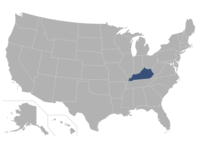
Frankfort