What bills did Gavin Newsom sign into law — or veto — in his final year leading California?
Sep 30, 2026 | 7:39 pm ET
Description
In summary
California lawmakers sent Gavin Newsom hundreds of bills in his final months as governor. Here’s how he handled proposals to counter the Trump administration, lower the cost of living, crack down on data centers and boost retirement plans for public employees.
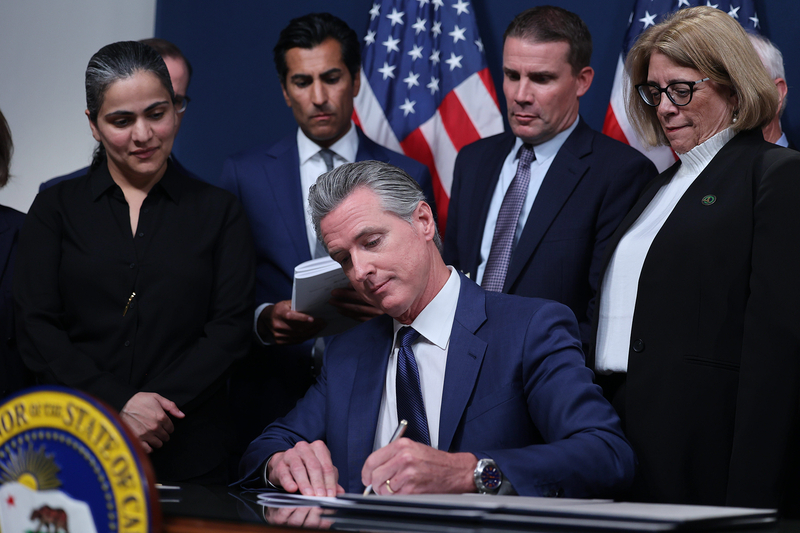
Gov. Gavin Newsom is signing and vetoeing his last bills as California governor.
Wednesday is the final day for Newsom to weigh in on 1,160 bills that were sent to him by state legislators.
The governor, widely understood to be gearing up for a run for president, wanted the spotlight on some bills more than others. Special attention was paid to placing guardrails on artificial intelligence and standing up to President Donald Trump.
During his first signing ceremony, in front of the Golden Gate Bridge, Newsom signed 13 bills that aim to change how children and teens can use social media and AI, including one that prohibits social media companies from giving teens under 16 “addictive” features like infinite scroll, and another that holds companies liable if they fail to protect a child from harm.
“Parents can’t compete,” he said. “Can’t compete with the engineering, can’t compete with the algorithms, can’t compete.”
In the weeks since then, his team drummed a steady beat of criticism against Trump. In a news release partially titled “THE OPPOSITE OF TRUMP!” he highlighted a new law prohibiting public officials from issuing cryptocurrency meme coins, which Trump did in 2025.
At the finish line Wednesday, he signed bills to ban child marriage, strengthen the state’s ability to rein in big business, and grant tax credits to the collapsing local news industry.
During a news conference for the journalism bill, the governor told reporters he will have considered nearly 8,000 bills during his time in office, and the last batch is making him nostalgic.
“I love this stuff,” he said. “We’ve had more fun devouring even bills that sunset a commission, which, trust me, I didn’t spend a lot of time on before.”
Here’s a look at some of his final bill signings and vetoes.
Data centers and technology
Legislators and the governor showed a more robust appetite for regulating technology in 2026. Take data centers: After vetoing a water disclosure bill and signing a stripped down environmental study last year, Newsom ate from the entire regulatory buffet this year, enacting no fewer than seven laws to keep data centers from inflating electric bills and harming the environment.
Justice and gun control
Newsom signed laws to bolster DUI laws following a CalMatters investigation, as well as measures that require firearm owners to take safety classes and exempt certain seniors from jury duty.
Economy
California Democrats were torn between adopting policies that would make the state more affordable and bills that aimed to regulate the massive companies that dominate the economy.
Elections
Newsom signed a number of laws that originated from Democrats’ concern that the Trump administration would interfere with California elections by limiting vote-by-mail or discouraging people from voting.
Immigration
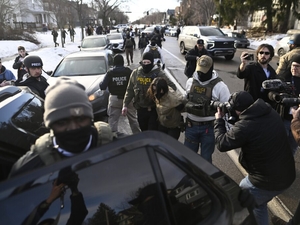
Democratic leaders passed a wave of laws to disrupt the Trump administration’s deportation campaign, including measures that empower people to sue federal agents over alleged civil rights violations and extend the state’s power to investigate conditions in detention centers.
Insurance
California’s insurance crisis shaped several proposals that went to Newsom. He signed one bill into law that imposes some additional responsiveness requirements on insurers, but vetoed two others put forth by fire survivor groups that would add additional transparency and penalties.
Education
Newsom faced decisions on bill meant to give schools some financial relief from sexual assault lawsuits and to increase the number of 4-year degree programs in community colleges.
Environment
On environmental bills, Newsom’s record suggests he put economic growth, his own prior policy choices, and executive control over spending ahead of expanding protections.
Pensions and public employees
Newsom took a hard line against public employee unions that sought to gain wins for their members in the Legislature. He vetoed bills that would have allowed more state employees to work from home and boosted retirement benefits for first responders.
Homelessness
Sacramento will now try a new regional approach to homelessness thanks to a new law. Meanwhile, state money can now be used for sober housing, and small tweaks were signed into law for CARE Court, Newsom’s signature attempt to get the sickest Californians on the street into mental health care.
Sacramento