Crackdown on out-of-state vehicle registrations to start in October
Sep 30, 2026 | 6:51 pm ET
Description
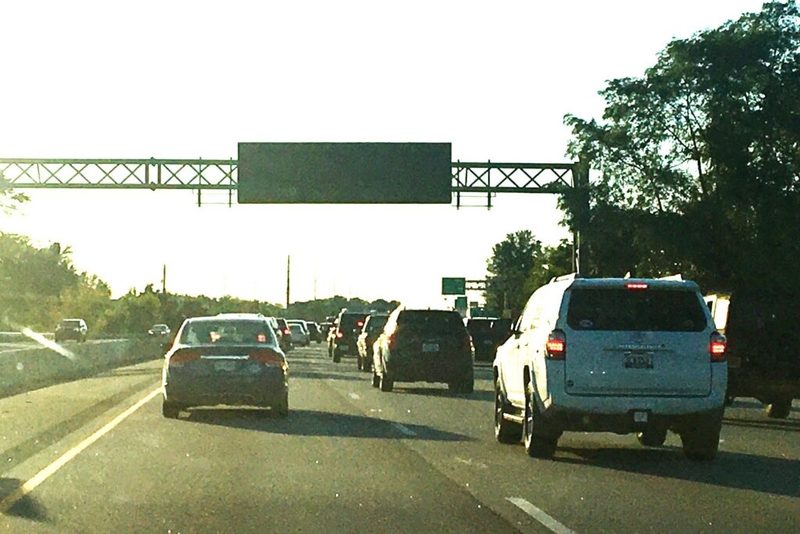
Maryland residents with vehicles registered in other states will have 60 days to register in Maryland or face fines and other penalties. Notices are expected to go out later this month. (File photo by Bruce DePuyt/Maryland Matters)
State officials say they are ready to crack down on Maryland residents who register their vehicles in other states.
Under a law that takes effect Thursday, Marylanders who register their cars in other states will have 60 days to register them in Maryland. Those who do not could face fines and other penalties, but Maryland Motor Vehicle Administrator Chrissy Nizer said her agency hopes most will make use of the grace period.
“That’s the end goal of this. It really is not to fine people,” Nizer said. “We don’t want to have to do that. We want people to come in compliance prior to that.”
The number of vehicles registered in Virginia to Maryland drivers is a growing problem.
In November 2023, more than 101,000 vehicles registered in Virginia were associated with Maryland addresses. That number jumped to more than 111,000 by the following June, according to an analysis presented to lawmakers in January.
In Baltimore City, 10% of fatal accidents from 2023 to 2024 involved vehicles registered in Virginia. Over 7,000 nonfatal crashes — about 47% of all non-fatal accidents during that same period — involved vehicles registered in Virginia.
Baltimore City Police Lt. Col. Derek Loeffler told lawmakers in January that out-of-state registrations account for 11% of all unpaid parking, speed camera and other citations.
In July, the Office of Program Evaluation and Government Accountability reported that 25% of all speed camera citations issued over a three-year period were issued to vehicles registered out of state. Topping the list were vehicles registered in Virginia.
Of primary concern is safety, Nizer said.
“It really all starts with safety, and we know what the requirements are in Maryland,” she said. “You have to have that safety inspection when you title and register a new vehicle. You have to comply with insurance requirements.”
Virginia has different insurance requirements. Additionally, Nizer said data shows that Maryland vehicles registered in Virginia are not in compliance with Virginia inspection requirements.
“Over 90% of them either were not completed or were not in compliance,” Nizer said. “That’s a real concern because if those vehicles are out there driving on the roads but don’t meet basic safety standards, and they are in a crash — obviously, that means that the risk of injury or even death is much higher.”
There are also budgetary concerns.
Registering in Virginia allows the vehicle to avoid Maryland registration fees. Those fees, based on weight class, make up 17% of the state’s Transportation Trust Fund, which pays for highway and transit projects. Some of the registration fees also help pay for emergency medical services and Shock Trauma.
Additionally, those vehicles avoid Maryland vehicle emissions testing.
A recent audit found that out-of-state vehicles owed more than $818 million in unpaid tolls and fees. Vehicles registered in Virginia owe nearly $235 million — more than any other state
Over the summer, officials started promoting the “Plate where you live” program. The goal was to give owners as much notice as possible.
The MVA and its counterpart in Virginia identified nearly 80,000 individuals who live in Maryland but register vehicles in Virginia. Seventy percent of the notices went to drivers in three jurisdictions — Prince George’s County, Baltimore City and Baltimore County. More than a third went to residents in Prince George’s County, according to the MVA.
In July, those owners received “courtesy letters” announcing the new law. About 3,400 registered their vehicles in Maryland, Nizer said.
The agency expects an updated file from Virginia in October. The new data will be used to send official compliance notices.
“Most of our compliance periods start when we send that first notice out,” Nizer said.
Motorists who get their vehicle titled in Maryland within that 60-day window will face no fines or penalties. After that, owners of vehicles face a fine of $7 per day for the next 60 days. The maximum fine is $420.
After that first 120-day period, owners of vehicles not registered in the state are subject to other penalties that could include seizing license or immobilizing those vehicles.
For now, most of the discussion about enforcement has centered around vehicles registered in Virginia, but supporters of the program insist that the out-of-state tag bill is not meant to focus on one state.
“We try to call it the out of state tag enforcement bill,” Nizer said. “To be clear that it’s not about Virginia specifically.
Virginia law — unlike Maryland — allows non-residents to title their vehicles in the state.
“There are some other states who also have that kind of law,” Nizer said, adding that her agency is looking at other states with similar laws. Her agency also takes “complaints from individuals,” a process that has been “in place for many years.”
Annapolis, MD