Georgia voters see tough future for next generation ahead of midterm race, poll finds
Sep 30, 2026 | 4:22 pm ET
Description
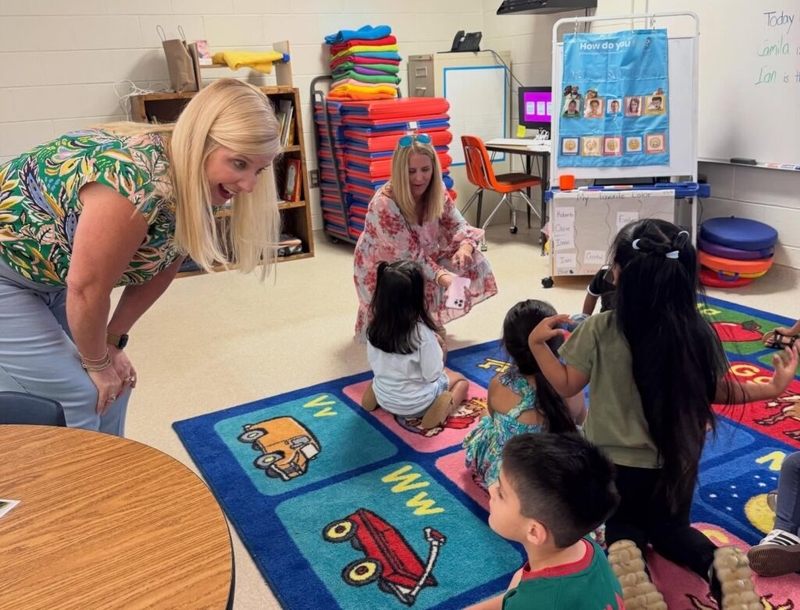
Amy M. Jacobs (left), commissioner of the Georgia Department of Early Care and Learning, visited pre-K summer transition program classes in northeast Georgia. New polling finds Georgia parents and non-parents are pessimistic about prospects for the next generation and think childcare is too expensive. Photo courtesy of the Georgia Department of Early Care and Learning
Georgia’s preschoolers won’t be able to cast a vote this November, but the state’s youngest residents could play a role in deciding the state’s next governor, according to a new poll.
Nearly 70% of Georgians say they are pessimistic about children today having a better life than the previous generation, and among parents, that number is 78%, according to a new poll released by the Georgia Early Education Alliance for Ready Students asking more than 600 likely voters about policies for families with young children.
Among the respondents, 68% said childcare is too expensive – including 67% of those who are not parents – and 63% of those polled said they would be more likely to vote for a candidate who supports policies that give more families access to quality childcare and preschool.
That includes majorities of Democrats and independent voters. Among Republicans, 38% said they would be more likely to support such a candidate, and 10% said they’d be less likely.
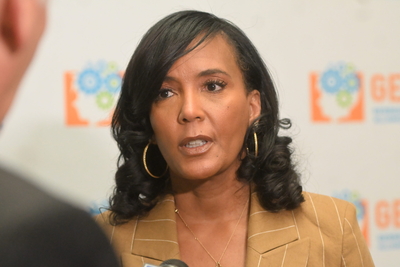
During a candidate forum hosted by GEEARS in Atlanta this week, the candidates for Georgia governor offered different priorities for policies to improve the life trajectories for preschoolers in the state.
Democrat Keisha Lance Bottoms said a top priority for her administration will be to expand access to the state’s universal pre-K program.
Georgia offers free state-funded pre-K classes for all 4-year-olds that have received high marks for quality, but classrooms are more available in some parts of the state than others, and not every child who wants a spot can get one.
“Part of the reason the lottery was approved by voters in Georgia was so that we could properly fund pre-K in this state,” Bottoms said. “Unfortunately, the state has still fallen short in doing that. We claim to have universal pre-K in Georgia. We absolutely do not. It should be a priority. It’s an economic issue as well as an educational issue.”
Bottoms said she wants to make pre-K available to every family that wants it and make 3-year-olds eligible, paying for it by drawing from the Georgia Lottery’s $2 billion unrestricted reserves and by putting it to voters whether to allow casinos to operate in Georgia. Bottoms said doing so could bring up to $500 million per year in revenue.
“We know that we’ve got neighboring states that do have casino gambling, but it would allow us to keep that revenue within the state and then plug any gaps where we can, whether it be with education or healthcare in this state,” Bottoms told reporters. “It could be a significant game changer for our budget, and it can be life-changing for so many people around the state.”
Bottoms said fully expanding Medicaid would help the finances of families with young children and proposed other policies including emphasizing third grade literacy, raising teachers’ starting pay in the state from $48,000 a year to $60,000 and eliminating income taxes for teachers.
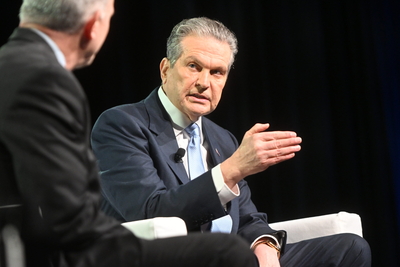
Republican candidate Rick Jackson did not attend the forum, but sent a short video message outlining his priorities without many details.
Jackson pledged to increase literacy rates for third graders, make healthcare more available, reduce maternal and infant mortality rates and modernize the state Division of Family and Children’s Services.
“I’m not running for a title,” Jackson said. “I’m running to make life better for all Georgians, especially our children who don’t have a voice at the Capitol. They’ll have a voice because I will be helping every child in this state.”
Atlanta, GA