Deadline hits for law agencies to remove license plate readers from state roads
Sep 30, 2026 | 3:48 pm ET
Description
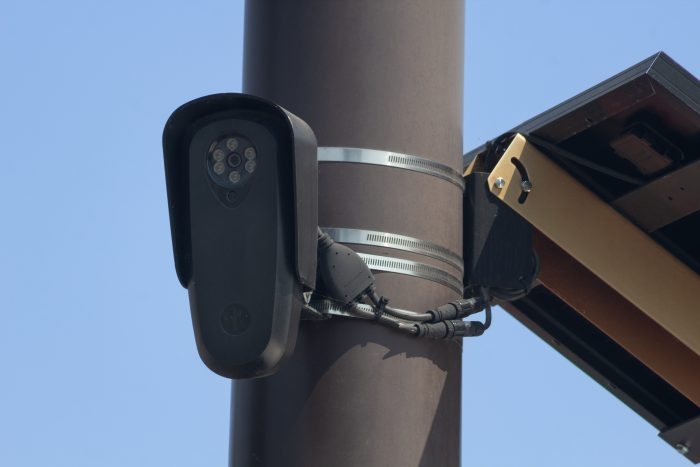
Flock automated license reader as captured on Aug. 5, 2026. (Photo by Valentin Termite/Idaho Capital Sun)
Local law enforcement agencies in Florida were required to remove Flock-style license plate readers on state-owned land and right-of-ways on Wednesday.
Those actions were required after Gov. Ron DeSantis expressed concern about data privacy and misuse of that technology last month. That led the Florida Department of Transportation (FDOT) to issue a memorandum revoking existing permits for automated license plate recognition (APLR) systems installed within the right of way within the state highway system, effective Sept. 30.
The decision has received pushback from some law enforcement officials and mayors, who say that the problem isn’t with the technology, but with rogue officers.
“Don’t throw the baby out with the bathwater,” Pinellas County Sheriff Bob Gualtieri said Wednesday during a press conference to announce that two deputies had been arrested following allegations of misusing license plate reading cameras.
“It solves homicides and rapes and returns people with dementia and Alzheimer’s to their loved ones. It is a very, very productive and beneficial public safety tool. But what we have to do is make sure our people use it properly and adhere when there’s consequences to misuse.”
Gualtieri reported that one of the deputies arrested searched the license plate of a woman he was interested in dating 300 times, 207 of them while off duty. The other officer ran the license plate number of a 17-year-old he was romantically interested in.
Law enforcement agencies have been using APLR cameras for years — Gualtieri said Wednesday that Pinellas has used them for 20 years — but concerns about privacy and abuse of the technology by law enforcement officers erupted this summer across the country, with more than 150 local governments choosing to deactivate or cancel their contracts with APLR vendors, according to DeFlock, an advocacy group that tracks the cameras.
While Flock Safety is the best-known and most used license plate reading company in the country with an approximately 82% market share with law enforcement agencies, there are other ALPR companies as well, as reported by NewsNation.
‘Where is this data going?’
“There’s obviously times when I think that it’s probably been useful, but where is this data going?” DeSantis said during a news conference in late August. “How much data are the companies doing? They claim that the companies are going to misuse it, but nobody’s watching that.”
The governor said that while he was certain that nearly every sheriff in Florida could point to a situation in which Flock-style license plate-reading cameras were used appropriately and “probably effectively,” he was concerned about how the data could be misused.
The two men running to succeed DeSantis in office, Byron Donalds and David Jolly, have said they support DeSantis’ action.
A number of Florida sheriffs immediately responded to DeSantis’ concerns, announcing they were discontinuing the cameras’ use in their counties, even though some didn’t appear happy to be doing so.
“Please know that the majority of the Board of County Commissioners’ lack of support for this agreement will impact the solvability of crimes and our ability to locate missing and endangered children and adults, including the victims of human trafficking,” wrote Pasco County Sheriff Chris Nocco in a letter to the commission announcing his agency would terminate their use.
Miami Beach Mayor Steven Meiner and six other South Florida mayors contacted Gov. DeSantis and FDOT Secretary Jared Perdue on Sept. 1 expressing opposition to the memo and requesting an immediate pause on the enforcement of the agency’s request “pending consultation with affected municipalities.”
Other high-profile Florida sheriffs such as Gualtieri and Polk County’s Grady Judd have said they will continue to use these cameras but would comply with the ban on state right-of-way.
Gualtieri said Wednesday that “misuse” of such systems by officers isn’t anything new, and that there invariably will be “people who just do bad things and stupid stuff” in any profession. But he said he understands the need for accountability.
“I wholeheartedly support having a discussion and having greater guardrails on this and making sure that there are harsher consequences for misuse, and that we do everything we can to make sure that the public has confidence in what we’re doing,” he said.
The arrest of the two sheriff’s deputies in Pinellas County now make 27 law enforcement officers who have been placed on leave, fired, or arrested regarding the cameras, according to an investigation by TCPalm. One Central Florida police officer was arrested last month after being accused of using the technology to track his estranged wife’s vehicle 717 times over a 21-month period.
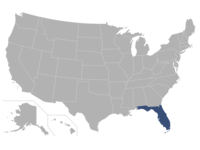
Tallahassee, FL