Justice Department alleges misconduct by ‘all but one’ Minnesota federal judge
Sep 30, 2026 | 1:44 pm ET
Description
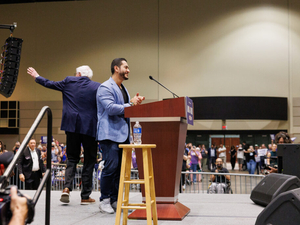
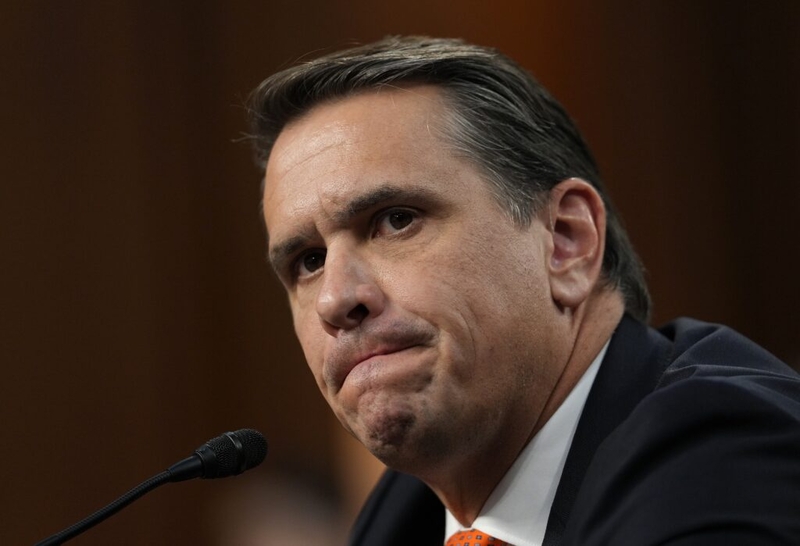
Attorney General Todd Blanche appears at his confirmation hearing in front of the Senate Judiciary Committee on Capitol Hill July 15, 2026 in Washington, D.C. (Photo by Eric Lee/Getty Images)
The U.S. Department of Justice has filed a judicial misconduct complaint to the Eighth Circuit Court of Appeals, accusing “all but one” of Minnesota’s federal district judges of unethical conduct, Attorney General Todd Blanche announced in a press conference Wednesday.
The complaint stems from interviews given by Judges Patrick Schiltz and others to the New York Times earlier this month, in which Schlitz — who until recently was the chief justice for the District of Minnesota — said the federal government’s actions during Operation Metro Surge “created a grave threat to the rule of law.”
The Times wrote that it interviewed six of the seven judges who were active in the District of Minnesota during the federal immigration crackdown, which resulted in the improper arrests of hundreds of immigrants and the deaths of two U.S. citizens.
“These judges talked to the media, or at least to the New York Times, about cases, some of which are ongoing, in a manner that the department views as a clear violation of their ethical duties,” Blanche said.
The code of conduct for federal judges bars them from speaking to the press about cases pending before the court. The New York Times wrote that Schlitz didn’t comment on specific cases, but noted that it’s “unusual for federal judges to give extensive interviews that reflect on periods when their rulings have made headlines.”
The Justice Department and the Trump administration more broadly have gone to war — in Blanche’s own words — with a federal judiciary that’s often been the only bulwark stopping President Donald Trump’s expansive view of his own powers. Trump and his allies have personally attacked judges who have not ruled in the president’s favor, and called for their removal.
The DOJ sued the entire federal bench in Maryland after judges ordered a 48-hour freeze on deportations of immigrants who had challenged their detention in court.
The Justice Department’s complaint only names Schlitz, Judge John Tunheim and “anonymous district judges.” Blanche didn’t identify which judge was not implicated, though the Times in its article states that U.S. Magistrate Judge Douglas Micko declined the interview request.
The move is an escalation of an ongoing fight between the Justice Department and Minnesota federal judges, as the DOJ continues prosecuting a number of controversial cases stemming from Operation Metro Surge, including conspiracy charges against a group of 15 anti-ICE activists and the prosecutions of people who protested at a St. Paul church where a pastor is a high-ranking ICE official.
Minnesota judges grew frustrated with the Department of Homeland Security and federal prosecutors this winter as they fielded around 1,000 habeas corpus cases, in which immigrants argued they’d been wrongfully detained. In more than 70% of cases, judges sided with the detainees and ordered their release, according to an analysis from University of Minnesota researchers.
In some of those cases, DHS did not immediately comply with judges’ orders to return detainees to Minnesota, prompting judges to consider contempt charges against federal officials. In an extraordinary move, U.S. District Court Judge Jeffrey Bryan ordered U.S. Attorney Daniel Rosen to appear in court and explain why he should not be held in contempt for violating court orders to return the property of 28 people released from ICE detention.
Trump administration officials also went over Schlitz’s head in an attempt to get a warrant for the arrest of journalist Don Lemon and others involved in the Cities Church protests. When that warrant was blocked by the other judge, the prosecutors convened a grand jury, which returned the indictments. Now, Micko is reviewing the grand jury transcripts to see if federal prosecutors acted improperly to secure the indictment.
The DOJ’s office in Minnesota lost many of its most experienced prosecutors in the wake of Operation Metro Surge, at least in part because Trump administration officials in Washington pushed them to abandon an inquiry into the killing of Renee Good by ICE agent Jonathan Ross in south Minneapolis, and instead investigate Good’s widow.
“My impression was that most, if not all, of the noncompliance was due to incompetence,” Schlitz said in his interview with the Times, “not due to conscious defiance of orders.”
The Justice Department is asking all of the Minnesota judges in its complaint to recuse themselves from cases involving the Department of Homeland Security.

Saint Paul, MN