Nor’easter flooding raises questions about how to protect Delaware coasts
Sep 30, 2026 | 6:00 am ET
Description
Photo courtesy of Spotlight Delaware
Why Should Delaware Care?
Delaware has the lowest-lying average elevation in the contiguous United States and is in a global hotspot for sea-level rise. Flooding near the Indian River Inlet and along bay communities during storms like the recent nor’easter signals a growing problem that may have limited immediate solutions.
For several hours this past Saturday, residents in southeastern Sussex County were diverted 45-plus minutes as floodwaters washed over and subsequently closed Route 1 south of Dewey Beach.
The National Weather Service recorded major flooding Saturday morning in Lewes and Dewey Beach, as well as near the Indian River Inlet and at Rosedale Beach east of Millsboro. Several of those areas experienced tide levels near record highs.
The storm passed without any reported injuries and minimal property damage in Delaware, state officials said. But flooding poses a challenge for coastal communities that has only grown over the decades despite millions spent on roadway improvements and beach replenishment.
Local officials agree that flooding from storms is not a problem that can be fully stopped — and is likely to get worse in years to come.
“Really, there’s not a whole lot we could do to prevent flooding,” said Christophe Tulou, a former state environmental secretary and now the executive director at the Delaware Center for the Inland Bays, a nonprofit that works to protect Sussex County’s three freshwater bays.
He said flooding in these areas is inevitable, noting that sea-level rise and stronger storms fueled by climate change are causing flooding events to happen more frequently. Heat-trapping gases released into the atmosphere by human activities like burning fossil fuels have caused land and ocean temperatures to rise, leading to rising sea levels and more intense storm patterns.
Delaware officials work with the U.S. Army Corps of Engineers to stop the worst flooding. They create manmade dunes, replenish beaches and build pumping stations to clear roads of floodwater.
But the state relies on federal money to fund these projects, and funding cuts have already delayed several beach replenishment projects.
At a press conference in Bethany Beach on Tuesday, Gov. Matt Meyer said he and the state’s Congressional representatives will work to secure funding for any necessary projects in the upcoming federal budget negotiations.
“This is a national treasure, and I know that in the past the federal government has treated it as such,” he said.
How to reduce flooding
Meyer pointed to flood mitigation measures as the reason why the storm damage was not worse.
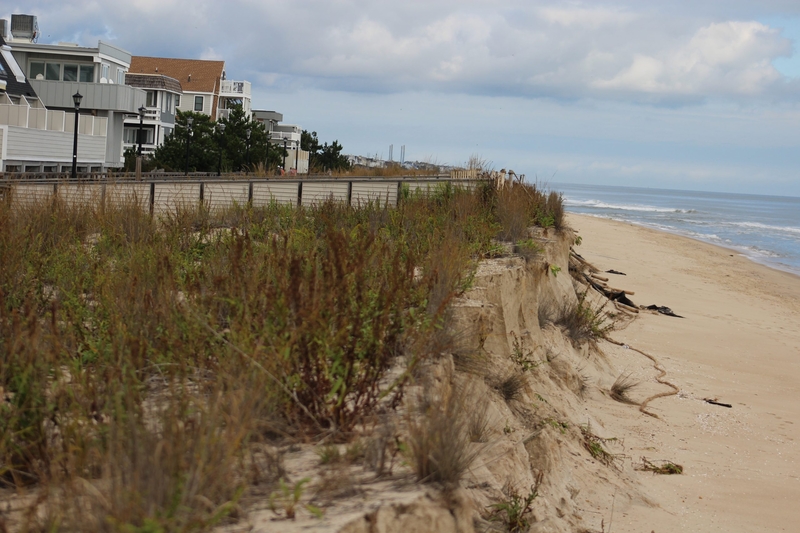
Manmade dunes at the beaches protected much of the state’s coastal properties — at the cost of being severely eroded. Meyer estimated that only about a quarter of Bethany Beach’s dunes remain.
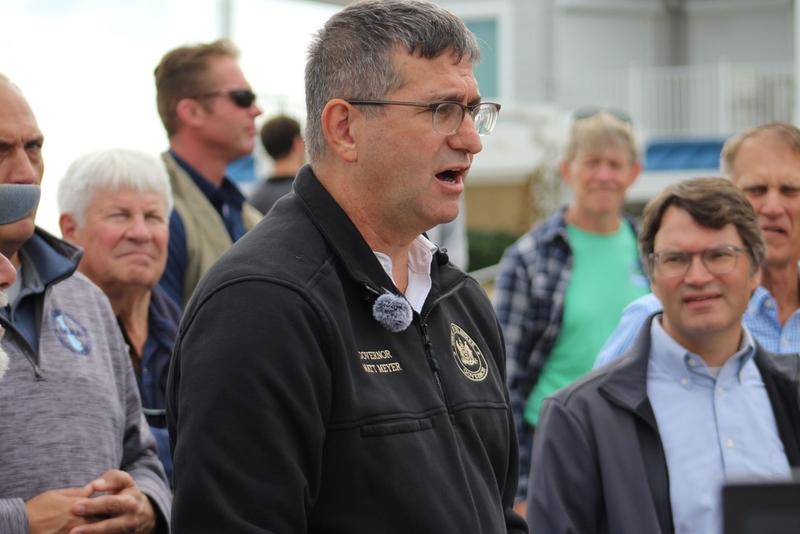
“While it’s pretty disheartening to stand and look at the dunes, they did their job,” Meyer said.
Sussex County Administrator Todd Lawson agreed, saying the lack of property damage “proves beach replenishment works for protecting property.”
But previous delays in beach replenishment projects have caused concerns that restoring those coastal barriers could be a long way off.
“We’re at the mercy of the federal government in terms of funding,” added Bill Stevens, the mayor of Dewey Beach, the small peninsula town that is less than a mile wide.
The storm eroded about a third of Dewey Beach’s dunes, Stevens said.
Steve Rochette, a spokesman for the Philadelphia District of the U.S. Army Corps of Engineers, said the corps is focused on evaluating the damage from the storm.
“Any potential outcomes of that would be too early for us to tell at this point,” he said.
As for road flooding, state Transportation Secretary Shanté Hastings said the agency is once again considering raising the pavement on parts of coastal Route 1 to reduce flooding. A stretch of the highway just south of Dewey Beach was raised some 6 inches in late 2017.
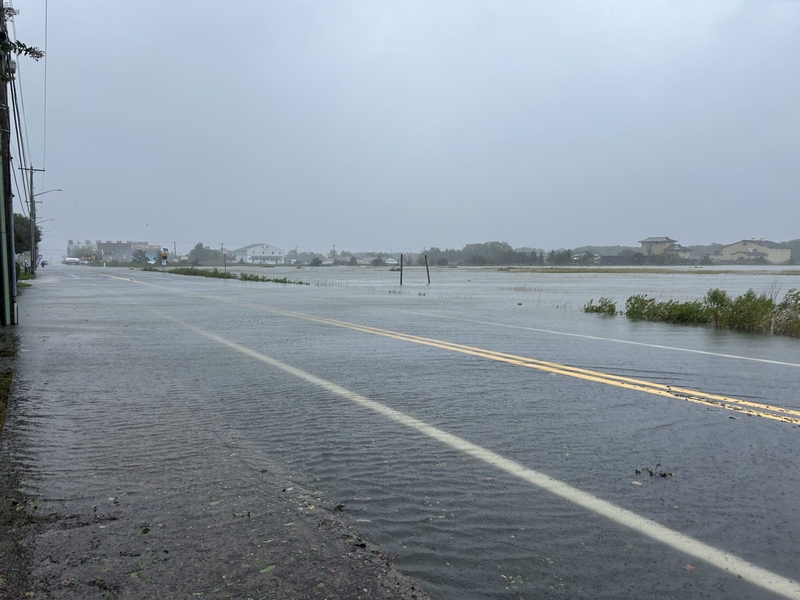
Delaware’s transportation department is also applying for federal funds to continue its study of how to further protect Route 1 between Dewey Beach and the Indian River Inlet.
Tulou said he thinks beach replenishment and raising roads can be helpful. But he said investing more in protecting wild areas like forests, meadows and wetlands that can absorb floodwaters could help ease the impact of rising tides on Delaware’s coastal towns and cities.
“If we just allow nature to do its work, it will continue to do the billion-dollar protection job that it’s already doing,” he said.
Meyer said at the press conference that he agrees, and pointed to a recently signed wetlands protection law as progress in protecting natural sources of flood protection.
Dover