Calculator allows individuals to see the fiscal effects in their areas if Amendment 3 passes
Sep 29, 2026 | 1:10 pm ET
Description
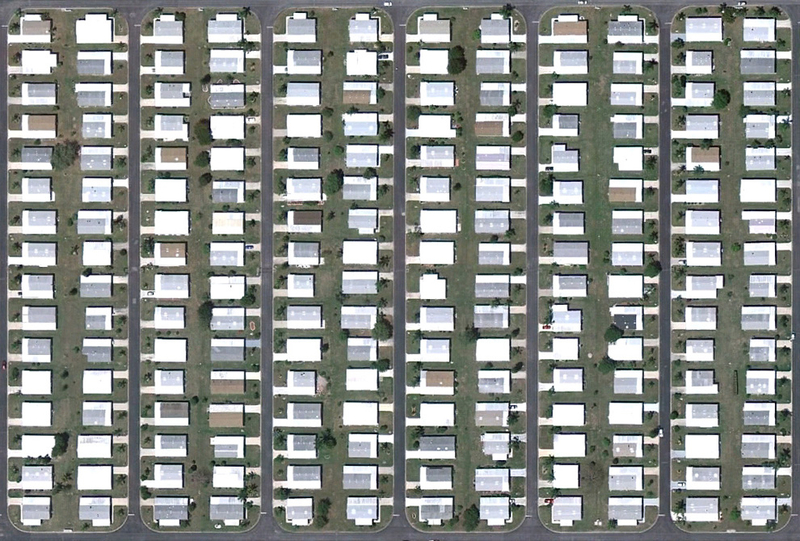
Several public websites provide calculators for homestead property owners in Florida to plug into to determine what the reduction in property taxes would amount to if Amendment 3 passes. (Google Earth)
The constitutional amendment that would reduce non-school homestead property taxes is the biggest policy proposal on the 2026 statewide ballot.
Amendment 3 would raise the homestead exemption on non-school taxes to $150,000 in 2027 and $250,000 in 2028. It would lower the annual assessment growth cap from 10% to 5% for non-homestead properties such as commercial buildings and rental units, and would require people moving to Florida after Dec. 31 to wait 5 years of continuous residency before qualifying for the full increased exemption.
It would also reduce revenues collected by local governments for essential services, which has caused many locally elected officials up and down the state to oppose the measure.
Several public websites provide calculators for homestead property owners in Florida to plug into to determine what the reduction in property taxes would amount to.
Now a calculator prepared by the Florida Policy Institute allows Floridians to type in their area codes or select a county from a drop-down list to view the projected revenue losses for county and municipal operations, along with special districts. The website also allows individuals to search by a specific service or view statewide effects.
“We really hope this will be a one-stop shop and something easy to use where people can see how the amendment would impact the community,” said Sonia Lindell, director of communications and marketing for the Florida Policy Institute.
“There is still a lot of information that Floridians would need,” added Sadaf Knight, CEO of the institute.
“There is a lack of understanding to a certain degree about what our property taxes fund and how those impact all of us in our day-to-day life. And so, what we’re hoping with our calculator is to show that these are not just services that you might typically think of running the local government … but it’s also things like mosquito control …. What we wanted to illustrate is what property taxes fund and what’s at stake so it can become more real for people and understand what the other side of the ledger really is when it comes to Amendment 3’s impact.”
Although the site shows actual reductions in revenues to local governments if the measure is passed, other sites provide information regarding what homeowners’ personal reduction in property taxes would be if the proposal is approved by 60% of the voters in November.
When Gov. Ron DeSantis announced his property tax proposal in late May, the state simultaneously unveiled a public calculator that encouraged homeowners to estimate how much they would save on their tax bills if his proposal became law. However, that was before the Legislature approved the ballot language in a bill the following week.
That calculator initially applied the exemption to the entire millage rate, which became inaccurate after the Legislature removed school taxes from the proposed amendment.
That prompted Jacksonville-based Casey Vockell and his father Steve, a state-certified appraiser, to create their own calculator, called MyExemptionCheck.com.
“I took the average tax rates [of a county] and then extrapolated out the non-school portion,” he said Monday in a brief phone interview. “So when you look up Hillsborough, if you’re in the lower end it’s going to overestimate it, whereas if you’re in the higher end it’s going to estimate it, but it’s a lot closer because it’s not just using the full millage rate. I think the millage rate in Tampa [Hillsborough County] is 20, and 11 of it might be what’s exempt. It’s a big difference.”
Other sites say they give an accurate portrayal of savings on property taxes, such as from Florida TaxWatch. There are similar calculators on the websites of various county property appraisers around the state.
Tallahassee, FL