Victims are ‘slipping through the cracks’ of Utah’s domestic violence law
Sep 28, 2026 | 7:02 am ET

Description
A display of purple flags raises awareness for domestic violence outside the Salt Lake County District Attorney’s Office in Salt Lake City on Thursday, Oct. 23, 2025. (Photo by Spenser Heaps for Utah News Dispatch)
To better identify escalating domestic abuse and intervene before it’s too late, Utah gave police a new mandate three years ago: ask 11 questions, and when the answers indicate the danger is high, bring in confidential advocates quickly.
But thousands of Utahns deemed to be at high risk are not getting immediate help through the program, according to data provided by the Utah Domestic Violence Coalition and interviews with advocates.
Across the state, officers responding to calls of intimate partner violence are asking the right questions. But most of the time, the numbers indicate they are not calling a domestic violence hotline on the spot during what is considered a short, critical window for arranging shelter and support.
“It feels to me very much like a Grand Canyon-type hole of miscommunication,” said Mikaylee Sanchez Paz, intervention and prevention specialist for the coalition.
‘They’re slipping through the cracks for us’
Over a yearlong period ending in June, domestic violence organizations received 6,458 referrals from police for victims deemed at high risk, according to the coalition. Of those, about 28% included a phone call from the scene to an advocate. Similarly, in each of the program’s first two years, the “warm handoff” call did not happen most of the time.
The main reason is that police are not required by the law to pick up the phone, even though its sponsor and supporters envisioned that as part of the process.
When a call doesn’t come in, organizations learn of the cases from emails generated by a state portal where officers must submit the assessments right away or “as soon as practicable.” They are not required to include a phone number for survivors of abuse.
Their contact information is missing from the portal entries sent to the YCC Family Crisis Center in Ogden the vast majority of the time, said Ashley Daniels, a victim advocate there. And even when a number is provided, strict privacy laws constrain the center’s attempts at follow-up.
“Maybe their data is getting tracked,” Daniels said. “but they’re slipping through the cracks for us.”
Advocates fear Utahns won’t seek help a second time if they’re told that they are in danger and that someone will get in touch to assist them, but never does because of the lapse in communication.
“It’s also going to back up a lot of the things that their abuser has told them, which is, ‘no one’s going to believe you, there’s not really help out there for you, I don’t know what you think you’re going to do, but you’re stuck,’” Daniels said.
Whether police make the phone call or not can depend on the size and resources of their force, and the strength of their relationships with local domestic violence groups like Daniels’. One bright spot, she said: the crisis center coordinates with Ogden police officers on a daily basis, and the department has welcomed ongoing training from the center.
Ogden Police Capt. Matt Ward said making the handoff allows police to stay focused on their own jobs, knowing someone else with the right expertise can offer ongoing support — regardless of whether someone wants to pursue formal criminal charges against a perpetrator.
“You don’t really become an officer to be a therapist, right? And you’re not really trained to be a therapist,” Ward said. “And so for us to continue to do that and think that we’re going to have a long-term impact with somebody is just not the reality.”
‘Now we have to see how we can make it better’
The Utah law that expanded the program statewide followed a string of high-profile tragedies. First was the death of Gabby Petito, an aspiring social media creator who roadtripped with her boyfriend through Moab, where they were stopped by police in 2021 after bystanders reported seeing them fighting. He was identified as a person of interest in her death by strangulation, and was later found dead in what authorities said was a suicide.
The following year, the cousin of Utah’s Lt. Gov. Deidre Henderson, Mandy Mayne, was shot and killed by her ex-husband in Taylorsville after he’d showed up uninvited at her job two days earlier, prompting a call to police. Petito’s family and Henderson urged lawmakers to mandate the protocol, saying police did not conduct a lethality assessment for their loved ones, though half of Utah’s law enforcement agencies used it at the time.
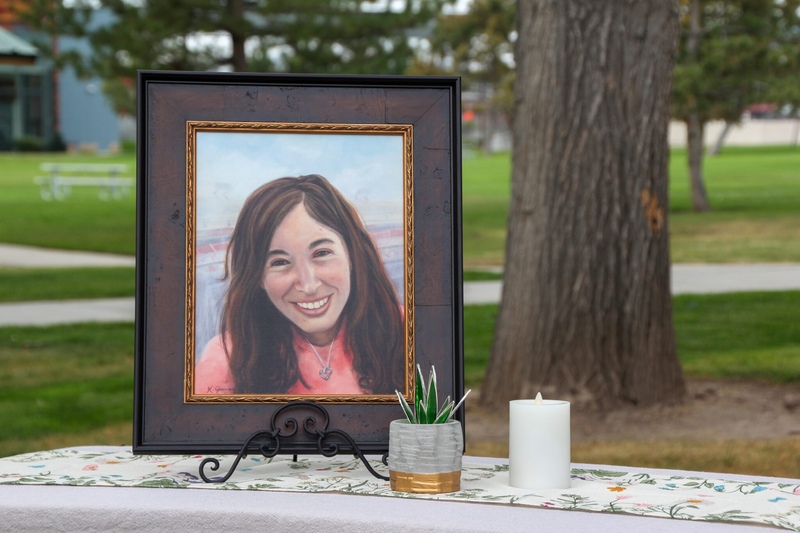
In an interview, Petito’s mother, Nichole Schmidt, noted Utah lawmakers gave unanimous approval to the program in 2023.
“It passed so easily, and now we have to see how we can make it better, because clearly there’s some issues going on,” Schmidt said. “And we don’t want this to be something that causes problems. We want this to be something that prevents homicides.”
Petito’s family believes she would still be alive today if she’d been asked the 11 questions.
“Gabby would have been flagged high risk, no doubt, and I would have hoped that she got connected to services,” Schmidt told Utah News Dispatch.
She is advocating in other states for expanded use of the tool screening for risk of homicide, asking about a perpetrator’s access to guns, prior threats, and any history of choking.
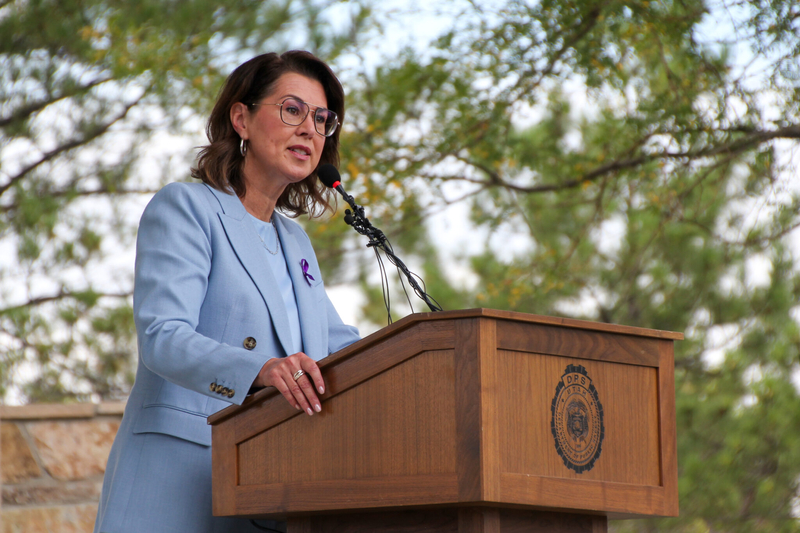
In a prepared statement, Henderson called the protocol “a crucial, life-saving intervention.” She did not address the gap identified by advocates, saying the process “has flagged dangerous situations that previously slipped through the cracks, and it has ultimately helped to protect Utah families.”
‘Unenthusiastic participation’ — and other issues
The sponsor of the measure, Sen. Todd Weiler, said in his memory, the protocol demanded a phone call. His city’s police department was the first in the state to adopt the lethality assessment, in 2013. Weiler said he plans to talk with police chiefs and others in law enforcement about the protocol and how they get in touch with shelters.
“Maybe we need to change that,” Weiler, R-Woods Cross, told Utah News Dispatch.
“But then, of course, if you make that the law and there is no cellphone service, then what do you do in those situations?” said. “I think the approach will be: Do we need to actually change the law, or do we need to increase education and encourage compliance?”
He said the system’s in a better place than it was before.
“I’d say, 30% is a lot better than 0%,” Weiler said of the phone call ratio. “But I’d like to see that up closer to two-thirds, and maybe we can work on getting that number up.”
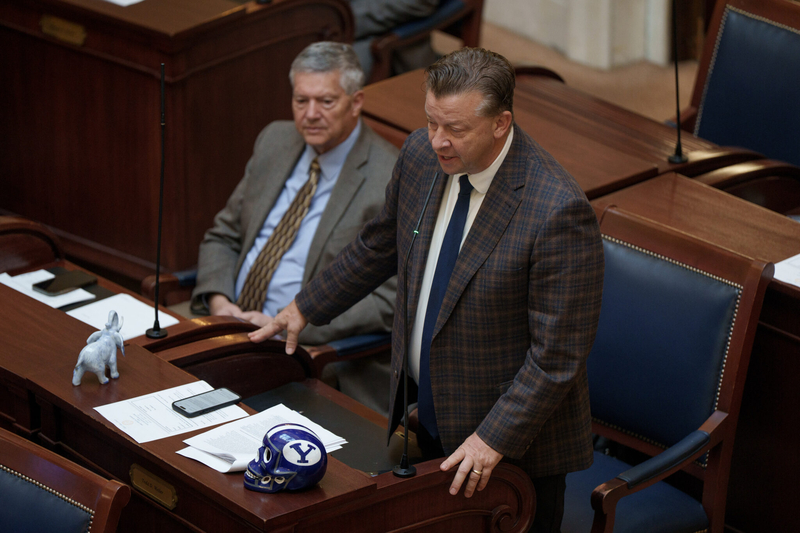
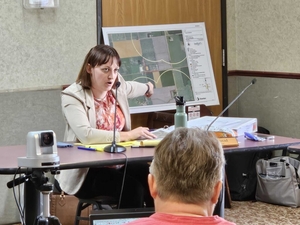
At the Capitol earlier this month, a researcher studying victim services told Weiler and other lawmakers on a judiciary panel that the assessment program has helped foster collaboration in Utah, but “we heard there are places where it’s not working that well because there’s unenthusiastic participation.”
“It’s disappointing, but again, I think it’s human nature,” Weiler said in an interview. “I just think there’s some people who just see this as more paperwork and more busywork, and not really, you know, what they should be doing with their time.”
Among the considerations when the measure was drafted: some officers aren’t given a department phone, and others work in regions with poor cell coverage, said Tanner Jensen, chief of investigations for the Utah Department of Public Safety. Still, he said, it’s best practice to make the call.
“It is a challenge, though,” Jensen said. “We’ve recognized it. The domestic violence coalition recognizes it, and you know, we encourage and look to find ways to train on that.”
Erin Jemison, director of public policy for the domestic violence coalition, recalled a drafting attorney for the Legislature saying, “we don’t really get that specific in statutory language. We’ll just put ‘referral.’”
The program has brought about other changes that have helped police make informed decisions quickly, giving officers fast access to a suspect’s comprehensive criminal history when they’re using the protocol, Jensen said. Within 15 minutes of a request, Utah’s Statewide Information and Analysis Center conducts a deep dive and reports back.
In some cases, the data dive revealed the alleged aggressor had a prior case of attempted homicide in another state, “which obviously escalates the risk level substantially,” Jensen said.
Utah’s yearly total of intimate partner homicides dropped from 14 in 2024 to 10 last year. Of last year’s deaths, six followed prior lethality assessments for the same perpetrator, Jensen said.
Salt Lake City, UT