A look into the extensive proposed Head Start changes and how they could affect NH
Sep 28, 2026 | 5:00 am ET
Description
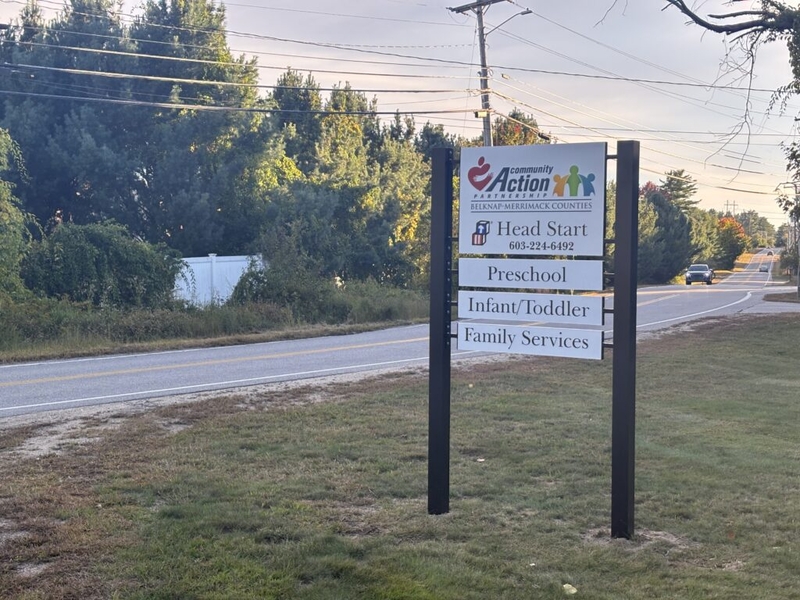
The entrance to the Head Start building on Old Loudon Road in Concord. The Trump administration proposed sweeping rule changes to the program, aiming to cut administrative responsibilities, safety and health practices, and more. (Photo by Maya Mitchell/New Hampshire Bulletin)
When the Trump administration announced this summer that it would seek a rule change to reduce the “federal burden” of Head Start programs nationwide, it was concerning for state officials and childcare providers alike.
“Head Start performance standards really set the bar for high-quality care,” said Jessica Carver, who leads the state Bureau of Child Development and Head Start Collaboration, during a Child Care Advisory Council meeting on Aug. 13.
August’s bimonthly meeting came a little over a week after the Trump administration announced the proposal. Alex Amaral, the state’s Head Start Collaboration office administrator, had only been able to get through around half of the proposal before the meeting.
“They want to take 130 pages and mark it down to 13 pages,” she said.
Most described the proposal as a “sweeping overhaul” of the 61-year-old program.
Head Start is a federally funded, state-administered early learning and developmental services program that provides comprehensive care to low-income children, often those who are in foster care, have disabilities, or are experiencing homelessness. The program supports children from birth to age 5 and their families in the areas of early learning, health and nutrition, family wellbeing and development with the goal of providing “high-quality services in safe and healthy settings that prepare children for school and life.”
On Aug. 6, the Trump administration announced a series of rule changes to the program, stating its goal is to restore local flexibility, reduce the regulatory burden and administration costs on the program, remove duplicate regulations and align licensing with state early childhood systems.
“Head Start began as a bold commitment to the health, dignity and potential of every child,” U.S. Health and Human Services Secretary Robert F. Kennedy Jr. said in a statement. “We are removing unnecessary bureaucracy, strengthening nutrition and physical health, trusting parents and local communities, and opening Head Start to hundreds of thousands more children.”
Head Start covers comprehensive child development, health, family engagement and administrative requirements to ensure vulnerable children are prepared for school.
The Notice of Proposed Rulemaking will eliminate, reduce or deregulate around 80% of the standards that govern the program in an effort to “preserve or expand” Head Start slots nationwide and save $2.2 billion.
The administration proposes changes to federal regulations that define the baseline quality, service scope and operational rules for Head Start and Early Head Start grantees. While regulatory redundancies are being addressed in the rule change, the proposal also eliminates health and safety, oversight and curriculum rules that benefit families and staff.
New Hampshire has 35 total programs. Early Head Start programs are for children ages 0-3, and Head Start programs are for children 3-5 years old.
Parent involvement
The administration said the proposed changes to Head Start would recognize “parents as a child’s primary teacher” and preserve the requirement that “programs engage parents and families in children’s learning and development.” However, new rules would cut governance structures that promote parent involvement in the program, increase eligibility requirements for homeless children, deregulate education regulations and more.
The rule proposal removes regulations from the Head Start Act around parent committees, which were established at each center to advise on local program policies and activities, as well as assist in staff recruitment and screening. It also cuts other oversight committees for the community and parents.
Additionally, requirements for programs to cover physical health, mental health and family support would be eliminated. Head Start’s capacity to treat both child and parent has been a defining metric of the program. The proposed replacement would have minimal standards.
Other regulation cuts, changes, or new proposals regarding parental involvement include:
- Requirements for parent activities supporting child learning are removed and/or reduced.
- Requirements about programs providing additional services, such as helping parents of children with disabilities access services, are removed.
Program curriculum and eligibility
Head Start serves children from birth to compulsory school age, pregnant women and expectant families. Families who meet federal poverty guidelines and who participate in certain federal programs, such as the Supplemental Nutrition Assistance Program, qualify. Additionally, children in foster care or who are experiencing homelessness qualify, as well as children with disabilities.
According to the First Five Years Fund, a national childcare organization, more than 60,000 children served in Head Start last year were experiencing homelessness, the highest on record. Families can enroll in the program through self-attestation of their situation and are given a grace period on government documentation.
Under the rule change proposal, families experiencing homelessness will have a higher burden to prove their qualification for Head Start. Self-attestation would no longer be enough to prove homelessness and therefore eligibility in the program, which could make it more difficult for a population that may lack formal documentation.
Other regulations on eligibility and enrollment would be cut as well, specifically around how programs select and recruit families, waitlist maintenance, attendance and more.
The rule change also seeks to eliminate the requirement of dual-language instruction for students who do not speak English. Currently, more than a third of children in Head Start are dual-language learners, and bilingual Head Start instruction is used to bridge the gap between the languages spoken at home and in school.
According to state Department of Health and Human Services spokesperson Jake Leon, the state does not know how many of New Hampshire’s Head Start programs have dual-language instruction because the department does not track it. Leon said the department “will be prepared to do so” if the proposed federal changes get approved and implemented.
The proposal would require all classroom instruction to be conducted exclusively in English, with no accommodation for children who are still building English proficiency. An exception is made for Indigenous tribes, who can still incorporate their tribal language and heritage into their teachings.
Head Start has rules about limiting suspension and requiring consultation of a mental health professional before a child could be suspended. The program also prohibited expulsion.
Those regulations would be cut in favor of narrower requirements on when children with documented behavioral problems get referred to a specialist. The program would also have no general suspension or expulsion policy.
Some other regulation cuts, additions or changes include:
- Introducing a minimum baseline for physical activity that is aligned with the health secretary’s Make America Healthy Again push.
- Cutting education requirements for home-based Head Start programs, including instructional activities, home visits and curriculum adaptation.
- “Healthy marriage” is now required to be a part of instructional material in a family-engagement context.
- Currently, programs have flexibility to determine their own rules and policies for addressing staff violations of eligibility-determination rules. The proposal, if approved, would require programs to report staff who violate eligibility determination regulations.
- Programs would no longer be required to participate in the state Quality Recognition and Improvement Systems program, which is known as Granite Steps for Quality in New Hampshire. Other nationwide program quality measurement metrics would be eliminated.
- Details around helping with kindergarten transition requirements are removed.
Staff-to-child ratio reductions
One of the changes in the proposal is for Head Start staff-to-child ratios to match a given state’s childcare licensing standards.
Staff-to-child ratios determine how many children should legally be allowed with an adult at one time, based on their age. Early education experts use these standards to determine safe care, and make sure that they can adequately meet the needs of young children.
According to the National Institute for Early Education Research, Head Start ratio standards are based on expert consensus and empirical evidence for high quality and developmentally friendly care that sets “reasonable limits” to the number of young children per staffer in the classroom. Exceeding ratio limits, although they vary by state, could result in unsafe care and faster teacher burnout.
Currently, only 12 states have childcare licensing standards that meet the 1 to 4 staff-to-child ratio requirement set by Head Start for ages 1-2; four states have the same ratios for two year olds and six states meet them for 3 year olds.
In New Hampshire, staff-to-child ratios are close to those of Head Start, with the biggest differences being an additional child per adult for 1- and 2-year-olds and an extra two children per adult for 4-year-olds.

State childcare licensing rules recently underwent a long reform process, led by the Child Care Advisory Committee and childcare providers, that ended in 2025. During the reform process, the committee decided to maintain low staffing ratios for safety and development reasons.
At least nine states will have their staff-to-child ratios drastically changed at Head Start facilities if the proposed rules become permanent. Florida, for example, mandates a 1 to 11 ratio for 2-year-olds, 1 to 15 ratio for 3-year-olds and 1 to 25 ratio for children over 5.
Child safety and other employee practices
In an effort to align Head Start programs with individual state early childhood systems and remove the duplicative regulations that separate federal standards from those of the state, the proposal eliminates a variety of Head Start regulations around child safety and staffing.
Under the rule change, Head Start teachers and staff will have fewer job qualification requirements and less required training. Program volunteers would also have to meet fewer health requirements. Some of the proposed changes include:
- Removal of the requirement for staff to have annual training on recognizing and reporting abuse and neglect.
- Staff health and wellness requirements, including staff breaks and health exams, are removed from the Head Start Act.
- Requirements for programs to screen volunteers for communicable diseases and that prohibit volunteers from being left alone with a child are removed.
The proposed rule would also bar programs from requiring or favoring postsecondary credentialing in hiring, unless the program can justify the requirement.
A majority of childcare professionals in New Hampshire, depending on their title, are required to have college or community college credits to be left alone and care for young children. It is unclear if the proposed rule would revert staff qualifications back to state licensing rules, but the requirement could be at odds with existing New Hampshire statute.
Additionally, the proposed changes would remove vehicle and other transportation requirements for programs. Details around how children should be transported, vehicle operation, annual vehicle safety inspections and pre-trip checks would be removed from Head Start’s rules in favor of state and local transportation laws. Nationwide regulations around safe field trip routing, safety procedures and alternative vehicles adapted for children with disabilities would also be removed in favor of programs relying on state rules.
Other proposed changes include:
- Family childcare Head Start programs are no longer required to have a child development specialist.
- Programs would no longer be required to assist children in daily tooth brushing after meals.
- Definitions of corporal punishment, sexual abuse, emotional abuse, and neglect with behavioral examples that draw from the federal Child Abuse Prevention and Treatment Act would be removed.
- Federal monitoring requirements on curriculum, financials and program designation renewal would be removed without a proposed replacement.
- Professional development requirements that include social/emotional development, a structured coaching process and an annual training strategy would be removed and replaced with at least 15 hours of professional development.
- Specific disability services and discipline protections would be replaced with general instruction to follow existing state and federal law.
Administrative work and federal oversight
In an effort to cut program costs to redirect funding to programming, the federal government proposed reducing the administrative spending cap for Head Start programs from 15% of approved program costs to 5%.
Most larger childcare programs have at least one staff member in charge of managing dollars, government oversight, and vendors, including for food. Administrative costs for Head Start programs include finance staff, human resources, and auditors who run payroll, background checks and financial oversight. The administrative cap will prevent programs from being able to have these positions staffed.
According to the First Five Years Fund, only about 3.7% of Head Start programs nationwide operate at or below 5% administrative costs. According to Amaral, most New Hampshire programs’ administrative costs sit between 9% and 11%.
To reach their goal of “reducing compliance-driven activities” that “constrict the early education workforce” the rule-change proposal also includes:
- Cutting regulations around program monitoring communication between local Head Start programs and the federal government.
- Removing details in the Head Start Act around grant applicant criteria.
- Removing financial regulation descriptions around insurance, facility management and payment (construction/renovation), financial documentation and oversight.
What’s next?
The proposed rule is open for a 60-day public comment period, which ends on Oct. 6. During this period, anyone can submit formal comments responding to the proposal, and when the comment period ends, the federal government must consider them before finalizing the rule. As of Sept. 24, over 16,700 comments have been submitted.
After the comments close, the timeline can vary on when a final ruling is published and takes effect. Until then, the current Head Start rules, standards and regulations are in place.
If the rule proposal is finalized as it stands, Head Start programs around the country will face loads of new rules to follow. However, plenty of existing rules around nutrition, inclusion for children with disabilities, curricula and no cost for parents will continue.
State Head Start officials told childcare providers in August that New Hampshire is in a better position than most states. All of the state’s programs have childcare licenses and state-level regulations the federal government wants to remove. It could also take years before the new rules are mandated, giving both families and teachers time to transition.
“Probably, I would say the majority of the Head Start programs will continue to provide that extra quality of care for both families and the children,” Amaral said.
Concord, NH