G20 Summit in Milwaukee gives working people a platform to demand change
Sep 28, 2026 | 4:00 am ET
Description
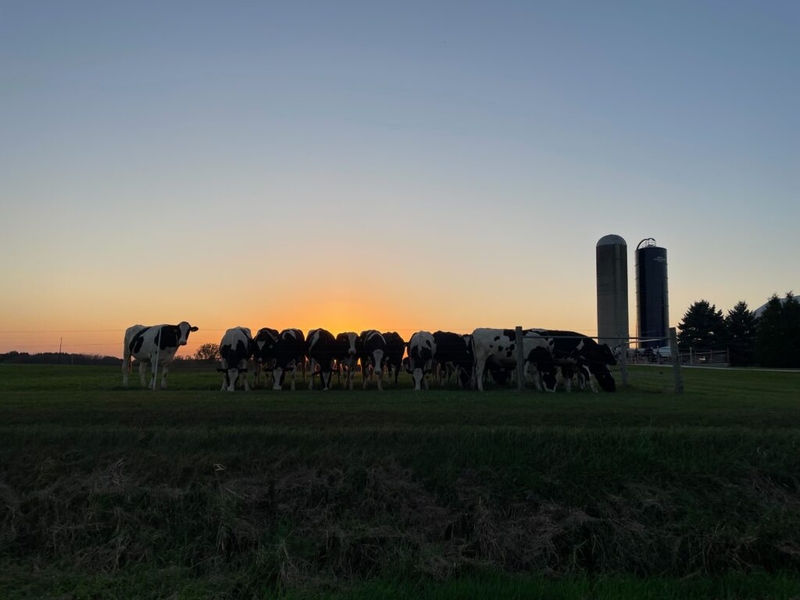
Dairy cows huddle at sunset on a farm in Manitowoc County. NAFTA helped drive a cycle of oversupply and low milk prices that put thousands of Wisconsin dairy farms out of business. (Photo by Andrew Kennard/Wisconsin Examiner)
President Trump has an uncanny knack for speaking to problems that Americans experience —and then taking actions that make things worse.
Take international trade, which most Americans see as in need of reform. Trump talked about getting better deals and helping U.S. workers displaced by NAFTA and other global trade agreements. But instead of helping working people, he then launched a series of a trade wars that no one asked for, imposing high tariffs tht triggered retaliation and sent prices for consumer goods soaring, while alienating close allies like Canada.
The upcoming G20 ministerial meeting in Milwaukee from Sept. 30 to Oct. 1 will feature leaders from around the world coming together to discuss these matters, especially trade, making Wisconsin the stage for discussing global policy on everything from artificial intelligence to fuel prices. World leaders including Trump will have the opportunity to hear from working people, especially those who will take to the streets.
Long before Trump campaigned on the promise to renegotiate the North American Free Trade Agreement and other “bad deals” for the U.S.,, Ross Perot during his unsuccessful bid for the Presidency in 1992 said he could hear a “giant sucking sound” from NAFTA, as firms prepared to leave the U.S. for countries where they could pay workers next to nothing. That sound became deafening in Wisconsin after President Bill Clinton signed NAFTA into law in 1993.
The deal took a heavy toll on the dairy industry. Shortly before the agreement, in 1990, our state had about 34,000 operations milking cows. As of August 2026, we have for the first time dropped below 5,000 licensed dairies.
Even as the farms closed, production increased , along with exports. The US Dairy Export Council notes that export values were $656 million in 1995, climbing to $8.32 billion in 2024. Wisconsin participates in these markets sending cheese, fluid milk, and whey to Canada and Mexico mainly. Moreover, Wisconsin dairies produce about one million pounds of milk more than they did in 1995 – a 33% increase.
But more production hasn’t meant more stability. In fact, more exports have led to greater price volatility, hitting smaller farms harder because they tend to have smaller profit margins. Adding insult to injury, long before the Iran war the percent of farm expenses dedicated to fertilizer more than tripled, from about 2% in 2003 to just under 8% in 2025. Trump’s tariffs, meanwhile, leave farmers especially in Wisconsin even more vulnerable to unforeseen economic disruptions.
Amid these worsening economic conditions, Trump has campaigned on a promise to help dairy farmers, alleging that the Canadians are “ripping us off.”
But Canada’s protections for it dairy farmers are not Wisconsin dairy farmers’ problem. In fact, Wisconsin farmers have begun seeking advice from their Canadian counterparts, expressing interest in the Canadian system. Canada’s supply management system assures dairy farmers a fair price as industry stakeholders including farmers meet regularly to adjust supply and demand.
Meanwhile, Trump’s renegotiation of NAFTA, the United States-Mexico-Canada Agreement (USMCA) in 2019, did not stop farms from closing as bankruptcies in the Midwest continue to rise.
Global trade agreements, including those negotiated by Trump, failed to deal Wisconsin farmers and workers a better hand.
From when NAFTA was passed until it became the USMCA, Wisconsin lost nearly 10% of its industrial workforce, or over 46,000 jobs.
On a positive note, according to the High Road Strategy Center’s State of Working Wisconsin Report, years of manufacturing decline seem to be ending as 2025 boasted a record high median wage of $26.17. Unfortunately for workers, that same report finds that rising inflation will eat into wage gains and inequality is worsening because Black workers are being left behind.
Under the current global trade regime, workers find themselves between a rock and a hard place. For instance, workers at CNH Industrial in Racine and Burlington, Iowa, went on strike in 2022 for 260 days and gained a new contract in 2023. But then, workers at the Racine plant found their company announcing layoffs and plans to shift some production to Mexico in 2024.
Iconic firms in Milwaukee like Master Lock had their workforces depleted in the 1990s after NAFTA was passed and production moved south. Master Lock totally closed in the city in 2024.
Workers fed up with being treated like pawns by their corporate employers and elected political leaders will convene in Milwaukee before and during the G20 talks.
The day before talks begin, on Sept. 29, Citizen Action of Wisconsin will host a panel of folks representing farmers, labor, and the environment to discuss the current global trade regime and possible alternatives. The next day, the Milwaukee Labor Council is calling on many of these same groups to stand together and protest.
In terms of concrete demands, most of the groups attending these events support the recently introduced House Resolution 1286. With 51 co-sponsors and endorsed by multiple organizations, including Citizens Trade Campaign, the AFL-CIO, United Steelworkers (USW), International Association of Machinists (IAM Union), Sierra Club, National Family Farm Coalition, Public Citizen, and others, the Resolution calls on our leaders to include within trade deals fair wages for workers, effective anti-monopoly policies, strong environmental standards, and data protection policies and AI regulations.
Free trade deals have cost Wisconsin considerably. Thankfully, the working people hurt by these deals still have the strength to make their voices heard. It’s time for our lawmakers and the other leaders at the G20 to listen to them, and start making deals to benefit working people instead of harming them.
Madison, WI