ACLU-WV files lawsuit over West Virginia school aid formula
Sep 25, 2026 | 2:30 pm ET

Description
A child eats a free breakfast through the county’s summer feeding program at Elk Center Elementary in Charleston, West Virginia, on June 10, 2026. (Photo by Marcus Constantino for West Virginia Watch)
The American Civil Liberties Union of West Virginia on Friday filed a lawsuit with the state’s highest court in an attempt to require state lawmakers to “correct the school funding formula,” the organization said Friday.
The 52-page petition to the West Virginia Supreme Court of Appeals follows a notice of intent to sue that the ACLU sent state officials on Aug. 17, the news release said.
“In West Virginia, each and every child is guaranteed the right to a thorough and efficient education, a promise enshrined in our Constitution since the State’s founding,” the petition says. “West Virginia made this promise concrete by defining what a thorough and efficient education requires, and what falls short.
“Today, despite the passage of nearly half a century since this Court first recognized this right, Lincoln County students are receiving a lower quality education than what their parents, and their grandparents, received before them,” it says. “The West Virginia Constitution does not, and should not, allow this profoundly important constitutional right to wither on the vine as the result of ongoing financial neglect by the Respondents.”
The petition lists as respondents House of Delegates Speaker Roger Hanshaw, R-Clay; Senate President Randy Smith; Auditor Mark Hunt; Tax Commissioner Matthew Irby; Treasurer Larry Pack; the state Department of Education; the state Board of Education, the School Building Authority, State School Superintendent Michelle Blatt, as as well as Lincoln County school board officials and county officials.
It is filed on behalf of “M.D.,” a sixth grader in Lincoln County Schools, and Lakin Patten, the student’s parent.
The legal action asks the court to answer whether or not the educational conditions in Lincoln County, the county that receives the least amount of funding per pupil through the school aid formula, meet the constitutional obligation that the “Legislature shall provide, by general law, for a thorough and efficient system of free schools.”
West Virginia has seen an accelerated wave of school closures in the last few years mostly due to the state’s declining population. During this past school year alone, 19 schools were proposed for closure. Since 2011, 139 West Virginia public schools have closed and 71% of those have been elementary schools.
West Virginia uses a seven-step formula to determine how much state funding goes to county school systems based on factors including the number of students enrolled.
While the state’s population is declining, the number of special education students is increasing, leading to tight budgets for many districts. Required special education costs, like providing one-on-one aides to help with feeding or toileting, have forced districts into millions of dollars of debt.
West Virginia schools are 2,685.92 school personnel positions over formula, according to the state education department, and the state has seen another year of widespread teacher and staff cuts. Counties will use local funds, if available, to avoid making job cuts.
A recent $114,000 study from the RAND Corporation, paid for by the House of Delegates, suggested that the state give more money to special education services to improve school budgets.
While lawmakers came into the 2026 legislative session with plans to revamp the formula, the session ended in March without any of those measures making it to the governor’s desk for consideration.
Attorneys for the ACLU argue that, in every measure, the state’s schools fail to meet established measures of adequacy and that the failures are a result of persistent under funding.
The state has closed 40 schools since 2017, the ACLU said in the complaint, and the difference in counties that close schools is funding. The state spends less on counties with high child poverty rates and counts contributions to the Teachers Retirement System debt as per-pupil funding, the organization says.
The schools funding gap is widened by a rule that counts only 85 percent of each county’s school levy toward its local share of school funding formula costs, the organization said.
According to the lawsuit, data from school assessments shows “a statewide, systematic failure to meet academic achievement benchmarks,” and the effects are even more pronounced in Lincoln County, where 71.43% of students were not proficient in mathematics during the 2024-2025 school year, compared to 62.01% statewide.
The lawsuit comes decades after the 1982 Recht decision found that state public schools were “woefully inadequate” and the funding system was unconstitutional because a child’s education depended on the property wealth of a county.
“More than 40 years later, the same problems exist in schools across the state and particularly in Lincoln County,” ACLU-WV Legal Director Aubrey Sparks said in a news release. “In many respects, the school funding formula is yielding results that are even less fair, and raise more constitutional concerns, than the system previously declared unconstitutional.”
In the news release, ACLU-WV Director Eli Baumwell said the lawsuit could prove to be the “most important case” the organization has filed in Baumwell’s 10 years with the organization.
“Access to a quality education is part of the bedrock of our democracy, and the decision by the Legislature to turn their back on their constitutional obligation to fund schools will have cascading effects on students, and on our communities, unless the Court intervenes,” he said in the release.
Paul Hardesty, president of the West Virginia Board of Education, said in a statement Friday that he’s “repeatedly” asked for help regarding the school aid formula in his four years at the helm.
“It is a 44 year old formula that does not meet the current needs of our 55 county boards of education and the 234,000 children they serve everyday,” Hardesty said. “The lack of adequate funding for our 45,000 special needs children is the fatal flaw in the current formula that is crippling county boards and contributing to the large number of school closings across the state.
“County BOE’s ran a collective deficit of $224 million dollars during the last school year to educate our special needs population,” he said.
He added that he remains ready to help the administration and the Legislature find a solution to school funding problems.
“I remain hopeful that a solution can be hammered out prior to this lawsuit moving forward,” Hardesty said.
- 3:39 pmThis story has been updated to include comments from Paul Hardesty, president of the West Virginia Board of Education.
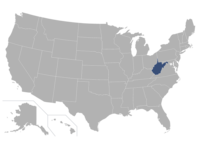
Charleston, WV