Mike Rogers claims he was an assembly line worker. The UAW said that is stretching the truth.
Sep 24, 2026 | 7:48 pm ET
Description
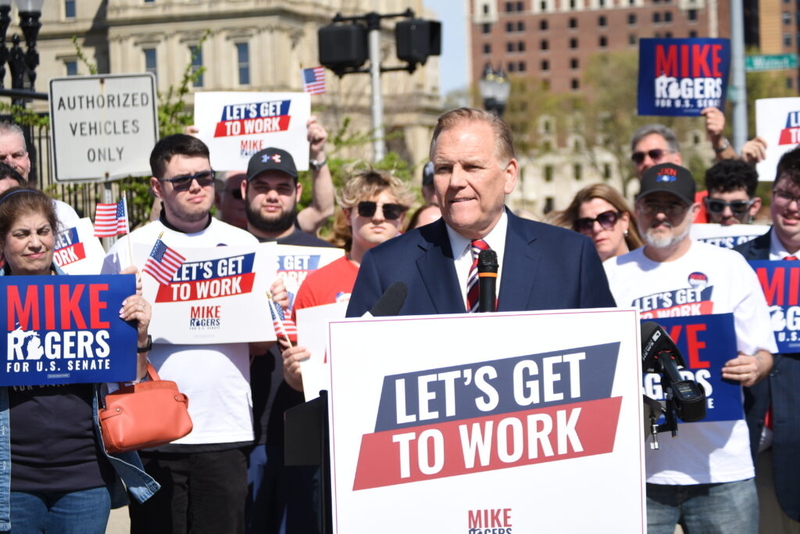
Former U.S. Rep. Mike Rogers (R-White Lake) after he filed signatures in Lansing in his bid for the Republican nomination for U.S. Senate. April 17, 2026 | Photo by Katherine Dailey/Michigan Advance
As Republican Mike Rogers makes his case to voters in Michigan’s high-stakes U.S. Senate race against Democratic nominee Abdul El-Sayed, he’s relied on his record as a federal law enforcement agent, his national intelligence expertise and his image as an every-day working man turned lawmaker.
But one claim he’s made on the campaign doesn’t appear to hold water for the United Auto Workers — his insistence that he worked in an automotive factory during his stint at Adrian College between 1981 and 1982. The UAW formally endorsed El-Sayed in June.
In advertisements, campaign interviews and in messaging to voters, Rogers claimed several times that he either worked in a factory, an automotive shop or an assembly line where he built Chrysler LeBarons.
Research done by Michigan Advance and interviews with a member of the United Auto Workers shows that while Rogers never worked for one of the Big Three automakers during his college years, and that he never worked on an automotive assembly line building one of Chrysler’s most well known vehicles — the LeBaron — Rogers did work at Cars & Concepts in Brighton, Michigan, between 1981 and 1982.
The Cars & Concepts facility, a large company in Brighton founded by former U.S. Rep. Dick Chrysler, did custom work on vehicles after they were already built on a Chrysler assembly line and shipped to Brighton for additional, after-market parts.
The campaign also said that he worked for a period of time at Thermofil, in Fowlerville, where he was a line mixer. The campaign said he made materials that were used for dashboards, but did not indicate when he worked at Thermofil.
Although Cars & Concepts was not an assembly line owned by one of the Big Three automakers, it was known in the auto industry as a speciality engineering, design and aftermarket parts facility. According to historical photos and museum entries, Cars & Concepts was more akin to a mechanic or body shop, but Rogers’ team insisted, when asked by Michigan Advance, that the facility did have an assembly line type facility.
Cars & Concepts is no longer in operation.
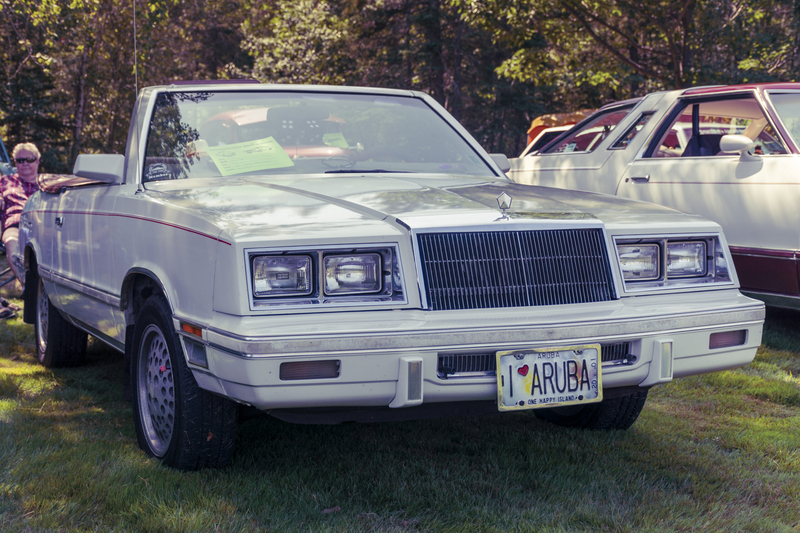
The facility was not building the LeBaron, either, but rather modifying already-assembled vehicles into convertibles with removable sunroofs — a part that Cars & Concepts was known for and well suited to produce and add on.
In that way, the UAW said that Rogers was greatly inflating his experience as an assembly line worker on the campaign trail.
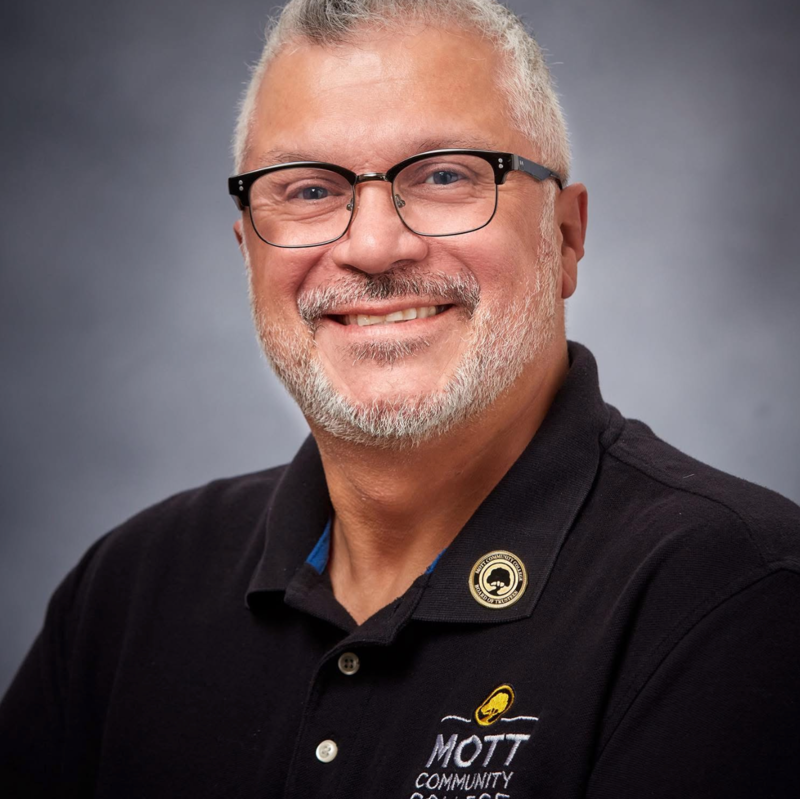
“He never claimed that he worked in an automotive factory when we were lobbying him at the beginning of the early 2000s,” said Art Reyes II, former president of UAW Local 651, serving Delphi plants in Flint, who was provided to the Advance for an interview when it asked UAW for a comment on this story. “He has tried to campaign as a champion of the auto worker when, in fact, he has no concept nor respect for the work that we do.” Reyes is president of the UAW Region 1-D Greater Flint Community Action Program (CAP) Council and also serves as a trustee for Mott Community College.
The UAW, in a separate statement, also told the Advance that “the record for Mike Rogers that we are familiar with is his record in Congress, where he supported bad trade deals that cost Michigan autoworkers good union jobs.”
In response, Rogers’ campaign told the Advance that any claim the former congressman didn’t work on an assembly line because it wasn’t one of the Big Three plants, was “an insult to all of the hard-working men and women in our auto industry working for small, third-party manufacturers.”
“When Mike worked at Cars & Concepts, he worked on Chrysler LeBarons, where he drilled the left and right A-pillars to secure the molding. Then, while the car was still moving down the line, he riveted panels between the back seat and the trunk,” said Rogers spokesperson and Communications Director Alyssa Brouillet. “Of course the UAW — which is already biased in endorsing Abdul — wouldn’t count it because it’s not theirs. And if Democrat failures hadn’t shipped off so many of our auto jobs, frankly, we’d have more of these small manufacturers.”
What Cars & Concepts was, and what it was not
The Brighton facility where Rogers said he worked was founded in 1976 by businessman and Republican former U.S. Rep. Dick Chrysler, who represented what was then Michigan’s 8th Congressional District between 1995 to 1997. Rogers would later represent that same district during his seven terms in Congress from 2001 to 2015.
According to various sources — such as Automotive News, Hemmings and the Howell Carnegie Library archives — Cars & Concepts designed, built and installed aftermarket products on factory-built vehicles. What the design shop and facility was most known for was its removable sunroofs on convertibles for Chrysler and Plymouth vehicles.
If you did not do time in the plant, that’s fine, but don’t act as if you had, and don’t talk to Michiganders about something which millions of us over the generations have experienced, have made careers of, have raised families on because of the collective bargaining power of the UAW.
For Chrysler in the 1980s, the shop had a contract with the automaker to convert its K-Body type LeBarons into more luxury models, modifying pre-built vehicles into convertibles.
According to Hemmings, a classic car marketplace, catalogue and media platform for enthusiasts, then-Chrysler CEO Lee Iacocca had visions of offering a new convertible because Chrysler had not offered one since 1970. A prototype was created and it attracted great interest, so Iacocca sought out the design expertise of Cars & Concepts to handle the conversions.
This contract was mainly focused on the 1982 LeBaron. Dick Chrysler sold the company in 1987.
By all accounts, Cars & Concepts was one of the premier aftermarket product shops in the nation, and that’s why Iacocca chose the company to help produce its LeBaron convertibles. The conversions were not necessarily easy, and did include a series of additional steps and some sheet metal work to ensure quality, Hemmings added.
Rogers’ campaign told the Advance that Cars & Concepts did have an assembly line-type process to do that work when he worked there in between 1981 and 1982.
Rogers’ claim that he “built” LeBarons at the facility is further refuted by the fact that the LeBaron, when it was being built in Michigan, was built at Detroit’s former Jefferson Avenue Assembly facility up until 1975, when the Imperial LeBaron was discontinued, and at the Hamtramck plant up until 1981, said a historian with Stellantis when the Advance asked about the LeBaron’s production history. Stellantis is now the parent company of Chrysler.
Later year LeBaron production occurred in Delaware, Missouri, and other nations like Mexico and Venezuela, but the LeBaron GTS was produced at Sterling Heights Assembly in 1984.
Adrian College is in Lenawee County, and the UAW has no record of a Chrysler assembly plant building the vehicles in the county. Cars & Concepts is located in Livingston County, where Rogers’ campaign said he worked and grew up.
While what Cars & Concepts did was an important step toward creating the LeBaron convertible product for customers, Reyes told the Advance that it was a far cry from an assembly line, an auto-parts factory or a parts supplier that the Big Three work with to produce vehicles along the designated supply chain — nor would the companies be shipping partially-produced vehicles to those shops for vehicle completion.
“In an original equipment manufacturing sense, no,” Reyes said. “The likelihood is that would not have been the case. Aftermarket stuff, there were a lot of specialty shops that General Motors or any of the American Three would do, but they were not partially building the LeBaron in the plant, then sending it out to be finished.”
Rogers alleging automotive experience is new a feature in his recent campaigns
When Rogers was endorsed by “Autoworkers For Trump,” he mentioned in a news release that he had worked in two different auto factory facilities and understood the “blood, sweat and tears” of Michigan’s auto workers.
That appears to be a new aspect of his campaign pitch, starting during his 2024 U.S. Senate campaign against current U.S. Sen. Elissa Slotkin.
At a Michigan rally featuring President Donald Trump in September 2024, Rogers told the audience that he worked in a car factory — his first mention of the claim. But instead of building LeBarons, Rogers said he was building the Sebring Convertible, another Chrysler vehicle.
“My God, America works when Americans are working. Let’s give a round of applause to the people who are making the engine of America getting up and going. Thank you for letting us into your place. I hope some of you’re getting time and a half. That’s all I’m saying,” Rogers said. “I have to tell you why these jobs are important. Certainly to me. I worked in a car factory — that Convertible Sebring. Remember those? Those are gems. Those jobs are important because they feed families. They nourish communities, and in the last four years, if you think about what the Democrats have done to us, I mean, my family has a saying, ‘you can’t drink yourself sober.’ You can’t spend yourself rich and you can’t regulate stupid.”
Of note, the Sebring replaced the LeBaron in the Chrysler manufacturer lineup — but not until 1995, according to J.D. Power. By then, Rogers was already a Michigan state Senator, well out of college and past his time as both a member of the U.S. Army and the Federal Bureau of Investigation.
While it’s possible that Rogers confused the two vehicles, the LeBaron wasn’t being built in any facility in Michigan when Rogers worked at Cars & Concepts.
That same month, speaking to Republicans voters and donors, Rogers again said he worked in a car factory.
“We always had to work,” Rogers said. “Obviously I worked in a car factory, put myself through school. That was a deal, as well. They’d helped where they could, but with five boys, they’re not being able to write a check, but it was the best thing they ever gave me. So I worked in that car factory.”
His claim became a fixture in that campaign across a few more Trump rallies and interviews, like one Rogers did with The Tony Conley Show in July 2024. It also started appearing in campaign ads.
“I’m Mike Rogers. Slotkin’s for EV mandates,” Rogers said in an ad released in September 2024. “I’m for Michigan. I worked in a car factory. These jobs are important to our families.”
Rogers maintained that he was an automotive assembly line worker even into 2025, well after losing his race to Slotkin the year prior.
In an interview with Breitbart News in 2025, Rogers again claimed that he worked on an auto factory floor making Sebring convertibles — which would have been impossible considering the Sebring wasn’t manufactured until well after Rogers had attended Adrian College, joined the military, worked in law enforcement and was a sitting member of the state Legislature.
Rogers again spoke of his “factory” experience during a September 2025 rally in Howell featuring Vice President JD Vance. Rogers told the audience that he specifically worked on an auto assembly line, and that those vehicles were Sebrings, not LeBarons.
“And when you think about my time on the assembly line, I worked in two different assembly lines, one that built Chrysler, Sebring, convertibles,” Rogers told the crowd. “Those are great cars. And if you got one that wasn’t, I didn’t build that one. I worked in a plant that made the materials to go that went into dashboards and parts. They were phenomenal jobs.”
Cars & Concepts did manufacture trim and additional fixtures, like shifters, to create more luxury looking vehicles, but that work in 1981 and 1982 was for the LeBaron.
The claim resurfaced during the 2026 campaign Rogers is currently waging.
Rogers said in an interview with Albanian TV of America that he “started out working on a car assembly line. I built Chrysler convertibles, the LeBaron.”
In July 2026, Rogers’ wife, Kristi, who has become a trusted campaign surrogate, said in a campaign ad that, “Mike worked in a factory. I worked at Burger King. Both our parents were teachers. It’s the middle class.”
When the Advance had asked Rogers what his experience was in the auto industry, the campaign at first said it was at Cars & Concepts. When fact checking this story, the campaign then said that he worked at a second facility. Before Michigan Advance published this piece, the Rogers campaign said he also worked at Thermofil, but did not provide dates for when he worked with the company, when asked a third time.

UAW says Rogers’ claims don’t square up with actual autowork experience
When asked, Rogers’ team asserted that his autowork experience came solely from Cars & Concepts and Thermofil. The assertion does not square up with what Reyes told the Advance he and other fellow autoworkers would consider actual automotive assembly line or parts manufacturing experience.
Reyes, who also served in the military, said he doesn’t doubt that Rogers served in the military because he speaks about his experience in the U.S. Army in a way that only someone who served can. That was not the case in terms of automotive experience, Reyes added, and likened Rogers’ claims as “stolen valor” from the auto industry.
“It’s insulting to my brethren who have spent their lives chasing the chain, whether it’s an assembly plant or a parts plant, sequencing, packaging, whatever it is; the supply chain of the automotive industry,” he said. “If you did not do time in the plant, that’s fine, but don’t act as if you had, and don’t talk to Michiganders about something which millions of us over the generations have experienced, have made careers of, have raised families on because of the collective bargaining power of the UAW.”
Brouillet said, in light of the UAW having endorsed El-Sayed, that “Unlike Abdul, Mike actually had to pay his own way through college–he wasn’t bankrolled by Soros.”
“If Abdul has ever worked a job where he had to get his hands dirty, we’re all ears,” Brouillet added.
Lansing, MI