New Mexico Election 2026: New Mexico governor
Sep 24, 2026 | 12:31 pm ET
Description
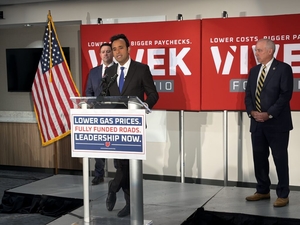
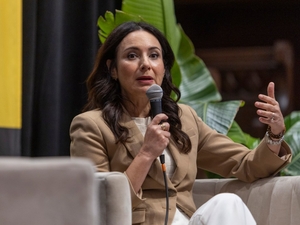
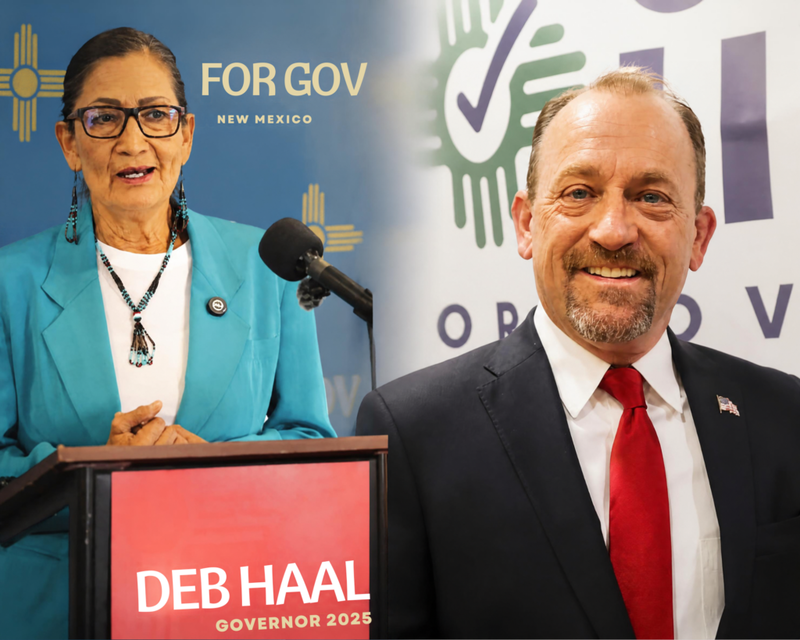
Democrat and former U.S. Interior Secretary Deb Haaland, left, will face Republican and former Rio Rancho Mayor Gregg Hull, right, in the Nov. 3 general election contest to be New Mexico's next governor. (Photos by Danielle Prokop/Source NM)
New Mexicans will elect a new governor on Nov. 3 for the first time in eight years.
Gov. Michelle Lujan Grisham, a term-limited Democrat, has steered the state through a pandemic and overseen the growth of several lucrative state trust funds. She created a new state agency, the Early Childhood Education and Care Department; implemented the first statewide universal childcare program in the nation; and oversaw reforms to the state’s dated medical malpractice regulations.
She’s also dealt with challenges, including rulings against her gun control measures, criticism for her high levels of emergency spending and a troubled child welfare agency.
Democrat Deb Haaland, who previously served as a member of Congress and as secretary of the U.S. Department of the Interior, will face Republican Gregg Hull, who was the longest-serving mayor in Rio Rancho history, in the Nov. 3 general election.
While the two have run mostly cordial campaigns after winning their parties’ respective June primary contests, they’ve taken differing approaches to how they would lead New Mexico through the remainder of President Donald Trump’s term, oversee the universal childcare program and regulate controversial data center developments.
Source NM spoke with both candidates about their priorities for the office, which comes with a $169,714 annual salary. Their answers have been edited for clarity and concision.
Deb Haaland
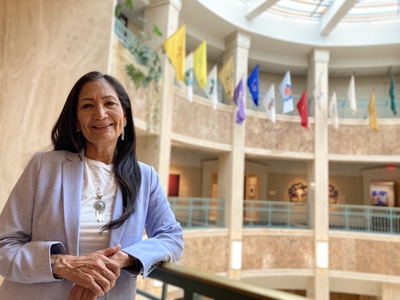
Deb Haaland earned a decisive victory over her primary election opponent, Bernalillo County District Attorney Sam Bregman, in June with a 44% lead. That evening, as election results came in, she addressed a crowd of supporters gathered in Albuquerque’s Old Town Plaza and promised to deliver a “better New Mexico.”
In the months since then, Haaland, a Laguna Pueblo member, has often invoked her lived experience as an Indigenous New Mexican and as the head of a federal agency. She knows what it’s like to rely on SNAP and Medicaid, she’s often said, and she also knows how to lead an organization with a multibillion-dollar budget and thousands of employees.
Over the summer, she’s campaigned on a platform of affordability and has pledged to work toward creating a public option for healthcare in the state. She recently promised to enact a data center moratorium immediately upon taking office while the Legislature works in the upcoming 60-day lawmaking session to create guardrails around the industry.
Haaland has also campaigned on increasing tax credits for working families and families with children and recently pledged to support a proposed bill that would ban landlords from using artificial intelligence to “price fix.”
“I really want to put more money in people’s pockets,” she told Source NM. “We need more of a focus on New Mexicans being treated fairly.”
What is the biggest issue facing New Mexico?
I believe I answered this in the primary as affordability, and it’s worse now because gas is more expensive and people are putting gas on their credit cards. People are going into debt just to get to work.
It’s directly related to the things that Donald Trump is doing. I’m going to blame this squarely on the president.
What makes you the better choice for voters?
I am the candidate with the experience to be the next governor. I managed one of the largest departments in the federal government; 70,000 employees and an $18 billion annual budget. I did that for four consecutive years. I represented District 1 in Congress where I got five bills signed and passed into law.
I know how the federal government works. The federal government has obligations to our state, so I would be the best-suited to hold the federal government accountable.
How would you approach overseeing the state’s universal childcare program in your first term?
I would make sure that it continues. When I think about what that program would have done for me when I was raising my kid as a single mom, it would have really changed my life in a good way.
We need to boost capacity, we need to bring more professionals in, open more programs in various parts of the state and even our largest cities.
Do you see a need for reform in the Children, Youth and Families Department, and what changes would you implement?
Hiring a qualified and experienced secretary will be the first order of business. I’ll also work to build morale in the department and to fill those positions where there’s a shortage, whether it’s social workers, case workers and so forth.
I am ready to overhaul CYFD and then implement a commission to set policies.
What issues do you want to see the state Legislature take up in the coming 60-day session?
There’s a lot of things that we need to get across the finish line.
The medical professional compacts, there are still some of those that weren’t passed.
Aside from the child tax credits and working-class families tax credits that I’ve spoken a lot about, some of my education plans are priorities. Reading coaches in schools, my Every Child Outdoor Initiative, I’d love to get started on that.
Of course I want to address healthcare, making a public option available for New Mexicans so nobody is without health insurance.
If elected, what is your first order of business after being sworn in?
I know you see governors and presidents with a big stack of executive orders to sign on day one. I don’t expect to have a great big stack of executive orders. If I win the election on Nov. 3, we’re going to immediately work on our budget.
Gov. Lujan Grisham appointed her fifth education secretary earlier this year during her tenure and the state continues to rank at or near the bottom in education. What do you think the problem is and how would you solve it?
I’m grateful for the early literacy program that we’ve been moving toward. I really feel that reading should be a top priority for our students overall. My pledge to put more reading coaches in classrooms; I really feel that this is a human-to-human endeavor that we need.
I know this because I’m a mom and I helped my child to read at an early age. If kids can read, they have the confidence to move through their entire educational journey.
What do you think Gov. Lujan Grisham has done the best in her tenure and what are you most critical of?
The things I really appreciate the most are the early childhood initiatives and the universal childcare. I could see how those can change people’s lives and help our kids, so I’m really grateful for that. I’ve been around for a while and I know that we tried to get early childhood education across the finish line for a long time, and she was able to do it.
Obviously I’m critical of Donald Trump, but I’m otherwise not one to be super critical of leaders here in our state. Gov. Lujan Grisham, some of the issues she faced were so massive. COVID, the worst fires in the history of our state. Those were things that were really urgent.
As secretary of the Interior you oversaw billions of dollars in infrastructure, conservation and clean energy projects. How would you support those projects on a statewide level?
I really am very committed to addressing our legacy pollution issue. I think everyone deserves to breathe clean air and have land they can live on and farm or what have you.
You’ve been critical of the Trump administration’s effects on New Mexico, particularly as it pertains to budget cuts on services like Medicaid and food assistance. How would you approach governing during the remainder of his second term?
The Legislature and the governor have worked hard to address the issue so that New Mexico can fill in the gaps. I want us to have navigators in the state government.
What the Trump administration will really work to do is kick people off because they aren’t recertified in the right manner. They’re going to put all these hoops in front of everyone to jump through and they want people to throw up their hands. I want to make sure that we are helping anyone and everyone we can to recertify for the programs.
Gregg Hull
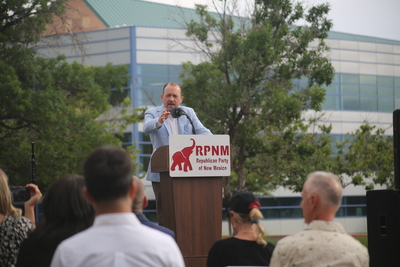
Gregg Hull first won election as Rio Rancho’s mayor in 2014. Twelve years later, he decided not to pursue the office again as he spent this summer in a three-way contest for the Republican gubernatorial nomination.
He defeated public relations professional Doug Turner and former New Mexico cabinet secretary and current cannabis CEO Duke Rodriguez with 47% of the vote.
While campaigning for governor, he’s often touted Rio Rancho’s accomplishments in the dozen years he oversaw the state’s third-largest city. Its population grew from about 93,000 to nearly 113,000 and the city won numerous Government Finance Officers Association budget awards under his leadership.
But as a Republican who, if elected, would oversee a Democrat-controlled Legislature, he’s equally quick to tout his experience as a nonpartisan politician.
While he disagrees with Haaland and Democratic state lawmakers on certain policy proposals, such as a proposed data center moratorium, he believes he can effectively work with elected officials in both parties — like he did during his eight years as chair of the New Mexico Mayors Caucus — to steer the state through the next four years.
“Governors get in there and, this is not a criticism, they’ve never had any type of municipal-level experience,” he told Source NM. “They haven’t been down in the communities to actually figure out what it takes to get the trash picked up and potholes filled and what it takes to make sure that the stop lights are timed properly and the police force is adequately equipped.”
What is the biggest issue facing New Mexico?
Our declining population. Having a lack of economic opportunity in our state, a lack of healthcare and poorly ranked education is driving people out of our state.
You fix that by working on making sure that when people are here, they know their kids can get quality education and when they get that education, there are actual opportunities for them to work and live here.
What makes you the better choice for voters?
The experience that I’ve had working within the state of New Mexico on so many different levels. Yes, I was mayor of Rio Rancho for 12 years, but I was not a mayor in a bubble. For eight years, I was the chair of the New Mexico Mayors Caucus, where I worked with every mayor across the state. I think that’s reflective of why (former Las Cruces) Mayor Ken Miyagishima came out and endorsed me after he discontinued his gubernatorial campaign.
We haven’t had somebody with my experience actually go to the Roundhouse, I believe, since Clyde Tingley, who was president of the Council of Albuquerque at the time.
How would you approach overseeing the state’s universal childcare program in your first term?
The first thing we need to look at is making sure that the most needy of individuals get those services. I have been opposed to the fact that this childcare program is not just for the most needy in our communities, but it’s also going to the wealthiest in our state.
I think there needs to be some balance there. We need to look at those higher-income echelons and look at the originally proposed co-pay systems, because I think you could divert those co-pays into helping daycares meet the criteria to become qualified and then more of our lower-income individuals would actually benefit from the program.
Do you see a need for reform in the Children, Youth and Families Department, and what changes would you implement?
We absolutely do need to see reform in CYFD. We need a director in there that is a qualified individual who knows how to deal with child psychology and child well-being and is certified in these things. We need to help CYFD employees gain certifications and trainings that they need.
What issues do you want to see the state Legislature take up in the coming 60-day session?
The Legislature outlined some ideas that they wanted to take up with CYFD. I actually agreed with most of them.
The only thing I want to make sure we tap the brakes on is reunification. You’ve got to make sure the child’s safety comes before reunification.
We also need to look at robust infrastructure packages that will help communities upgrade their water systems up and down the state.
If elected, what is your first order of business after being sworn in?
CYFD and the Public Education Department. I’ll work with our superintendents and our local school districts to make sure we have consistent goals of what we want to see to help improve the education scores of children in New Mexico.
Making sure that we are enabling our children to read by the third grade is critical. I’ll also work with PED to talk about how we invest more money into career and technical education.
Gov. Lujan Grisham appointed her fifth education secretary earlier this year during her tenure and the state continues to rank at or near the bottom in education. What do you think the problem is and how would you solve it?
Once you hire a PED secretary, you need the most qualified individual you can hire. As a leader, when that qualified individual tells you, ‘This is the way things should be done’ and they give you advice and bring their experience to the table, that needs to be listened to. That experience needs to be put to work.
I would propose additional deputy cabinet secretaries. We have one right now that deals with special education, but I’d like to see a deputy cabinet secretary for rural northern New Mexico, rural southern New Mexico, the metro areas and then one that’s a direct liaison with our pueblos so that we’re dealing with our Indigenous people to make sure that their cultures are being respected and that their languages are actually part of the curriculum.
What do you think Gov. Lujan Grisham has done the best in her tenure and what are you most critical of?
I’m always cautious about criticizing current elected officials. It’s easy to second guess and be a backseat driver.
I think that she’s worked very hard. She worked very hard to try to get some things done in education, she worked very hard to get some things done in public safety.
If elected, you’ll be a Republican overseeing a Democrat-controlled Legislature. How would you work across the aisle in the upcoming legislative session?
I think I’ve proven that I can work across the aisle. I have worked across the aisle because mayor is a nonpartisan position.
I’m very good at building relations by sitting down, finding common ground and working together.
You’ve said that a blanket moratorium for data centers would send the message that New Mexico is closed for business, but you’ve also said that the state needs guardrails regarding such developments. How can you accomplish that without putting a pause on development while the Legislature drafts those protections?
Here’s the thing: The ability to raise guardrails already exists. This has become a political talking point that distracts us from the real issues facing New Mexico, like healthcare, education and public safety.
Data centers or any other industry coming into New Mexico have to work through the Economic Development Department and if they’re going to qualify for any kind of state incentives, you put the guardrails into the deal. Project Jupiter had guardrails built into it. Now, did they follow through on those? From what I’m hearing, no. So then you put clawbacks in the deal. If you don’t perform the way you promised, then we pull all your incentives and we stop your project.
Santa Fe, NM