Missouri Supreme Court hears appeal of school library ‘explicit sexual material’ law
Sep 23, 2026 | 2:44 pm ET
Description
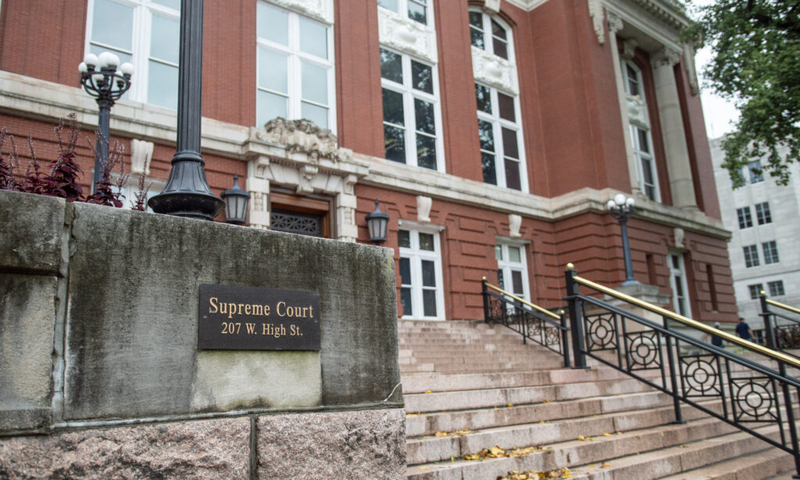
The Missouri Supreme Court heard oral arguments Wednesday debating whether a state law criminalizing school librarians who stock "explicit sexual content" violates their free speech rights (Annelise Hanshaw/Missouri Independent).
The Missouri Supreme Court is weighing whether a 2022 law making it a crime for school employees to provide students with “explicit sexual material” violates constitutional free speech protections.
The law, which a Jackson County Circuit Court judge struck down last November, “sowed great confusion across Missouri school districts” and spurred school librarians to remove books from shelves when it was passed, attorneys representing the Missouri Association of School Librarians and Missouri Library Association wrote in their brief.
In oral arguments Wednesday morning, much of the discussion focused on a decades-old U.S. Supreme Court precedent that determines what content can be considered obscenity — which is outside the bounds of what the First Amendment protects as free speech rights.
The three-pronged Miller Test used to determine whether material is obscene considers whether content as a whole appeals to a “prurient,” or lewd, interest and depicts sexual conduct in a “patently offensive way” based on “contemporary community standards.” Obscenity restrictions must also consider if the entire book or other work lacks literary, artistic, political or scientific value.
The language approved by lawmakers in 2022 restricts explicit sexual material, with exceptions for “works of art, when taken as a whole, that have serious artistic significance, or works of anthropological significance, or materials used in science courses.”
The Missouri Attorney General’s Office contends that the law falls within constitutional limits, asking the judges to overturn the circuit court’s decision and allow the case to go to trial. But David Thoreson, an attorney representing the librarians, told the judges that the law sweeps much more broadly than obscenity restrictions and therefore is unconstitutional.
“Any time that a state legislature or Congress decides to depart from that standard, or jettison any part of it, or substantively modify any part of it, it is playing with constitutional fire and very likely to get burned,” he said.
Judges zeroed in on the differences between the law and the controlling precedent Wednesday. Judge Mary Russell asked how the law addresses the first prong of the Miller test, which considers whether the material as a whole appeals to a prurient interest.
“It appears the statute completely omits that first standard,” she said, adding that there is no mention of community standards.
Since the law concerns material given to minors, Deputy Solicitor General Graham Miller responded, the requirement to consider the work as a whole is not applicable.
“Minors possess a more restrictive right to judge and determine for themselves what sexual material they may read or see,” he said. “They don’t have the ability to judge the work in relation to its whole as compared to a normal adult, so the determination is made under community standards.”
His answer opened up additional questions. The law overlaps with an existing statute that criminalizes “furnishing pornographic material to a minor.”
A first offense under the existing law, like an offense under the 2022 school library law, is a Class A misdemeanor. But the key difference is how the two laws define prohibited material. The existing law bars “pornographic material to a minor,” which is defined using a near verbatim copy of the Miller Test.
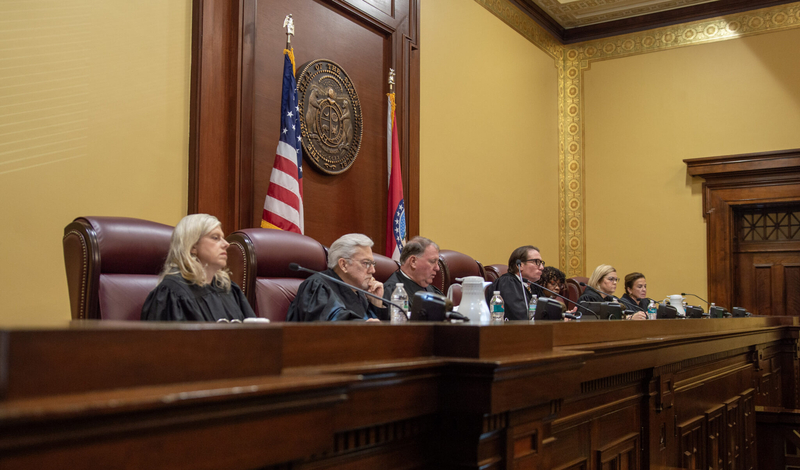
Chief Justice W. Brent Powell asked why the 2022 law didn’t adopt the same definition.
“The state is allowed to have overlapping criminal statutes,” Miller said. “Just because the state has criminalized the distribution of pornographic materials to minors, it doesn’t mean it cannot again criminalize the distribution of pornographic materials to minors in the school setting.”
“So do you think it is just banning the same material?” Powell asked.
“Correct,” Miller said.
When the law was passed, schools interpreted it to be broader than the existing restrictions. Attorneys for the librarians wrote in their brief that hundreds of books were removed from the shelves.
“Ultimately, (the law) resulted in the widespread removal of books previously deemed appropriate solely to avoid the possibility of criminal prosecution,” they wrote.
The state argues those removals were unnecessary, writing in its filing that the law only criminalizes books that are obscene and in violation of the existing law.
“There is no avalanche of banned books which exist outside these categories,” the state’s attorneys wrote.
The attorney general’s brief included pictures from three books with sexual content that were in high school libraries. This caught Russell’s attention.
“Are those actually on the shelves at our public school libraries?” she asked Thoreson.
Those books were some of those removed from libraries, he said, adding the books do not meet the definition of obscenity.
The images are “mere components of single scenes in multifaceted narratives with richly developed characters in which sex is merely an element in some storylines,” librarians’ brief states.
“The fact that the state appears to believe it must be removed” and schools’ decisions to stop distributing the books are proof that the law is too vague, Thoreson said.
School-sponsored speech
Even if the court finds that the law’s definition goes beyond just barring obscenity, judges could still conclude that it does not violate constitutional free speech protections.
A second tier of the state’s argument claims that the law falls under government or school-sponsored speech and does not restrict private speech.
“Government officials have no right to use official powers for their own expressive activities,“ Miller said Wednesday. “Librarians selecting or removing books from a library is not conveying their own message, but is rather conveying the school’s message,”
He cited an 8th U.S. Circuit Court of Appeals decision from April that found that schools have a “legitimate pedagogical interest in prohibiting speech involving sexual content” when considering a similar law in Iowa.
Missouri’s law differs from Iowa’s in a couple ways. Missouri’s law carries criminal penalties, while Iowa’s is limited to professional consequences, like written warnings and license suspensions.
Iowa’s law is also confined to public schools, whereas Missouri’s applies to “public or private elementary or secondary schools.”
Judge Ginger Gooch asked about this distinction, saying the state is “asking the court to construe it in a way to only have the statute apply to public school settings, even though it goes beyond that.”
If the law only bars obscenity, this piece does not matter, Miller responded. He also suggested removing the language including private schools and allowing the law to move forward only for public schools.
“Severing the private schools would be in accordance with the legislature’s wishes in this case,” he said. “Then at that point, the government speech or the school-sponsored speech doctrines would apply.”
A piece of the debate not covered Wednesday but included in attorney’s briefs is whether the law could restrict school employees outside their work at school.
The state argues that the law is limited to school staff’s work on school grounds, pointing to the statute’s language applying to those “affiliated with a public or private elementary or secondary school in an official capacity.”
But the librarians’ counsel argued that, grammatically, the phrase “in an official capacity” applies to those impacted by the law but doesn’t limit its bounds to when a school official provides the material.
“The second clause defining the prohibited conduct contains no time or place limitations whatsoever,” the attorneys wrote.
The court did not immediately issue its decision Wednesday.
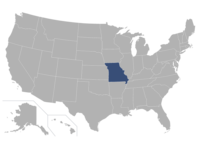
Jefferson City, MO