Three Clark County School Board seats are on the ballot this year
Sep 23, 2026 | 8:05 am ET
Description
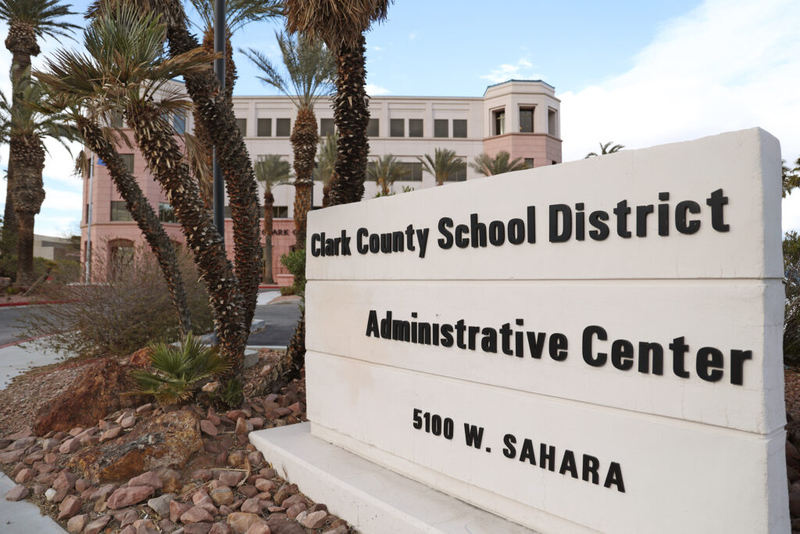
(Photo: Ronda Churchill/Nevada Current)
Voters will have the chance to reelect or replace three Clark County School Board District incumbents this November as public schools in Nevada face budget cuts and declining student enrollment.
The Clark County School District (CCSD) Board of Trustees is a nonpartisan 11-member board responsible for governing the nation’s fifth-largest school district with over 300,000 students. Seven of those members are elected and work alongside four appointed members.
Their primary duties are hiring and monitoring the superintendent, establishing district policies, approving the annual budget, managing capital programs, and setting strategic goals to improve student achievement.
Trustees can serve for up to three four-year terms and receive a salary of $750 a month or $9,000 a year.
Earlier this month, CCSDannounced it must reduce its fall budget by $51.6 million, largely due to declining student enrollment and increasing employee costs.
Enrollment for the 2026-2027 school year is more than 10,400 students lower than last year, a decline the district says amounts to more than $100 million in lost state funding.
Trustees will need to tackle those impacts while focusing on how to improve student achievement.
Clark County School Board District D
Brenda Zamora, the incumbent for District D who was elected in 2022 and previously served as the board’s vice president, is facing David Gomez, who has served on several school district commissions including zoning and facilities.
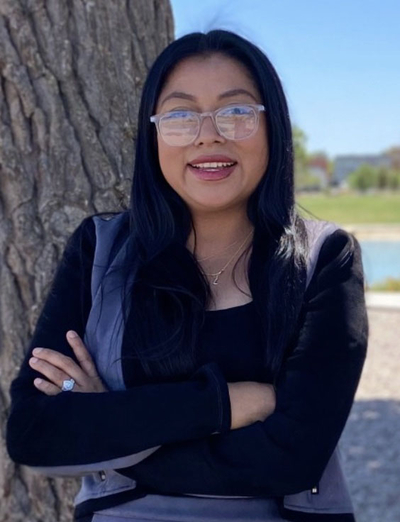
Outside her role as a trustee, Zamora serves as a deputy director at Make It Work Nevada, a nonprofit focused on paid leave and childcare.
Gomez has a law degree, and works as a consultant and advisor.
Notable endorsements for Zamora include Culinary Union Local 226, SEIU Local 1107, AFL-CIO, the Education Support Employees Association, and the Nevada State Education Association. Assemblyman Jovan Jackson (D-LV) has also endorsed Zamora.
Gomez has been endorsed by the Nevada Veterans Association, the Nevada Young Republicans, and Moms for Liberty.
Zamora identifies as a Democrat. Gomez is registered as a Republican.
Declining school enrollment is attributable at least in part to a declining birth rate and migration trends.
But Zamora believes that lower enrollment in Clark County schools is also linked to the growing popularity of charter schools and homeschooling. In order to reverse that trend, Zamora said the district must address negative perceptions of CCSD schools.
She pointed to the district’s specialized Career and Technical Academies (CTAs), many of which have long waitlists, as an example of where CCSD excels.
“We are a big target for a lot of charter schools in the area. You drive down Bonanza, and there’s about four or five at this point. So our district is really suffering in my area specifically because of that, but our schools have really great programs,” Zamora said.
Addressing the current needs of students in the district would also help keep students in CCSD schools. For District D, Zamora said that would mean more bilingual educators, greater special education funding, stronger school safety, and expanding pre-K.
The Clark County School District is facing a major budget shortfall, especially for schools with low enrollment. Zamora listed several solutions Clark County could explore including promoting open enrollment, and school consolidation or K-8 models.
Zamora said she was proud of expanding transparency during her first term by bringing back trustee community engagement meetings, and spending more time visiting schools in her district.
Gomez did not respond to requests for an interview from the Nevada Current. In an interview with Veterans in Politics, Gomez attributed the budget shortfall to mismanagement, and low enrollment to insufficiently attractive programs in public schools. Gomez suggested incorporating trade programs into more CCDS schools to attract enrollment.
Gomez also blamed low enrollment on CCSD policies, including the passage of a gender-identity policy in 2018 that gave principals guidelines for addressing issues like bathroom and locker room usage for trans and other gender diverse students.
Clark County School Board District F
Irene Bustamante Adams, the incumbent for District F who was elected in 2022 and serves as the board’s vice president, is facing first-time candidate Robert Hutchinson, the director of facilities for the Clark County School District.\
November’s general election will be the final match between Bustamante Adams and Hutchison. During the three way primary in June, Bustamante Adams received about 50% of the vote, while Hutchinson got nearly 33% of the vote.
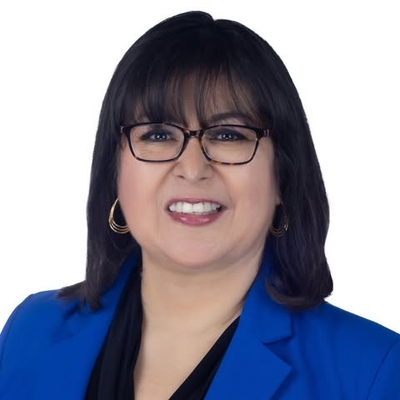
Outside her role as a trustee, Bustamante Adams works as deputy director and chief strategy officer at Workforce Connections, which is Southern Nevada’s Local Workforce Development Board. Bustamante Adams also previously served four terms as a Democrat in the Nevada State Assembly.
Notable endorsements for Bustamante Adams include the Clark County Education Association, AFL-CIO, the IBEW Local 357, and the Nevada Veterans Association. She was also endorsed by the Vegas Chamber and the Latin Chamber of Commerce.
Hutchinson has been endorsed by Culinary Union Local 226, SEIU Local 1107, the Education Support Employees Association, Bartenders Local 165, and the Progressive Leadership Alliance of Nevada. He’s also endorsed by Hispanics in Politics.
Both Bustamante Adams and Hutchinson identify as Democrats.
Bustamante Adams highlights as key accomplishments from her first term on the Clark County School Board the hiring of Superintendent Jhone Ebert, adopting a governance model, and approving teacher contracts before the school year.
If reelected, Bustamante Adams said her goals will be improving student outcomes in literacy, mathematics, graduation and career readiness.
Low enrollment is a major contributor to the CCSD budget shortfall, said Bustamante Adams. She noted several steps CCSD can take to reverse some of the drop, including strengthening parent communication, multilingual engagement, and public awareness of alternative enrollment options.
Bustamante Adams pointed to open enrollment, formerly known as a “change of school assignment” (COSA), which allows CCSD parents to apply to send their children to other district schools that have open and available space. Bustamante Adams also hailed CCSD’s Career and Technical Academies (CTAs) — many of which have long enrollment waitlists.
“Parents want to be able to make a choice of what school their child goes to, and so we made that happen,” Bustamante Adams said. “We have large, very high-quality high schools in the district.”
The budget shortfall should be addressed by modernizing tax policy and changing budget-setting rules to improve long-term sustainability, said Bustamante Adams.
“We need to look at modernizing our tax policy,” said Bustamante Adams. “We’re also leaving a lot of money on the table where we don’t tax or collect taxes for certain things that are new to the market, like digital platforms and some other things.”
Hutchinson said if elected his top priorities would be school safety, student success, and educator empowerment.
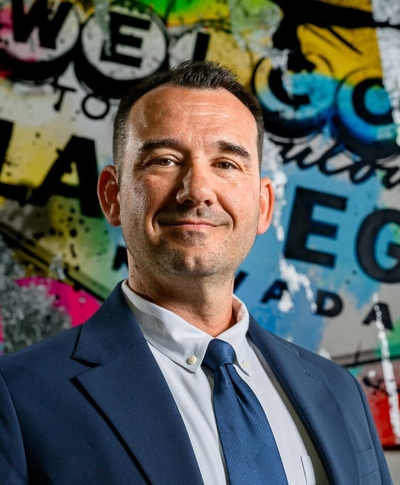
After decades working in the school district, Hutchinson said he has plenty of real operational experience from inside the district that can inform his decisions on the school board.
“I’m out there in the community, understanding real life problems. I understand what things are actually working and not working,” Hutchinson said. “I’m pretty embedded in our neighborhoods, and I want to bring that kind of community aspect into the board.”
Not every student wants to enter higher education, said Hutchinson, adding that Nevada falls behind when it comes to creating a pipeline for students who want to enter the workforce. He said expanding Career and Technical Academies (CTAs) who help retain students as enrollment drops in CCSD.
Hutchinson attributed enrollment declines to lower birth rates, charter schools, homeschooling, and declining community trust. Hutchinson said CCSD must improve communication with parents and increase responsiveness to rebuild confidence in public education.
Declining enrollment in the Clark County School District could be mitigated by focusing on successful programs like the district’s career and technical education, said Hutchinson.
When it comes to budget shortfalls, Hutchinson said CCSD should start preventative planning rather than reactive cuts. He advocated for reducing central administrative excess and seeking more equitable state funding.
“Back in 2008, I was personally caught up in a budget shortfall myself, and my position was cut. So I kind of know the anxiety that the frontline workers feel,” Hutchison said. “We can’t keep balancing these budgets on the books of our classrooms. We need to really start trimming some of those top-heavy central administrative things.”
Hutchinson said if elected, he would also prioritize expanding the Safe Routes to School program, adding that District F required better traffic management, including protected bike lanes, flashing beacons, and traffic monitoring near schools.
Clark County School Board District G
Linda Cavazos, the incumbent for District G who previously served as board president and vice president, is facing first-time candidate Paul Casey, an entertainment production businessman who also worked as a substitute teacher for the district at the elementary level for four years.
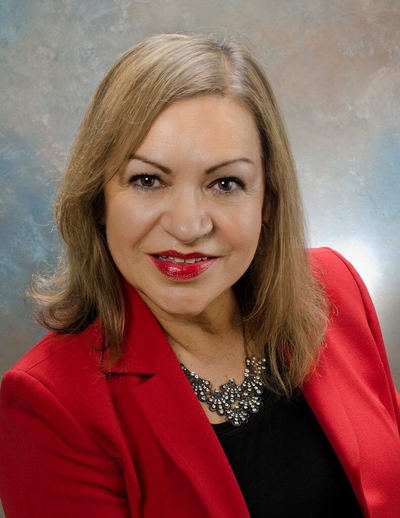
Cavazos is a part-time family therapist who worked in the district for 15 years and was appointed to the board in 2017, elected in 2018 and re-elected in 2022. If reelected, it will be Cavazos’ last term.
Notable endorsements for Cavazos include Culinary Union Local 226, Make the Road Action Nevada, the Nevada State Education Association, the Southern Nevada Building Trades Unions, Hispanics in Politics, and Progressive Leadership Alliance of Nevada Action Fund. She is a registered Democrat.
Casey was endorsed by the Clark County Republican Party, Nevada Veterans in Politics, and the Nevada Young Republicans. He is a registered Republican.
Cavazos is known on the board for her vocal support of progressive positions, such as the district’s gender-identity policy and a policy requiring schools to distribute letters on the importance of safe gun storage. She said her ability to win reelection several times lie with her board experience and deep ties to the community. She considers herself one of the most accessible trustees.
She attributed declining enrollment to lower birth rates, reduced migration into the state and parents choosing charter, private, or home schools. However, she said more detailed exit surveys are needed to identify the exact reasons.
“We need to try harder to reach out. Why are parents pulling their kids from CCSD? Why are they going to charters or private if they can afford it? Why are they going to homeschools? And then we need to fill in those gaps,” Cavazos said.
Lack of equity in schools has driven students in lower performing schools to leave CCSD, said Cavazos, noting that students should have equal access to transportation, after-school programs, manageable class sizes, and other resources.
“We have some schools where their enrollment did not drop as drastically as other schools where it really dropped quite a bit. I think that to be able to make it more equitable, we have to see the challenges that they’re facing, and then how do we get them the resources,” Cavazos said.
Data shows schools with better programs have retained students, Cavazos said, pointing to Career and Technical Academies (CTAs). She said comprehensive high schools need comparable opportunities to retain enrollment and broaden program access.
Cavazos said CCSD will have to embrace innovative solutions to address the $50 million budget shortfall facing CCSD, including having some support staff share a position.
“If those two people agree to share a position, they would end up with a half-time position, but they wouldn’t lose their job entirely,” Cavazos said.
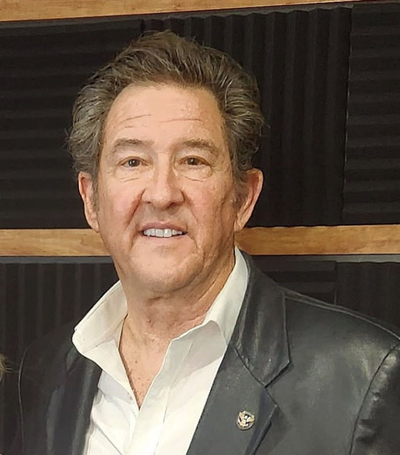
Casey, who worked as a substitute teacher for the district, attributed the drop in enrollment to parent dissatisfaction. He said CCSD should retain enrollment by prioritizing foundational skills such as reading, writing, mathematics, and science. Casey said he believes education outcomes have been interrupted by politics.
“One of the biggest issues that has reared its ugly head recently is politics, personal opinions of lifestyles, and that should be probably addressed by parents, not educators,” Casey said.
In order to retain more students, Casey said he believes CCSD schools must expand technology education that can help students enter Nevada’s growing tech industry.
Special education in CCSD should also be overhauled to improve student outcomes, said Casey. He advocated for more parent involvement in individualized Education Programs (IEPs), as well as more assistants and aids.
“It’s hard to have individualized educational programs for them because the ratio of teacher to student is way past where it should be,” Casey said.
Casey said he believes the budget shortfall is the result of mismanagement by CCSD. He proposed leasing CCSD properties to for-profit trade schools as a way to cover budget shortfalls, including schools that may need to consolidate in the future due to low enrollment.
“If the programs are not effective, if they’re not producing desired results, they need to be red penned out, because that is the responsibility in the budget,” Casey said.
Las Vegas, NV