Sussex teacher earns grant to expand multilingual programming
Sep 23, 2026 | 6:00 am ET
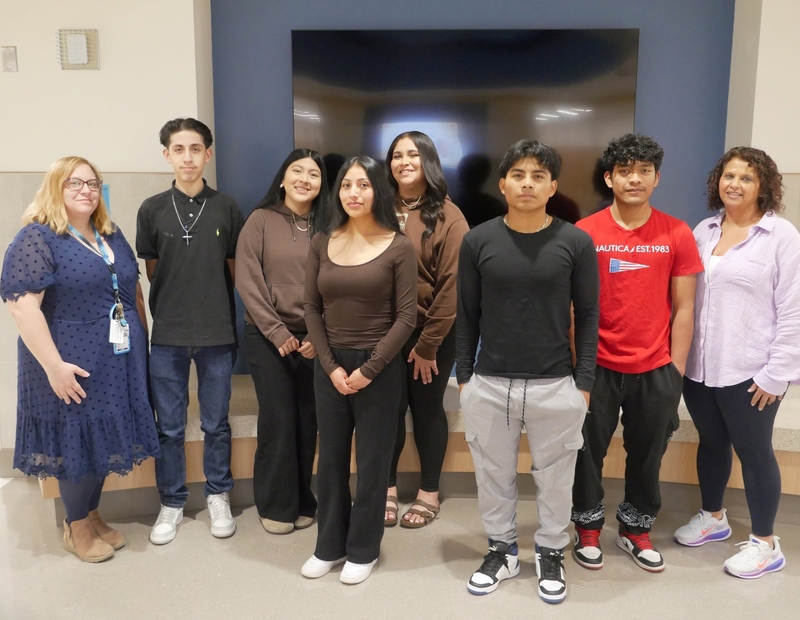
Description
Photo courtesy of Spotlight Delaware
Why Should Delaware Care?
One Georgetown-area teacher started a student-run mentorship program to help multilingual learners in her school improve both their English literacy and overall sense of community. A national grant has now bolstered her work.
Katherine Mancuso knew she had to do something.
The Sussex Central High School English teacher — whose classes are made up of more than 60% multilingual learners — was seeing low test scores, staffing changes and students entering high school without foundational language skills.
She knew the school needed to find a system to help students who speak Spanish, Haitian Creole, French, or Portuguese as a first language build confidence and better navigate their curriculum.
So Mancuso created the “Multilingual Mentors” program last March, pairing juniors and seniors with sophomores and freshmen who need the extra help in core subject areas. The program includes small-group and one-on-one support focused on homework help, literacy development, vocabulary, and study skills.
“Having a multilingual teacher in the room still hasn’t been enough, so we need to do something that makes [multilingual students] feel more comfortable, and this is what I came up with,” Mancuso said.
Students are identified through teacher recommendations, English language proficiency assessment data, and self-referral. Mancuso also has promoted the program through community events, direct outreach to families and working with multilingual staff at the school to ensure students feel encouraged to attend.
While the program initially was based on 9th and 10th graders in need, it is open to any student who may be struggling, she said.
Mancuso has even received a national grant to help bolster the program. A one-year, $5,000 grant from the National Education Association will help fund the mentorship program through the middle of the current school year. She also is looking for more outside funding to continue growing.
Student-centered mentorship
Manscuso emphasized the need for these students to have relationship-building, peer encouragement and opportunities for mentors to lead activities.
In the classroom, teachers often have to pull at different strings to meet a wide range of needs, she said. But through the mentorship program, many students have naturally stepped up to help their peers.
“It’s our students building a foundation of support. It’s student-centered,” Mancuso said. “They track everything, so they track the students that need homework help. They are the ones trying to make sure that they’re communicating with each other.”
She has used the grant money to add incentives like snacks to ensure mentees stay engaged after school hours. She also has purchased gift cards to recognize the mentors’ participation and leadership.
The program has been successful, Mancuso said, because it takes organic student relationships and makes them intentional and structured.
The program included about 20 mentors and 20 mentees in the spring. This year, six mentors have returned, and Mancuso currently is recruiting to begin tutoring sessions in October.
The program will run twice a week after school and during intervention periods, where mentees can meet with their mentors during the day for 35 minutes to continue working on their goals.
Student-run organization
One mentor, 17-year-old Sussex Central senior Jordani Bernal Tapia, joined the program after being recruited by Mancuso.
He chose to mentor because he said he wanted to help others using his fluency in both Spanish and English.
Tapia noticed that with his help, other students were able to complete their assignments and improve their grades. He has noticed how much more relaxed the mentees feel, and how much more they are able to connect with new people.
“For the majority of them, their first language is Spanish,” Tapia said. “The bigger the words are, or the more that the teacher explains it to them, the more they get lost.”
Instead, Tapia starts by asking what the students understood from their teachers before explaining the material further in Spanish.
“There’s a lot more people that can help, and that should help,” he said. “And I would like to highlight that this is all to help our peers become who they want to become through the challenges they face.”
What comes next?
Mancuso said she would like the senior students to eventually take ownership of the program.
That way, it could create a cycle where the students’ leadership continues beyond the first year, and their mentees’ academic growth could continue in concert.
Since the program has started, Mancuso said she has already seen academic improvement.
Students are testing higher on their English-proficiency exams, and less schoolwork is being handed in late, she said.
“I have over 60% of my students who are multilingual learners … it’s not just a few. If it’s over half the classroom, people have to start changing,” Mancuso said. “Things have to start happening to make sure that everyone graduates on time and that they all feel comfortable in the classroom.”

Dover