Idaho is built to lead our country’s next big energy transition
Sep 22, 2026 | 6:00 am ET
Description
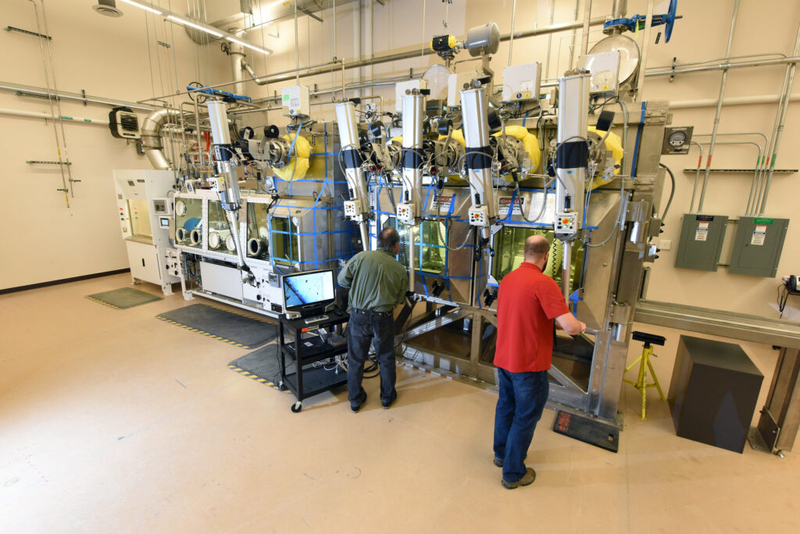
Two men work at the Irradiated Materials Characterization Laboratory at the Idaho National Laboratory's Materials and Fuels Complex. (Photo courtesy of the Idaho National Laboratory)
For nearly three years, the Idaho Advanced Energy Consortium has partnered with the Idaho National Laboratory, Idaho Environmental Coalition, colleges and universities, and dozens of industry organizations across Idaho and the greater region.
We’ve done this because Idaho is one of the only places in the country with the highly skilled nuclear workforce, infrastructure and institutional knowledge to lead the nation into the next era of American energy.
All of this resulted from decades of investment. The region’s nuclear engineering roots trace back more than 70 years, beginning in 1949 at what is now the INL site. In that time, Idaho has developed its workforce, supply chains and research capacity that, today, supports industry from small modular reactor development to hydrogen production and next-generation grid technology.
Last year, the U.S. Department of Commerce formally recognized the region’s leadership, designating the Intermountain West Energy Corridor as the nation’s only nuclear energy focused Tech Hub. More than 45 organizations across Idaho and Wyoming are now working together to further develop the existing workforce and enhance manufacturing capacity to support America’s energy future.
Idaho-Wyoming nuclear industry partnership set to receive $31M federal award
This matters because the conversation surrounding the Nuclear Lifecycle Innovation Campus should be understood in this context. Whatever position individuals take on specific proposal details, the underlying opportunity cannot be overlooked. New research missions that help fuel America’s energy future represent exactly the kind of institutional growth Idaho has prepared to implement for years.
Historically, new missions at the U.S. Department of Energy’s premier nuclear laboratory have supported durable careers and advanced technical fields that allow young Idahoans to remain in our state. These missions have established a research ecosystem that continues to attract global attention and private investment.
We’ve watched this pattern play out for decades, and we’re continuing to build workforce pipelines and new infrastructure that prepares our communities for the next chapter of economic growth.
As a nonprofit coordinating organization, the Idaho Advanced Energy Consortium does not advocate for or against specific proposals. It is our job to help our region position itself to benefit from whatever opportunities emerge and to make sure the benefits of this growth extend to communities across the region, not just around the laboratory’s front gate. This is the lens through which the energy consortium views the Nuclear Lifecycle Innovation Campus opportunity and the broader advanced energy work happening in our region.
We encourage anyone following this debate to look past the headlines and ask a more practical question: What does it take for a region like ours to prepare for the next generation of energy technology? This is the question our consortium exists to answer, which is why we convene partners across construction, manufacturing, transportation and education.
It’s the reason we’ve spent the last several years building the workforce infrastructure this moment calls for.
I’ve spent nearly two decades watching workforce investment transform communities across this state and one thing has been consistent: Building this kind of capacity doesn’t happen by accident. It takes sustained investment in people and institutions, the kind our consortium was established to support.
Boise, ID