Residential property insurance projected to jump in North Dakota, analysis shows
Sep 21, 2026 | 6:24 pm ET

Description
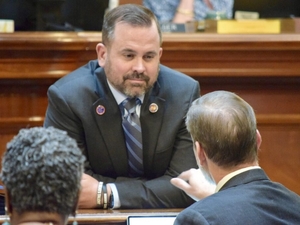
North Dakota Insurance Commissioner Jon Godfread speaks to members of a Residential Resiliency Roundtable, hosted by the American Property Casualty Insurance Association, at the Bismarck Event Center on Sept. 21, 2026. (Photo by Michael Achterling/North Dakota Monitor)
Residential property insurance rates are projected to increase 26% from 2025 to 2028 in North Dakota, according to American Property Casualty Insurance Association figures presented Monday in Bismarck.
Insurance Commissioner Jon Godfread said the projected jump follows an average increase of about 14% that North Dakota property owners saw between 2024 and 2025.
“It doesn’t mean that every North Dakotan is going to face a 26% increase; this was commercial, residential and multi-family businesses,” Godfread said during a North Dakota Residential Resiliency Roundtable. “But it’s absolutely a signal that’s worth taking seriously.”
Godfread said insurance premiums are increasing in part because the costs of labor and materials are going up.
“Labor costs more, materials cost more, if homes cost more, then the same storm produces more expensive damage that eventually does show up in your premiums,” Godfread said.
The state has done a good job in mitigating potential flooding, Godfread said, with projects in Grand Forks, Fargo, Minot and the Garrison Dam.
“We’ve taken that very seriously to address the flood mitigation problems, and we need to put that same kind of energy and effort into community resiliency,” he said.
Godfread said North Dakota has a statewide building code but no dedicated enforcement division to conduct inspections. He added that lack of enforcement can give insurers pause when determining insurance rates.
“It’s generally left to the local communities to enforce that code, and that means inspections, and that means going out and making sure that these buildings are built to appropriate standards,” Godfread said. “And I question how much we are doing that.”
He said fire inspections are conducted through the State Fire Marshal’s Office and local fire departments, but they are only looking at fire concerns, not the types of materials being used during construction and whether the structures are up to code.
The construction contractors are typically responsible for ensuring new buildings adhere to building codes, Godfread said. The only time his office or the insurance industry discovers a problem with a structure is after a catastrophic loss or collapse, he added.
“I think we need to start having some serious conversations on doing what the rest of the country does and start investing in some of those inspections,” Godfread said. “Every citizen in North Dakota deserves safe buildings to go into.”
Godfread said he was not accusing the construction industry of not following the state’s building code, but the insurance industry won’t know if building codes are being followed unless inspections take place.
Jill Beck, CEO of the North Dakota Association of Realtors, said she worries homebuyers are not pricing in the increasing insurance rates when they are shopping for a home.
Older roofs are also a concern, Beck said, as more buyers are not able to acquire insurance or mortgages for some homes with dated roofs.
“We need to do education with homesellers about the age of their roof, and they might not be able to get a typical mortgage buyer because of the age of the roof,” she said.
Brad Nold, chief claims officer for the North Dakota Farmers Union, said cheaper insurance plans may not cover everything that farmers need to be fully insured. He said he recommends farmers sit with a licensed insurance agent, shop around to compare insurance plans and understand everything that is in their policy before making a commitment.
“The No. 1 thing is education,” Nold said. “Too many people go out and buy an insurance policy based strictly on price.”
Farmers may need to make decisions on whether to insure older outbuildings as a way to keep costs down, Nold said.
“If you have two old buildings that are about to fall down anyway, why would you want to pay a premium to insure that?” Nold said.
Godfread said North Dakota is still a “good risk” state for insurance providers to conduct business due to predictable weather patterns and fewer potential losses, which can drive down insurance costs.
“The challenge that we have is that we’re 800,000 people and the economies of scale get a little bit tough,” he said.
North Dakota Monitor reporter Michael Achterling can be reached at [email protected].
Bismarck, ND