Michigan House committee probes canvassing process amid dispute over citizen-only voting signatures
Sep 21, 2026 | 6:15 pm ET

Description
Flags atop the Michigan State Capitol dome. April 30, 2026. | Photo by Katherine Dailey/Michigan Advance.
Frustrations from proponents of a failed ballot initiative that would have required Michigan residents to verify their citizenship in order to cast their vote had led members of a state House panel to examine how state officials determine which questions should make the ballot.
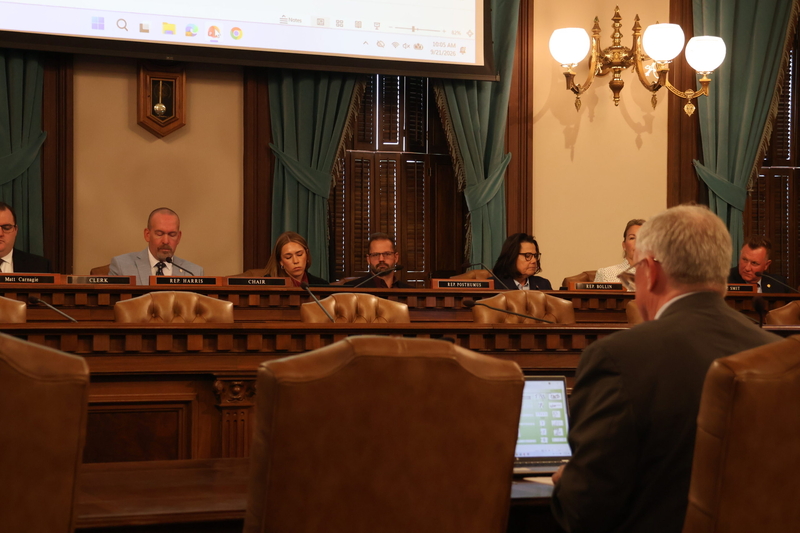
That work started last week with the House Select Committee on the Rules and Procedures of the State Board of Canvassers and the Bureau of Elections, as the joint committee held an introductory meeting.
Work from the committee continued on Monday, with House lawmakers hearing from Paul Jacob, the chair of Americans for Citizen Voting-Michigan.
The citizen-only voting effort died on Aug. 24, when canvassers failed to certify petitions for the initiative as the bipartisan board split along party lines, with the two Democrats on the panel voting against certification.
Prior to the meeting, Bureau of Elections staff advised against certifying the ballot measure, after a random sample of signatures gathered by the ballot committee failed to meet the threshold of valid signatures to receive approval.
After the Michigan Supreme Court and the United States Supreme Court declined to hear Americans for Citizen Voting-Michigan’s bid to overturn the Board of State Canvassers decision, the group is looking towards another attempt in the 2028 election cycle.
Jacob voiced frustrations with several steps in the canvassing process, from the amount of time it took members of the Board of State Canvassers to consider the ballot proposal, to the board’s decisions on whether certain signatures should be considered valid.
Jacob contended that the group submitted more than enough valid signatures when they dropped off their petitions with the Board of State Canvassers in March, and that they had worked to verify the names and addresses of those who signed their petitions — crossing off duplicate signatures and making other checks to their petition sheets.
He raised concerns with the bureau’s timeline in reviewing the effort’s signatures, telling committee members that when the Bureau of Elections released its Aug.17 report, which found that their signatures had fallen short of the threshold needed for certification, the group had but days to respond.
In its report, the Bureau of Elections reviewed a random sample of 1,000 signatures, determining 308 of the signatures in that sample were invalid.
Ninety-two of those signatures were invalid, meaning an entry either lacked a signature, or the signature included did not match that person’s signature in the Qualified Voter File.
“Neither we nor our attorney were allowed to review those voter signatures, the evidence used against us, serious denial of due process,” Jacob said. “Nothing is more un-American than not being able to see the evidence used against you.”
Ahead of the Board of State Canvassers meeting, Jacob said they set out to find as many of those individuals as possible, ultimately filing 23 sworn affidavits from individuals attesting that their signature was on the petition.
Of the 23 affidavits submitted, 14 were accepted by the bureau and agreed upon by the Board of State Canvassers, though Americans for Citizen Voting-Michigan ultimately came up three signatures short of the 629 valid signatures it needed within the sample.
In reviewing their petitions, Jacob said the Bureau of Elections had adopted a “when in doubt, throw it out” mentality.
“The behavior of the Bureau of Elections toward this petition and the partisan deadlock that is the nature of the Board of Canvassers denied Michigan voters their rights and squelched this citizen participation,” Jacob said. “The citizen-only voting petition met the legal requirement to be on the ballot and is not on the ballot. This is what voter suppression looks like.”
After the hearing, Jacob said the bureau’s rules should be placed into state law.
Jacob told Michigan Advance that “laws are all about clarity and fairness, and if they’re not fair, you can take them to court. Rules can be slippery.”
He also criticized the bipartisan makeup of the Board of State Canvassers, noting that while its design is intended to prevent partisanship, the two-Republican, two-Democrat makeup means the board is designed to deadlock.
Jacob also argued that the Bureau of Elections should adopt a first-in, first-out approach to processing petitions.
However, Mark Brewer, a longtime election attorney and former Michigan Democratic Party chair who represented Promote the Vote Action in opposing the citizen-only voting effort, said the bureau has other jobs to do and deadlines to meet.
During the Board of State Canvassers’ March meeting, Michigan Director of Elections Jonathan Brater said that there are three petition timelines that run in tight windows.
The petitions are processed in the order of those deadlines, Brater said, noting that if the bureau has a window, they will process efforts that come in ahead of the deadline as quickly as they can.
The bureau would not have been able to finish canvassing the citizen-only voting initiative before it needed to shift to processing candidate nominating petitions, Brater added.
If Americans for Citizen Voting-Michigan wanted to address their timeline concerns, they should have filed their signatures earlier, as the group was cleared to begin gathering signatures in July 2025, Brewer said.
“These are like two- and four-year projects, right?” Brewer said. “You got to plan it all out, and again, you can control much of this if you think ahead. Because none of this is secret. All this is laid out in the statute, in the procedures of the board.”
While Jacob argued that the bureau shouldn’t be invalidating signatures that the proponents of petitions don’t get to see, Brewer said allowing outside parties to see the signatures housed in the qualified voter file could open voters up to identity theft and forgery.
In addition to comparing the information on the petitions with address and voter registration information in the Qualified Voter File, committees can also validate their signatures by reviewing past petitions and requesting absentee ballot applications or envelopes through the Freedom of Information Act, Angela Benander, the chief communications officer for Michigan Secretary of State Jocelyn Benson, said in an email.
“Their goal was simply volume,” Brewer said of the citizen-only voting effort. “They thought if we just collect enough signatures, we’re going to be okay, and that was their fatal mistake.”
Lansing, MI